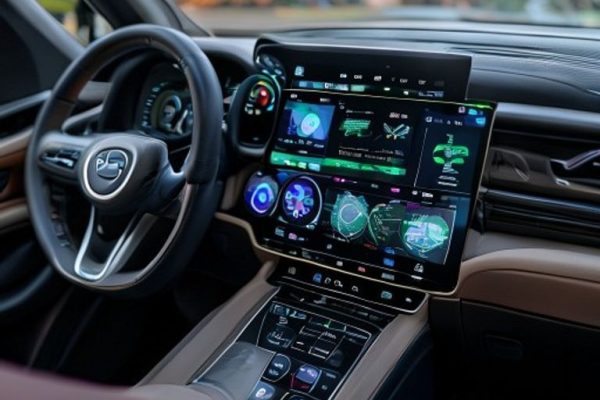

The automotive industry is in a constant state of flux, but few segments have experienced as rapid and transformative a shift as the electric vehicle (EV) market. What began with fervent enthusiasm and ambitious projections is now entering a more nuanced phase. Indeed, as demand for EVs cools in the United States, observers have noted that several electric models have been killed off after just a brief time in the spotlight. This trend, while perhaps surprising to some, is a natural consequence of a market finding its equilibrium, driven by evolving consumer preferences, technological advancements, and strategic corporate decisions.
The initial years of the modern EV era were characterized by a gold rush mentality, with established automakers and new entrants alike rushing to claim a stake in what was widely predicted to be the undisputed future of personal transportation. This led to a proliferation of models, some experimental, others designed to test market waters. Many of these vehicles were launched amid significant fanfare, benefiting from early adopter enthusiasm and government incentives. However, the market dynamics are undeniably shifting, signaling a maturation that brings both opportunities and challenges for manufacturers.
The Shifting Tides of EV Demand
The phrase « cooling demand » doesn’t necessarily imply a decline in EV sales, but rather a moderation from the exponential growth rates seen in prior years. Several factors contribute to this recalibration. Economic uncertainties, including higher interest rates and inflation, have made new vehicle purchases, particularly higher-priced EVs, less accessible for many consumers. The initial cost of many electric vehicles remains a significant barrier compared to their internal combustion engine (ICE) counterparts, despite long-term fuel savings.
Furthermore, persistent concerns about charging infrastructure availability and reliability continue to weigh on potential buyers. Range anxiety, though steadily decreasing with technological improvements, still plays a role in purchase decisions, especially for those in rural areas or without reliable home charging options. The competitive landscape has also evolved, with a renewed interest in hybrid vehicles that offer a bridge solution without the full commitment to an all-electric lifestyle. This broader array of choices means consumers are more discerning, and not every EV model can secure a viable foothold.
Why Models Fade: Beyond Just Demand
While softer demand is certainly a contributing factor, the discontinuation of an EV model is often the result of a confluence of strategic and operational challenges. It’s a complex decision influenced by a variety of internal and external pressures, not merely a direct response to overall market sentiment.
- Lack of Market Fit and Poor Sales Performance: Even within a generally growing segment, individual models may simply fail to resonate with a sufficient number of buyers. This could be due to design, pricing, performance, or a perceived value proposition that doesn’t align with consumer expectations. If a model consistently underperforms against sales targets, it becomes a candidate for removal from the lineup.
- Strategic Reprioritization by Manufacturers: Automakers frequently reassess their product portfolios to align with broader corporate strategies. A company might decide to consolidate its EV offerings onto fewer, more cost-effective platforms, or shift focus to segments where it perceives greater long-term profitability or competitive advantage, such as larger SUVs or pickup trucks, rather than smaller sedans or niche vehicles. Resources are finite, and tough choices must be made about where to allocate investment.
- Rapid Technological Advancement: The EV sector is evolving at an unprecedented pace. Battery technology, charging speeds, motor efficiency, and software capabilities are constantly improving. Models designed just a few years ago can quickly appear outdated compared to newer entrants, particularly in terms of range or charging performance. This rapid obsolescence can make it difficult for older designs to remain competitive, justifying their early exit.
- Production and Cost Challenges: Developing and manufacturing EVs is incredibly complex and capital-intensive. High production costs, supply chain bottlenecks for critical components like batteries and semiconductors, and the sheer scale required to achieve profitability can make certain models economically unsustainable, especially if sales volumes don’t meet projections. Some models may have been too expensive to produce at a competitive price point.
- « Brief Time in the Spotlight » Phenomena: Some vehicles are launched as experiments, concept-to-production fast-tracks, or as interim solutions. If these vehicles don’t quickly prove their worth, or if they were designed around technology that rapidly became obsolete, their lifespan can be inherently short. This highlights the inherent risks in pioneering a new technology and market.
Implications for the EV Ecosystem
The discontinuation of certain EV models carries significant implications for the broader automotive ecosystem. For manufacturers, it underscores the need for more rigorous market research, adaptable production strategies, and a clearer understanding of specific consumer segments. It signals a move away from simply « having an EV » to strategically developing EVs that offer compelling value, meet specific market needs, and can be profitably produced at scale.
For consumers, this trend can create a mix of uncertainty and opportunity. There might be concerns about the long-term support, parts availability, and resale value of models that have been discontinued. Conversely, it also means that the market is weeding out less successful offerings, paving the way for more refined, competitive, and ultimately better-engineered electric vehicles. It reinforces the idea that consumers should look for manufacturers with robust long-term EV strategies and established service networks.
Looking Ahead: A Maturing Market
It is crucial to view these discontinuations not as a failure of electrification itself, but as a natural phase in the maturation of a revolutionary industry. Every emerging technology market experiences a « shake-out » period where initial offerings are refined, consolidated, or replaced by superior alternatives. The EV market is transitioning from an early adopter phase to mainstream acceptance, a journey that demands greater efficiency, cost-effectiveness, and responsiveness to a broader range of consumer needs.
The future of the EV market will likely be characterized by more targeted product development, intense competition among fewer, stronger contenders, and a greater emphasis on profitability alongside innovation. This shift will ultimately benefit consumers, who can expect more diverse, capable, and economically viable electric vehicles to emerge from this evolutionary process. The long-term trajectory towards an electrified future remains firmly in place, even if the path to get there involves some necessary course corrections and pruning of the product tree.
In conclusion, the discontinuation of several electric models is a symptom of a dynamic and evolving market. While it reflects a cooling of initial demand, it also signifies the industry’s ongoing efforts to adapt, innovate, and build a sustainable future for electric mobility. These decisions, though tough, are part of the learning curve in shaping the next generation of transportation.
Source : https://www.caranddriver.com/news/g68920984/evs-discontinued-canceled/