

Volkswagen CEO Confirms Robust Progress on Mk 9 Golf Development
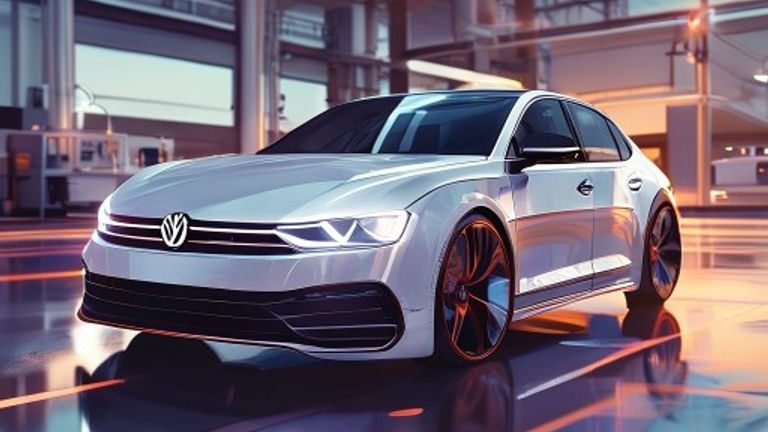
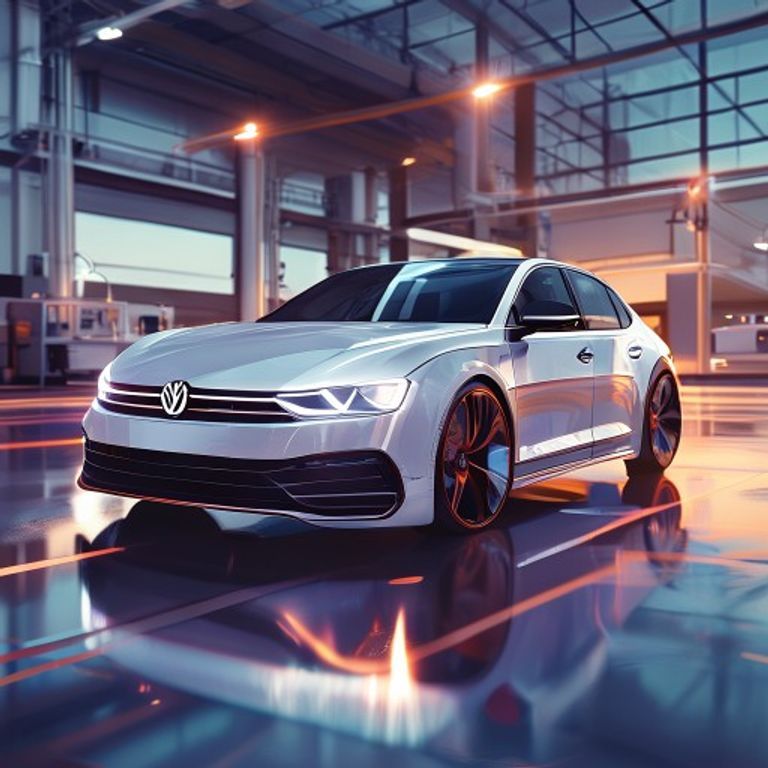
In a significant announcement for automotive enthusiasts and industry observers alike, Volkswagen CEO Thomas Schäfer has offered a glimpse into the future of one of the world’s most enduring and successful nameplates: the Golf. Schäfer confirmed that the development of the ninth-generation Volkswagen Golf is not only well underway but has reached an advanced stage, with the vehicle’s crucial styling aspects nearly finalized. This revelation underscores Volkswagen’s continued commitment to its iconic compact car, even as the global automotive landscape rapidly shifts towards electrification.
The Volkswagen Golf, since its inception in 1974, has been more than just a car; it has been a benchmark for the compact segment, a symbol of practical engineering, and a consistent bestseller across generations. Its evolution has mirrored technological advancements and consumer preferences, making each new iteration a keenly anticipated event. Schääfer’s update signals that despite the strong push towards the ID. family of electric vehicles, the internal combustion engine (ICE) powered Golf retains a vital role in Volkswagen’s immediate and medium-term strategy, serving as a critical bridge during the industry’s transformative period.
The Significance of ‘Development Well Underway’
When an automotive CEO states that development is ‘well underway,’ it speaks volumes about the meticulous and multi-faceted process behind bringing a new vehicle to market. For a model as globally significant as the Golf, this phrase encompasses hundreds of thousands of hours of design, engineering, testing, and supplier coordination. The journey typically begins with concept ideation, moves through detailed CAD (Computer-Aided Design) models, extensive simulations, and the construction of numerous prototypes for real-world evaluation.
- Platform Integration: The Mk 9 Golf is expected to continue leveraging Volkswagen’s highly adaptable MQB (Modular Transverse Matrix) platform, specifically an updated iteration like the MQB Evo. This platform underpins a vast array of VW Group vehicles and allows for efficient sharing of components and technologies, driving down development costs and accelerating market readiness.
- Engineering Challenges: Modern vehicle development must contend with increasingly stringent global regulations concerning emissions, safety, and connectivity. Engineers must innovate to meet these targets while simultaneously delivering the performance, efficiency, and driving dynamics expected of a Golf.
- Supplier Engagement: A new car program involves thousands of components, each requiring collaboration with an extensive network of suppliers. ‘Development well underway’ implies that many of these partnerships are firmly established, and component integration is progressing as planned.
Styling Nears Finalization: Evolving an Icon
Perhaps the most intriguing aspect of Schäfer’s announcement is that the styling of the Mk 9 Golf is ‘nearly finalized.’ Automotive design is a highly iterative process, balancing aesthetic appeal with aerodynamic efficiency, manufacturing feasibility, and brand identity. For the Golf, this task is particularly challenging given its iconic status and the need to appeal to a broad global audience while staying true to its design heritage.
The phrase ‘nearly finalized’ suggests that the core exterior and interior aesthetics have been locked in, moving past conceptual sketches and clay models to production-ready surfacing. This stage typically involves:
- Brand Recognition: Maintaining the Golf’s instantly recognizable silhouette and visual cues while introducing modern elements that signal progress and innovation. This often involves subtle refinements rather than radical departures, ensuring broad appeal.
- Aerodynamic Optimization: Design is intrinsically linked to engineering, with aerodynamics playing a crucial role in fuel efficiency and reducing wind noise. Finalizing the styling involves extensive wind tunnel testing and computational fluid dynamics (CFD) to achieve optimal airflow.
- Interior Ergonomics and Technology: While the exterior draws initial attention, the interior defines the user experience. ‘Styling finalized’ likely extends to the cabin, encompassing the layout of controls, material choices, digital interface design, and overall ergonomics to ensure a modern, intuitive, and comfortable environment for occupants.
- Manufacturing Considerations: The finalized design must also be manufacturable efficiently and cost-effectively, requiring close collaboration between designers and production engineers.
The Broader Context of Powertrain Decisions
While Schäfer’s specific statement focused on styling, the original title alludes to ‘powertrains,’ highlighting another critical area of development for the Mk 9 Golf. In an era where automotive manufacturers are grappling with the transition to electric mobility, decisions surrounding ICE powertrains are more complex than ever. Volkswagen’s strategy for its conventional models involves a strong emphasis on efficiency, emissions reduction, and leveraging hybridization technologies.
For a new ICE model like the Mk 9 Golf, the powertrain lineup will almost certainly reflect current and upcoming emissions standards, such as Euro 7. This necessitates:
- Advanced Internal Combustion Engines: Continued refinement of petrol and diesel engines for maximum efficiency, lower emissions, and improved performance.
- Mild-Hybrid Technology (MHEV): Integration of 48-volt mild-hybrid systems to enhance fuel economy and provide subtle boosts during acceleration, a common feature in modern compact cars.
- Plug-in Hybrid (PHEV) Options: Offering robust plug-in hybrid variants with increased electric range, catering to consumers seeking a blend of electric and conventional driving capabilities.
These powertrain considerations are integral to the ‘development well underway’ phase, with significant engineering resources dedicated to optimizing engine and transmission calibration, battery integration for hybrid systems, and exhaust after-treatment technologies.
The Golf’s Enduring Role in Volkswagen’s Future
The confirmation of the Mk 9 Golf’s progress reinforces Volkswagen’s strategy of maintaining a strong presence in both the electric and conventional vehicle markets. The Golf serves as a critical volume model, providing the revenue and customer base necessary to fund Volkswagen’s ambitious electrification roadmap. It ensures that customers who are not yet ready or able to transition to an electric vehicle still have access to a state-of-the-art, efficient, and technologically advanced compact car from the brand.
As the automotive industry continues its rapid transformation, the Mk 9 Golf will undoubtedly play a crucial role in bridging the gap between Volkswagen’s storied past and its electric future. Schäfer’s update builds anticipation for the official unveiling, promising a vehicle that respects its heritage while embracing the demands of modern driving.
Source : https://www.caranddriver.com/news/a71138991/volkswagen-mk-9-golf-new-details/