



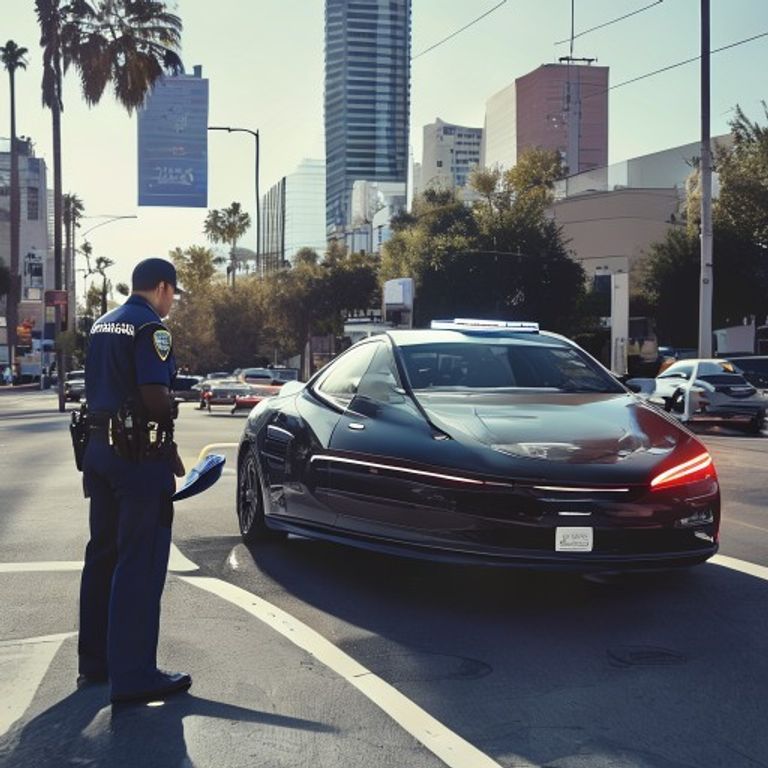
New Era of Accountability: California Cops to Ticket Autonomous Vehicles
A significant shift in how autonomous vehicles (AVs) are regulated and held accountable on public roads is set to commence in California. Effective July 1, a new state law will empower police officers to directly issue traffic citations to self-driving cars found committing traffic violations. This pivotal development marks a clear legislative move towards integrating driverless technology more firmly into the existing framework of traffic enforcement, ensuring that these advanced vehicles are subject to the same rules as their human-driven counterparts.
For years, California has been at the forefront of autonomous vehicle testing and deployment, with numerous companies operating fleets of driverless cars across its cities. While these vehicles promise enhanced safety and efficiency, instances of unusual behavior, traffic infractions, or even minor accidents have raised questions about accountability. Until now, the process for addressing violations by a vehicle without a human driver has often been ambiguous, involving complex communication with the operating company rather than a direct roadside citation.
Understanding the Mechanism: How Will Driverless Cars Be Ticketed?
The concept of ‘ticketing’ a car without a driver might seem novel, but the new law clarifies the procedure. When a police officer observes a self-driving car committing a traffic violation—such as speeding, running a red light, making an illegal turn, or blocking traffic—they will be authorized to issue a citation. This ticket will not be issued to an absent human driver, but rather to the registered operator of the autonomous vehicle. In essence, the responsibility for the vehicle’s adherence to traffic laws falls squarely on the shoulders of the company deploying and managing that particular self-driving car.
This approach mirrors how citations are handled for commercial vehicles or fleet operations, where the company, not necessarily the individual driver at the time of the infraction, bears ultimate responsibility for certain violations. Law enforcement agencies in California are currently preparing for this change, likely developing new protocols and training for officers on how to identify an autonomous vehicle’s operator and issue the appropriate citation. This could involve direct communication systems with the AV company or accessing vehicle registration databases to ascertain the responsible entity.
Implications for Autonomous Vehicle Operators
The introduction of direct ticketing carries substantial implications for companies operating autonomous vehicle fleets in California. The primary impact will be an increased level of accountability. While AV companies already face scrutiny from regulatory bodies, the ability of local law enforcement to issue immediate citations introduces a more granular and pervasive enforcement mechanism. This could lead to:
- Financial Penalties: Each citation will likely carry a monetary fine, potentially adding significant operational costs if vehicles frequently violate traffic laws.
- Pressure for Performance Improvement: Companies will face heightened pressure to refine their self-driving software and ensure their vehicles operate within legal parameters at all times, reducing the incidence of violations.
- Data Collection and Analysis: Each ticket issued will serve as concrete data point, potentially highlighting recurring issues or areas where AV technology needs further development.
- Reputational Impact: A consistent record of citations for traffic violations could negatively affect public perception and trust in a company’s autonomous driving technology.
This legislative move underscores a broader trend in the automotive industry: as autonomous technology matures, so too must the regulatory frameworks governing its deployment. The intent is not to stifle innovation, but to ensure that safety and public order are maintained as these transformative technologies become more commonplace on our roads.
Enhancing Public Trust and Safety
For the general public, this new law is likely to be viewed as a positive step towards greater transparency and safety. One of the persistent concerns surrounding autonomous vehicles has been the perceived lack of accountability when incidents occur. By establishing a clear mechanism for traffic enforcement, the state is demonstrating a commitment to holding AVs to the same standards as human drivers. This could contribute significantly to building public trust, which is crucial for the widespread acceptance and adoption of self-driving technology.
Moreover, the law ensures that critical traffic regulations, designed to maintain safety and traffic flow, are consistently applied. Whether a vehicle is controlled by a human or an advanced AI system, adhering to speed limits, traffic signals, and lane discipline is fundamental to preventing accidents and ensuring efficient transportation. The ability of police officers to directly intervene and issue citations for violations by AVs reinforces this principle, aiming to foster a safer and more predictable road environment for all users.
Looking Ahead: The Evolving Landscape of Autonomous Regulation
The July 1 implementation date for this new law marks another milestone in the evolving regulatory landscape for autonomous vehicles. As the technology continues to advance and driverless cars become more integrated into daily life, it is probable that further legislative adjustments will be made. These could include more specific regulations pertaining to AV behavior in complex scenarios, standardized reporting requirements for incidents, or even frameworks for determining fault in accidents involving multiple autonomous vehicles.
California’s proactive stance in addressing the operational accountability of driverless cars sets a precedent that may influence other states and nations as they grapple with the legal and ethical challenges posed by autonomous technology. This new law is not just about issuing tickets; it represents a foundational step in defining the relationship between advanced robotics, urban infrastructure, and human society, all aimed at safely paving the way for the future of transportation.
Source : https://www.caranddriver.com/news/a71229487/california-ticketing-driverless-cars/