



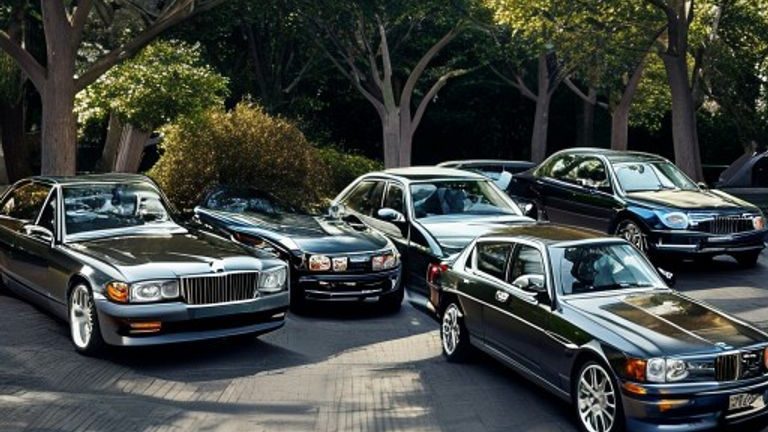
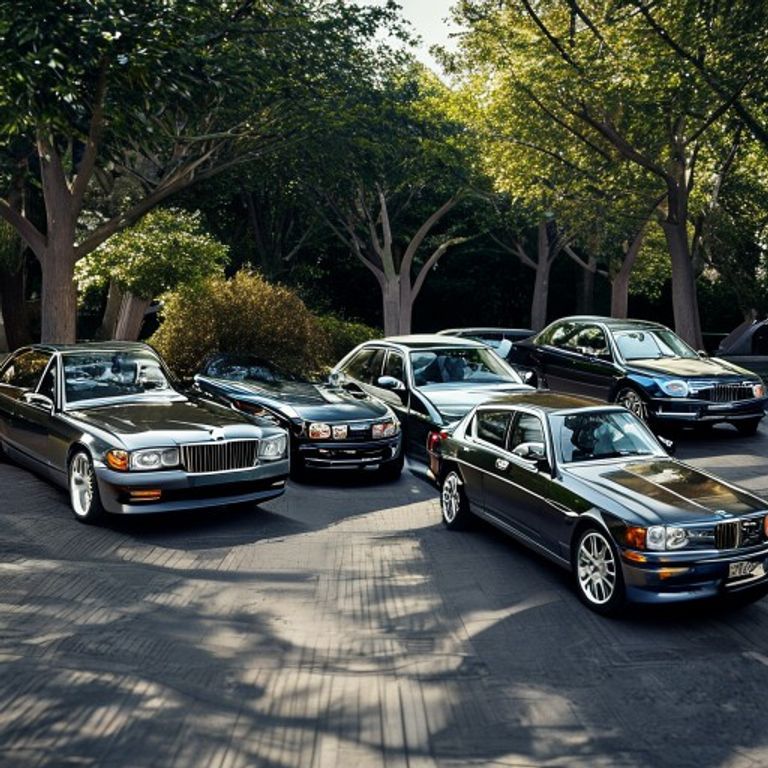
The year 1997 brought into sharp focus a compelling question in the luxury sedan market: Can anyone top the Germans? For decades, BMW and Mercedes-Benz had set the global benchmark for premium motoring, synonymous with engineering prowess, performance, and prestige. Yet, by the mid-1990s, formidable Japanese challengers had emerged, offering sophisticated new interpretations of luxury. This era saw a direct confrontation between established German excellence and ambitious Japanese innovation. The Infiniti Q45t and Lexus LS400 entered the fray against the BMW 540i and Mercedes-Benz E420, each representing a distinct philosophy in the pursuit of automotive excellence and forcing a re-evaluation of what truly constitutes luxury.
The German Standard Bearers: BMW 540i
The 1997 BMW 540i, part of the acclaimed E39 generation, was a testament to BMW’s unwavering commitment to the driver. Widely celebrated for its exceptional chassis dynamics, this sedan seamlessly blended executive comfort with genuine sporting intent. Its philosophy revolved around creating a direct, engaging connection between the driver and the road, embodying the « ultimate driving machine » ethos that had become synonymous with the brand. This wasn’t merely about raw power, but about the harmonious integration of all mechanical components to deliver a peerless driving experience.
- Powerful Performance: Propelled by a sophisticated V8 engine, the 540i offered robust acceleration and smooth power delivery, characteristic of BMW’s engineering excellence.
- Dynamic Handling: The E39 platform was renowned for its finely tuned suspension, precise steering, and balanced weight distribution, contributing to agile and confidence-inspiring handling.
- Driver-Focused Interior: The cabin, while luxurious, was ergonomically designed to prioritize the driver, with intuitive controls and supportive seating that encouraged spirited driving.
- Understated Elegance: Its exterior design combined classic BMW styling cues with a modern, elegant form that projected authority without unnecessary ostentation.
The German Standard Bearers: Mercedes-Benz E420
Representing the W210 generation, the 1997 Mercedes-Benz E420 offered a different, yet equally compelling, interpretation of German luxury. Where BMW emphasized dynamism, Mercedes-Benz focused on established prestige, unparalleled refinement, and a serene, confidence-inspiring ride. The E420 was designed for those who sought traditional luxury, comfort, and the undeniable aura of a Mercedes-Benz badge. It was a vehicle that exuded status and solidity, built to conquer long distances in utmost comfort and quietude.
- Traditional Luxury: The E420 epitomized the classic Mercedes approach, offering a substantial feel, superior ride comfort, and a sense of enduring quality.
- Robust V8 Engine: Under the hood, a potent V8 engine delivered smooth, effortless power, ensuring strong acceleration and refined cruising capabilities.
- Supreme Comfort: Its suspension was engineered to absorb road imperfections with remarkable composure, providing a plush and isolated cabin experience for all occupants.
- Commanding Presence: The W210’s distinctive quad headlamp design and elegant lines gave it a recognizable and prestigious road presence, clearly signalling its luxury status.
The Japanese Challengers: Lexus LS400
The 1997 Lexus LS400 (XF20 generation) continued to solidify Lexus’s reputation as a disruptive force in the luxury market. Its core philosophy was built upon the relentless pursuit of perfection, emphasizing incredible refinement, an almost uncanny quietness, unwavering reliability, and exceptional build quality. Lexus aimed not just to compete with the Germans, but to redefine luxury by offering a package that prioritized serene comfort, meticulous attention to detail, and a supremely smooth driving experience, often at a competitive price point.
- Unrivaled Refinement: The LS400 was celebrated for its whisper-quiet cabin and remarkable smoothness, creating an isolated and tranquil environment for its occupants.
- Silky Smooth V8: Its V8 engine was a masterpiece of engineering, delivering power with an almost imperceptible smoothness, contributing significantly to the car’s refined character.
- Impeccable Build Quality: Every aspect of the LS400, from its interior fit and finish to the operation of its controls, exuded an obsessive level of precision and quality.
- Comfort-Oriented Ride: The suspension was tuned for ultimate comfort, gliding over road imperfections and providing a cushioned, stable ride characteristic of a flagship luxury sedan.
The Japanese Challengers: Infiniti Q45t
The 1997 Infiniti Q45t (Y33 generation) presented a distinct alternative to the LS400, offering a sportier, more dynamic interpretation of Japanese luxury. While sharing the Japanese commitment to high quality and advanced features, the Q45t distinguished itself with a bolder design and a more performance-oriented character. The ‘t’ in its designation often indicated a touring or sport package, suggesting a focus on enhanced handling and a more engaging drive, aiming to fuse aspects of German dynamism with Japanese refinement and distinct styling.
- Potent Performance: Equipped with a robust V8 engine, the Q45t delivered strong acceleration and substantial power, catering to drivers who appreciated a more spirited drive.
- Dynamic Aspirations: The ‘t’ designation often meant a suspension tuned for greater responsiveness, aiming for a balance between luxurious comfort and engaging road manners.
- Distinctive Styling: Its design language was more assertive and less conservative than its Lexus counterpart, projecting a unique presence that appealed to those seeking a luxury car with character.
- Feature-Rich Interior: The cabin offered a high level of luxury and technology, with an emphasis on comfort and convenience, presented in a thoughtful and refined manner.
In 1997, the luxury sedan segment was undeniably rich and diverse. While the BMW 540i and Mercedes-Benz E420 continued to uphold the venerable traditions of German automotive engineering – one prioritizing driving pleasure, the other prestige and comfort – the Lexus LS400 and Infiniti Q45t demonstrated that Japanese manufacturers had not only arrived but were setting new standards in refinement, value, and distinct approaches to luxury. This era vividly showcased a global dialogue on what it meant to be at the pinnacle of automotive design and engineering, offering discerning buyers a compelling array of choices, each brilliant in its own right.