



The pursuit of ultimate speed has long captivated automotive enthusiasts and engineers alike. For decades, the 200 mph barrier stood as an almost mythical benchmark, a true testament to a vehicle’s engineering prowess, raw power, and aerodynamic sophistication. Achieving such speeds requires not just immense horsepower, but also a delicate balance of chassis rigidity, advanced thermal management, specialized tires, and often, an aerodynamic profile honed through countless hours of wind tunnel testing. It’s a club with incredibly stringent entry requirements, and the membership roster remains remarkably exclusive.
In a recent series of high-performance evaluations, a formidable lineup of three distinct machines, each boasting in excess of 700 horsepower, converged on a controlled environment designed to push the boundaries of automotive performance. The objective was clear: to assess not just their top-speed capability, but more critically, their acceleration to the rarefied air of 200 miles per hour. This demanding test highlights a new era in automotive engineering, particularly with the rise of electric powertrains challenging traditional internal combustion engine (ICE) supremacy.
The Ascent of the EV Supersedan: Lucid’s Unprecedented Pace
At the forefront of this new wave is the Lucid EV supersedan, a vehicle that has not only proven its ability to breach the 200 mph threshold but, more astonishingly, demonstrated an ability to reach this monumental speed with an urgency that rewrites established benchmarks. The Lucid Air, particularly in its high-performance iterations like the Dream Edition Performance or the even more potent Sapphire, embodies a paradigm shift. Its advanced electric powertrain delivers instantaneous, relentless torque, an attribute inherent to electric motors that provides a significant advantage in rapid acceleration from a standstill and through the mid-range.
The architecture of the Lucid Air, combining a sophisticated battery management system, advanced thermal controls, and highly efficient electric motors, allows for sustained power delivery crucial for achieving and maintaining such extreme velocities. The absence of traditional gear shifts, characteristic of most EVs, contributes to a seamless, uninterrupted surge of power, minimizing any potential for power loss during ratio changes. This direct, unyielding power transfer is a key factor in its remarkable performance metrics, pushing the boundaries of what a luxury sedan is capable of.
The Enduring Benchmark: The Corvette Legacy and the ZR1X
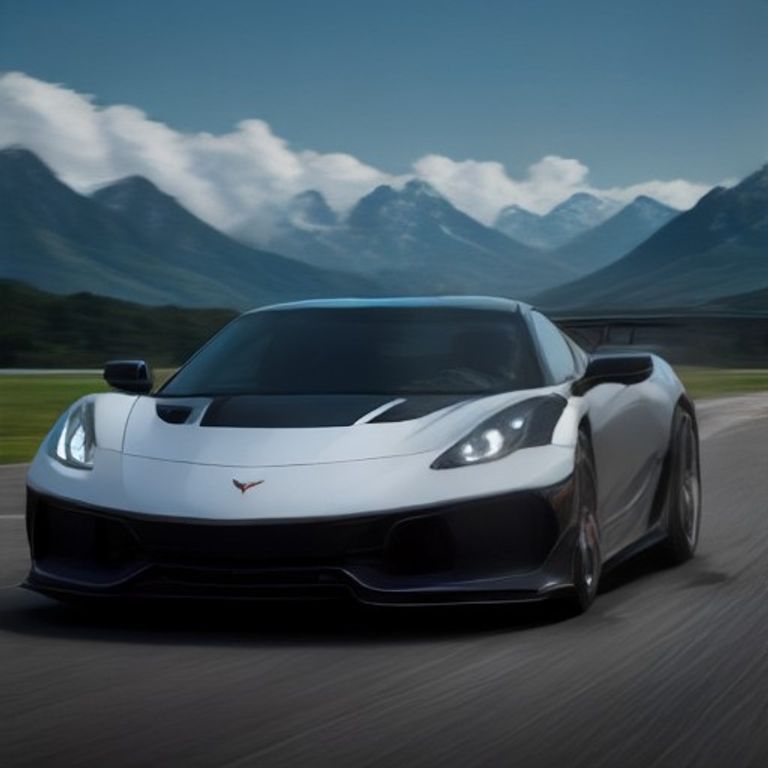
On the other side of the performance spectrum, and serving as a crucial reference point in these high-speed evaluations, stands the formidable Chevrolet Corvette. While the specific ‘ZR1X’ variant mentioned may represent a hypothetical extreme or a future, ultimate iteration of Chevrolet’s legendary performance line, it embodies the spirit and capability of the Corvette’s most potent offerings. Models like the C7 ZR1 and the anticipated next-generation Z06 or ZR1 have long set global standards for track performance, blistering acceleration, and driver engagement, representing the pinnacle of American internal combustion engineering.
Corvettes have traditionally achieved their incredible speeds through a combination of high-revving, supercharged or naturally aspirated V8 engines, meticulously engineered lightweight chassis, and advanced aerodynamic packages designed to generate downforce while minimizing drag. The visceral experience of an ICE Corvette, with its intoxicating engine note and aggressive power delivery through a multi-speed transmission, offers a different, yet equally thrilling, pathway to extreme speed. The comparison against such an established titan underscores the significant strides made by electric vehicles in performance.
EV vs. ICE: A New Chapter in the Speed Wars
The juxtaposition of a high-performance EV like the Lucid Air against a top-tier ICE machine like a hypothetical Corvette ZR1X highlights a fascinating divergence in automotive engineering philosophies. Electric vehicles leverage massive, instantly available torque to achieve blistering 0-60 mph and 0-100 mph times, often surpassing their ICE counterparts. This initial burst is further amplified by advanced traction control systems that can precisely manage power delivery to each wheel.
- Instant Torque: EVs deliver maximum torque from 0 RPM, providing unparalleled launch capabilities.
- Seamless Power Delivery: Without traditional gear changes, EVs offer continuous acceleration without interruption.
- Aerodynamic Efficiency: Often designed with smooth underbodies and fewer cooling requirements, EVs can achieve superior aerodynamic profiles.
- Weight Distribution: Heavy battery packs located low in the chassis can contribute to a lower center of gravity and improved stability at speed, though overall weight can be higher.
Internal combustion engines, while requiring more time to build revs and reach peak power, often possess a more sustained high-end power curve, allowing them to maintain ultra-high speeds effectively. The challenge for ICE vehicles at extreme speeds often revolves around managing heat, complex gear ratios, and overcoming the mechanical inefficiencies inherent in transmitting power through a multi-component drivetrain.
The 200 MPH Club: Engineering Excellence Defined
To join the elite 200 mph club, a vehicle needs more than just a powerful engine. It demands a holistic engineering approach where every component is optimized for extreme conditions. This includes:
- Aerodynamics: Minimizing drag while ensuring sufficient downforce for stability at triple-digit speeds is paramount.
- Tires: Specialized high-speed-rated tires are essential to withstand the immense centrifugal forces and maintain grip.
- Braking Systems: Carbon-ceramic or other high-performance braking systems are critical for safely shedding speed from such extreme velocities.
- Chassis Rigidity: A stiff chassis is vital for precise handling and stability, preventing flex that could compromise control.
- Thermal Management: Keeping engines, motors, and batteries within optimal operating temperatures during sustained high-performance driving is a significant challenge.
The evaluations with the trio of 700-plus-horsepower machines underscore these principles. While all three possessed the raw power, the Lucid EV supersedan demonstrated a distinct advantage in its ability to rapidly achieve the 200 mph milestone. This isn’t just a testament to its horsepower, but to the inherent characteristics of its advanced electric powertrain, which can deploy its immense power with unprecedented efficiency and immediacy.
The Future of High-Performance
The results of these tests paint a clear picture of an evolving landscape in the high-performance automotive world. While the visceral thrill and mechanical symphony of a powerful ICE machine will always hold a cherished place, the arrival of ultra-high-performance EVs like the Lucid Air marks a pivotal moment. Their ability to deliver breathtaking acceleration, effortlessly reaching speeds once reserved for a select few hypercars, suggests that the future of automotive performance will be increasingly defined by electric innovation.
The challenge now for traditional manufacturers, and indeed for the entire automotive industry, is to continue innovating and adapting to these new benchmarks. The race to 200 mph is no longer solely about outright top speed, but increasingly about how quickly and efficiently that speed can be attained. In this new paradigm, the Lucid EV supersedan has emphatically staked its claim as a leader, setting a new, formidable standard for the pinnacle of rapid acceleration.
Source : https://www.caranddriver.com/news/a73477231/0-200-0-speed-test-corvette-zr1x/