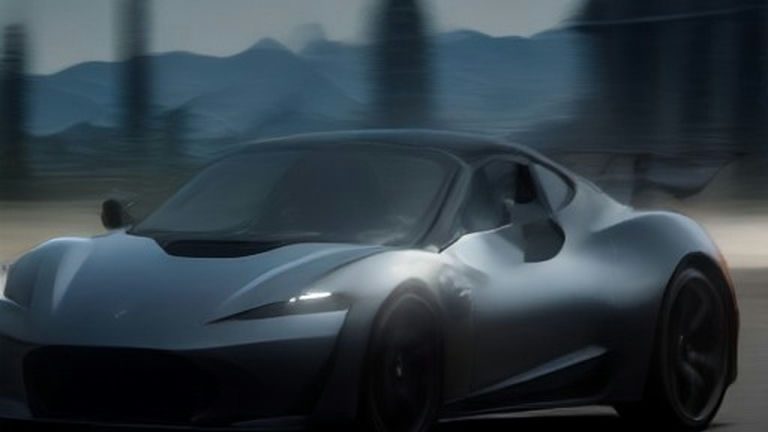
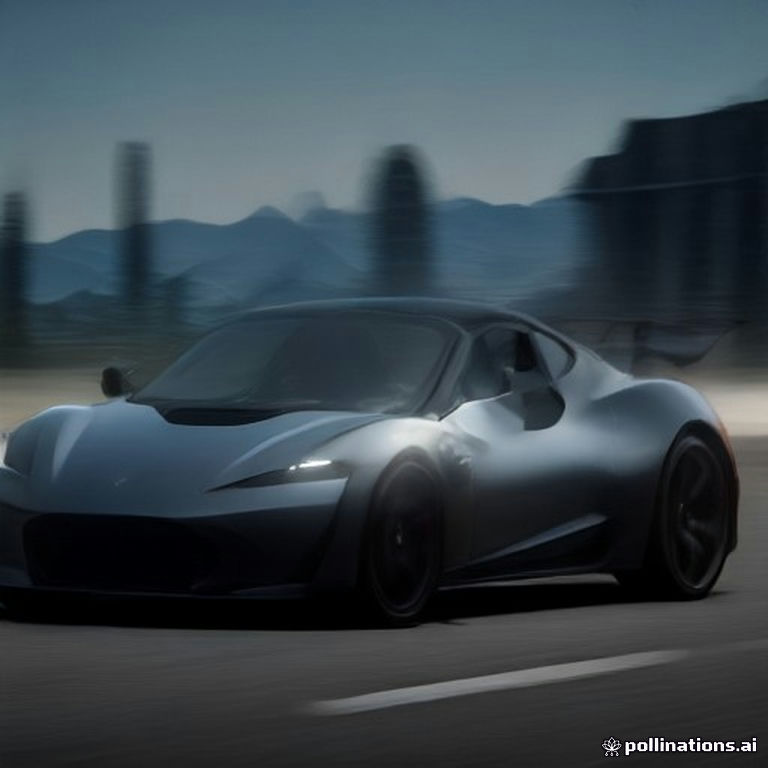
Introduction: Redefining Performance Expectations
The automotive world was significantly stirred in November 2017 when Tesla unveiled the second-generation Roadster, an ambitious electric sports car promising unprecedented levels of performance. Billed as the quickest production car ever made, its initial specifications captured global attention. Beyond standard metrics, Tesla CEO Elon Musk later introduced an even more audacious concept: an optional « SpaceX package » integrating propulsion technology. This bold move underscores Tesla’s commitment to pushing technological boundaries, not just within electric vehicle powertrains but also in vehicle dynamics and control. The proposed « SpaceX technology » positions the new Roadster as a rolling demonstration of advanced engineering principles applied to redefine the limits of ground transportation.
The Core Performance Promise
Even without the optional additions, the standard Tesla Roadster boasts a set of performance claims that place it in exclusive hypercar territory. From its reveal, Tesla stated targets including a breathtaking 0-60 mph acceleration in 1.9 seconds, positioning it as one of the quickest accelerating vehicles ever conceived. The car is also projected to reach 100 mph in just 4.2 seconds and complete a quarter-mile sprint in 8.8 seconds, figures that would set new benchmarks for production cars. Furthermore, its top speed is claimed to exceed 250 mph (400 km/h), while its substantial 200 kWh battery pack is expected to provide an impressive range of 620 miles (1,000 km) on a single charge. These figures are attributed to its sophisticated all-wheel-drive system, powered by three high-performance electric motors—one at the front and two at the rear—working in concert to deliver immense power and precise torque vectoring. While these remain target specifications for a vehicle still in development, they illustrate Tesla’s intent to dominate the performance segment.
- 0-60 mph: 1.9 seconds
- 0-100 mph: 4.2 seconds
- Quarter-mile: 8.8 seconds
- Top Speed: Over 250 mph (400 km/h)
- Range: 620 miles (1,000 km)
- Battery Capacity: 200 kWh
- Powertrain: Three electric motors (one front, two rear), All-Wheel Drive
Unpacking the « SpaceX Package »: Cold Gas Thrusters
The most intriguing and often misunderstood aspect of the new Roadster is its proposed « SpaceX package. » Elon Musk publicly discussed this optional upgrade, stating it would replace the vehicle’s rear seats with a composite overwrapped pressure vessel (COPV) filled with ultra-high-pressure compressed air. This reservoir would then feed a series of small, cold gas thrusters strategically placed around the car’s periphery. Unlike rocket engines that burn fuel, cold gas thrusters expel pressurized inert gas through a nozzle, generating thrust without combustion or significant heat. This technology is commonly used in spacecraft for attitude control. The idea is to provide short bursts of directed thrust to augment the car’s traditional mechanical systems. Using compressed air, rather than propellants requiring combustion, means these thrusters are intended to be relatively clean and potentially safer for ground vehicle application, although engineering challenges remain substantial.
The Ambition Behind the Engineering
Musk’s vision for the SpaceX package is conceived as a means to dramatically enhance the Roadster’s performance across multiple axes. The primary stated benefits include:
- **Improved Acceleration:** Additional forward thrust could offer quicker launch off the line, potentially shaving milliseconds off its already record-breaking 0-60 mph time.
- **Enhanced Braking:** Reverse thrust could assist the traditional braking system, enabling shorter stopping distances, especially at high speeds.
- **Sharper Cornering:** Lateral thrusters could provide micro-bursts of force to push the car into a turn or counteract centrifugal forces, improving grip and cornering speeds beyond what tires alone can achieve.
- ** »Short Hops »:** This widely discussed phrase, used by Musk, has often been interpreted as literal flight. However, within the context of automotive physics, it is more accurately understood as an extreme form of performance augmentation. By modulating down-facing thrusters, the car could potentially reduce its effective weight or increase grip momentarily, allowing for unprecedented control and dynamic capabilities, akin to very brief, controlled lifts or shifts for maximum agility, rather than sustained aerial movement. This concept aims to apply principles typically reserved for aerospace to ground transportation.
The integration of this technology represents a significant engineering undertaking, requiring advanced control systems to precisely manage thruster firings in conjunction with the car’s electric powertrain, brakes, and suspension. It showcases a « behind-the-scenes magic » reliant on cutting-edge physics and software integration.
Looking Ahead: The Future of High-Performance EVs
While the Tesla Roadster with its optional SpaceX package remains a future product with many details still to be finalized for production, its announcement has already sparked considerable debate and excitement. It challenges conventional thinking about vehicle design, safety, and performance, prompting questions about regulatory approval for such radical systems. The Roadster’s journey from concept to production will undoubtedly involve overcoming significant engineering hurdles, safety considerations, and compliance challenges. Nevertheless, it stands as a powerful statement of intent from Tesla, illustrating a vision where electric vehicles not only match but fundamentally surpass the performance envelope of their internal combustion engine predecessors. It serves as a compelling preview of what might be possible when innovation is unconstrained by conventional automotive wisdom.
Source : https://www.caranddriver.com/news/a74165059/tesla-roadster-thrusters-fan-system-explained/