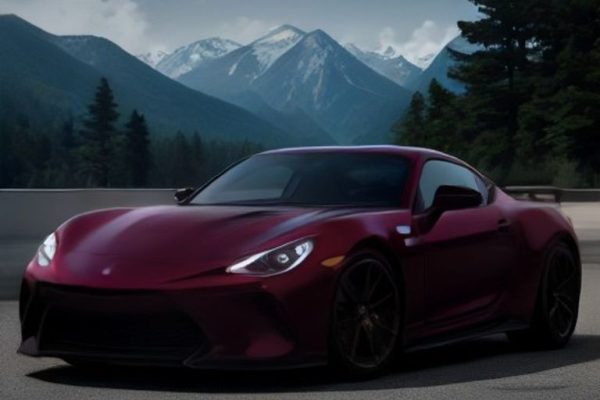

In the illustrious history of BMW tuning, certain creations stand out not just for their performance, but for their sheer audacity and engineering prowess. Among these legends, the 2001 Hartge H50 holds a prominent place. This wasn’t merely a performance upgrade; it was a wholesale transformation, an audacious endeavor by the German tuning house Hartge to fuse the brute force of an E39 M5’s V8 engine with the nimble, compact chassis of an E46 3-Series. It begged the question: how do you fit eight cylinders into a car designed for six? The answer, as demonstrated by Herbert Hartge and his team, was through meticulous design and masterful execution, crafting what many consider an M3-bodied M5-engined monster.
The Legacy of Hartge: A Name Synonymous with BMW Performance
To understand the significance of the H50, one must first appreciate the legacy of Hartge. Founded by Herbert Hartge in 1971, the company quickly established itself as a premier BMW tuner, operating from Merzig, Germany. Unlike some tuners who focused solely on aggressive aesthetics or raw horsepower, Hartge always prided itself on a more holistic approach, offering enhanced performance, improved handling, and refined aesthetics that complemented BMW’s original design philosophy. Hartge cars were often characterized by their understated elegance combined with substantial mechanical upgrades, making them discerning choices for enthusiasts who sought performance beyond factory offerings without sacrificing everyday usability. Their reputation for quality and engineering excellence was well-earned, building a foundation of trust that allowed them to tackle projects as ambitious as the H50.
The E46 3-Series: An Ideal Canvas for Extremes
Introduced in 1998, the E46 generation of the BMW 3-Series quickly became a benchmark for compact executive cars. Praised for its superb chassis dynamics, balanced handling, and driver-focused ergonomics, it was available with a range of capable inline-four and inline-six engines, culminating in the high-revving S54 I6 found in the E46 M3. The E46 platform was inherently rigid and well-engineered, making it an attractive base for tuners aiming to push performance boundaries. Its relatively compact dimensions and precise steering offered an agile driving experience that a heavier, larger car simply couldn’t replicate. The idea of injecting a significantly more powerful and larger engine into this already brilliant package was tantalizing, promising a power-to-weight ratio that could redefine the E46’s performance envelope, albeit requiring immense engineering effort to maintain its dynamic integrity.
The Heart of the Monster: BMW’s S62 V8
At the core of the Hartge H50’s identity was the legendary S62B50 engine, plucked directly from the E39 generation BMW M5. This naturally aspirated V8 powerhouse was a marvel of its time, revered for its blend of smooth power delivery and an exhilarating top-end rush. Key specifications of the S62 V8 included:
- Displacement: 4.9 liters (4,941 cc)
- Cylinder Configuration: V8
- Power Output: 400 horsepower (294 kW) at 6,600 rpm
- Torque Output: 369 lb-ft (500 Nm) at 3,800 rpm
- Key Technologies: Double VANOS (variable valve timing on both intake and exhaust camshafts), individual throttle bodies for each cylinder, a semi-dry sump lubrication system.
The S62’s sophisticated design, responsiveness, and robust power output made it a formidable engine in the larger E39 M5. Transplanting it into the significantly lighter and more compact E46 chassis promised an explosive increase in performance, creating a car with the acceleration capabilities of a supercar in a far more unassuming package. The challenge, of course, was making it fit and function seamlessly.
The Engineering Odyssey: Fitting Eight Into Three
The concept of placing an M5 V8 into an E46 3-Series, though thrilling, presented a formidable engineering challenge. Hartge’s masterminds had to overcome numerous hurdles to ensure the H50 was not just fast, but also reliable, safe, and true to the BMW driving experience. The primary areas of intensive development included:
- Engine Bay Fitment: The physical dimensions of the S62 V8 were considerably larger than the inline-six engines typically found in the E46. This necessitated custom engine mounts, potential modifications to the firewall, and careful routing of ancillaries to ensure adequate clearance and proper weight distribution.
- Drivetrain Integration: The S62 V8 typically mated to a Getrag 6-speed manual transmission in the E39 M5. Integrating this transmission, along with a heavy-duty differential, custom driveshafts, and robust half-shafts, was critical to handle the increased power and torque without failure.
- Cooling System: The S62 generates significantly more heat than the E46’s standard engines. An entirely custom and highly efficient cooling system, including larger radiators, oil coolers, and optimized airflow, was essential to prevent overheating under strenuous conditions.
- Exhaust System: Custom headers and a bespoke exhaust system were required to accommodate the V8’s architecture within the E46’s undercarriage, while also optimizing exhaust gas flow for performance and compliance with noise regulations.
- Electronics and Wiring: Perhaps one of the most complex aspects was integrating the S62’s sophisticated engine management system (ECU) with the E46’s chassis electronics, including the instrument cluster, ABS, traction control, and other vital functions. This often involved extensive custom wiring harnesses and programming to ensure all systems communicated effectively.
- Suspension and Brakes: To handle the increased weight of the V8 (predominantly over the front axle) and the massive surge in power, the H50 required a completely revised suspension setup, often incorporating components from the E46 M3 or bespoke Hartge-designed units. Similarly, a substantial upgrade to the braking system, likely using M5 or M3-derived components, was mandatory for adequate stopping power.
- Body Reinforcement: While the E46 chassis was robust, the increased power and stress might have necessitated selective reinforcement to ensure structural integrity and dynamic stability.
Performance Redefined: The Hartge H50 on the Road
The result of Hartge’s monumental efforts was a car that offered truly staggering performance. With 400 horsepower propelling a chassis significantly lighter than the E39 M5, the H50’s power-to-weight ratio was exceptional. While official figures could vary depending on the specific donor car and tuning, the H50 was widely reported to achieve 0-60 mph times in the range of 4.3 to 4.5 seconds, placing it firmly in supercar territory for its era. Top speed was electronically limited in many iterations, but had the potential to exceed 180 mph. Beyond straight-line speed, Hartge’s focus on handling meant the car was not just fast, but also manageable, albeit with a different character than the perfectly balanced inline-six E46. The additional weight of the V8 at the front certainly influenced handling, but Hartge’s suspension tuning aimed to mitigate this, creating a powerful, engaging, and unique driving experience.
An M3-Bodied M5-Engined Enigma
The descriptor “M3-bodied” for the H50 implies that Hartge likely adorned the car with components from the E46 M3, such as wider fenders, more aggressive bumpers, and side skirts, to accommodate wider tires and to visually hint at the immense power lurking beneath the hood. This styling choice not only provided functional benefits for performance but also gave the H50 an aggressive yet factory-like appearance, a hallmark of Hartge’s subtle approach to tuning. These cars were incredibly rare and bespoke, catering to a niche clientele who desired the raw power of the M5 V8 in a more agile, compact, and exclusive package than what BMW offered off the showroom floor.
The Enduring Legacy of an Archive Gem
Looking back at the 2001 Hartge H50, it stands as a testament to the golden age of BMW tuning and the unbridled ambition of companies like Hartge. It wasn’t just a car; it was a statement – a demonstration of what was possible when engineering expertise met a passionate vision. The H50 bridged the gap between two of BMW’s most celebrated performance platforms, creating a vehicle that was more than the sum of its parts. For enthusiasts, it remains a legendary build, a benchmark for engine swaps, and a vivid reminder of a time when bespoke, high-performance creations pushed the boundaries of automotive engineering, solidifying Herbert Hartge’s place as a true mastermind in the realm of high-performance BMWs.
Source : https://www.caranddriver.com/reviews/a73285378/2001-hartge-h50-v-8-e46-3-series-archive-test/