
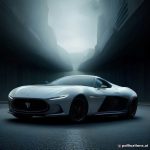


Redefining Rear Vision: The 2026 Polestar 4’s Bold Design
The automotive landscape is constantly evolving, with manufacturers pushing boundaries in design, technology, and performance. Among the most anticipated vehicles making a statement is the 2026 Polestar 4, specifically the Long Range Dual Motor variant currently undergoing rigorous testing. This vehicle is not merely an iteration but a significant leap forward, challenging established norms and rethinking fundamental aspects of car design. A central, indeed defining, characteristic that immediately captures attention is the complete absence of a traditional rear window, a design choice that encapsulates the Polestar 4’s commitment to innovation and its truly forward-looking ethos.
The title of this report, "Camera Obscura," serves as more than just a catchy phrase; it’s a direct reference to the sophisticated solution Polestar has engineered to address the missing rear glass. Historically, a camera obscura projected an image through a small aperture onto a surface. In the context of the Polestar 4, this concept is brought into the 21st century through advanced digital imaging technology. Instead of relying on direct optical vision through glass, drivers will experience the rearward view courtesy of a high-definition, roof-mounted rear camera. This camera feeds a live, unobstructed digital stream directly to a screen inside the cabin, effectively replacing the conventional rearview mirror with a modern, digital interface.
The Digital Aperture: Unpacking the Camera-Based Rear View
The implementation of a camera-based rear view system is a profound departure from automotive tradition. This isn’t just a stylistic gimmick; it’s a deliberate engineering choice with multiple implications. The high-resolution camera offers several potential advantages over conventional glass: a wider field of view can be achieved, potentially eliminating blind spots inherent to traditional mirrors; performance in low-light conditions or adverse weather (like heavy rain or fog) could potentially be enhanced through digital processing; and the system may offer dynamic overlays or augmented reality features in the future, providing drivers with more contextual information.
However, such a radical shift also invites questions regarding driver adaptation and experience. The transition from an optical, three-dimensional view to a two-dimensional digital display requires a period of adjustment. Polestar’s commitment to a seamless user experience will be paramount here, ensuring the screen offers sufficient brightness, contrast, and refresh rate to be intuitive and comfortable for extended periods of driving. Furthermore, the system must be robust, reliable, and immune to the common digital pitfalls, ensuring the driver always has a clear and accurate representation of the environment behind the vehicle.
Design Freedom and Aerodynamic Prowess
Removing the rear glass grants designers an unprecedented degree of freedom, allowing for a sleeker, more coupé-like silhouette that would otherwise be constrained by the necessity of a conventional rear aperture. The Polestar 4’s unique roofline, uninterrupted by a rear window, likely contributes to significantly improved aerodynamic efficiency. This design choice potentially allows for smoother airflow over the vehicle’s body, reducing drag and thereby enhancing the range of its Long Range Dual Motor electric powertrain. In an era where every kilometer of range counts, such aerodynamic optimizations are critical for electric vehicles.
- Enhanced Aerodynamics: The continuous roofline contributes to reduced drag, improving efficiency and range.
- Structural Rigidity: The solid rear structure potentially offers enhanced torsional rigidity and crash protection.
- Unique Aesthetic: A distinctive and immediately recognizable design signature that sets the Polestar 4 apart.
- Interior Space Optimization: Allows for greater rear passenger headroom, unconstrained by the angle required for a rear window.
Interior Experience: A New Sense of Enclosure and Space
The absence of a rear window profoundly impacts the interior environment, particularly for rear passengers. While some might initially perceive a loss of outward visibility, the design offers significant benefits. Rear passengers can enjoy vastly increased headroom, as the roofline no longer needs to accommodate a sloped window. This creates a more spacious and airy feel, despite the potential for a more enclosed sensation. The solid rear bulkhead also enhances privacy for rear occupants, creating a secluded, executive-lounge-like atmosphere. Furthermore, the interior design can now be rethought, perhaps incorporating ambient lighting or integrated screens into the rear bulkhead, transforming what was once a viewing portal into a canvas for technological and aesthetic expression.
This bold choice is also indicative of the Polestar 4 being a truly forward-looking vehicle. Beyond merely replacing a physical window with a digital feed, it represents a commitment to exploring new automotive architectures and user experiences. The Long Range Dual Motor powertrain itself signifies Polestar’s dedication to sustainable, high-performance electric mobility. The brand consistently positions itself at the forefront of innovation, blending Scandinavian minimalism with cutting-edge technology. The Polestar 4, with its striking rear design, is a testament to this philosophy, daring to redefine expectations for what a modern, premium electric vehicle can be.
Pushing Boundaries for the Future of Mobility
The ongoing testing of the 2026 Polestar 4 Long Range Dual Motor is more than a routine evaluation; it’s a validation of a daring vision. By embracing the "Camera Obscura" principle for rearward vision, Polestar is not just removing a piece of glass; it is fundamentally altering the interaction between driver, vehicle, and environment. This design choice encapsulates a holistic approach to vehicle development, where aerodynamics, interior comfort, safety, and digital integration converge. As the automotive world progresses towards an increasingly electrified and digitized future, vehicles like the Polestar 4 are setting precedents, challenging conventions, and ultimately shaping the driving experience of tomorrow.
Source : https://www.caranddriver.com/reviews/a70733871/2026-polestar-4-long-range-dual-motor-test/

