



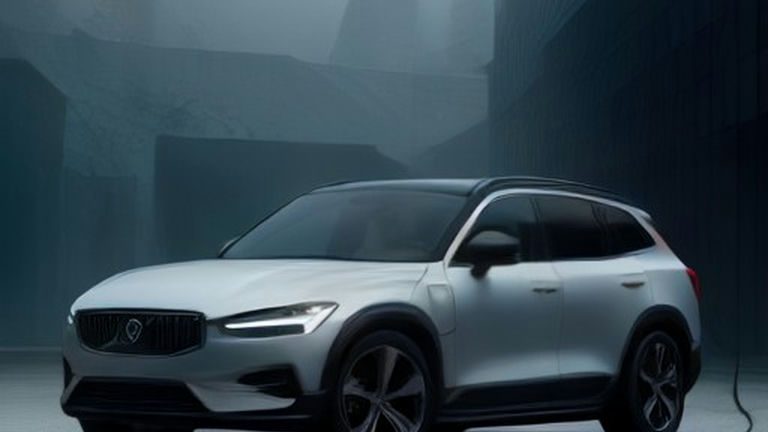
Prospective buyers and enthusiasts eagerly anticipating the arrival of the new Volvo EX60 in the United States may need to temper their expectations significantly. Recent information indicates that while a handful of 2027 model year EX60s did reach American shores shortly after order books opened earlier this year, the vast majority of initial orders face substantial delays. The consequence is that the EX60 is projected to be a relative rarity on U.S. roads for an extended period, with widespread availability not expected until at least late 2027. This significant setback is attributed to unspecified production issues, casting a shadow over what was otherwise a highly anticipated launch for Volvo’s latest electric SUV.
A Glimmer of Hope: Initial U.S. Arrivals
Earlier this year, the automotive market saw the exciting commencement of order books for the 2027 Volvo EX60. This opening generated considerable buzz, as consumers were keen to secure their spot for the next generation of Volvo’s electric offerings. Following this initial period, a select number of 2027 EX60 vehicles indeed made their way to the U.S. These early arrivals represented a crucial first step in the launch process, allowing some of the earliest reservation holders to take delivery and providing a tangible presence of the new model in the market. This limited initial rollout, though small in scale, suggested that the launch was proceeding as planned, at least for a fortunate few who were among the first to receive their vehicles.
The successful delivery of these initial units, however, appears to have been an isolated event rather than the start of a robust supply chain. For those who observed these first EX60s arriving or perhaps even took delivery themselves, there was an understandable sense of excitement and a belief that broader availability would soon follow. This initial trickle of vehicles set an expectation that has now been significantly revised. The early availability, while real for a small cohort, now serves to highlight the stark contrast with the current outlook, where widespread distribution for the model year has encountered unforeseen hurdles.
The Unspecified Production Bottleneck
The primary reason cited for the impending scarcity and prolonged delays is a series of production issues. While the precise nature of these manufacturing challenges has not been publicly detailed, their impact is evidently substantial enough to significantly disrupt the planned delivery schedule for the U.S. market. Production issues can encompass a wide range of complexities, from component shortages and supply chain disruptions to manufacturing plant retooling challenges or unexpected quality control measures. Regardless of the specific root cause, the consequence is a slowdown in the assembly and dispatch of vehicles, directly impacting the volume available for export and sale.
Such setbacks in the production pipeline can have far-reaching effects, extending beyond just the immediate delay. They can strain logistical networks, require adjustments to factory operations, and necessitate revisions to delivery timelines across multiple regions. For a new model like the EX60, which is likely leveraging advanced technologies and potentially new manufacturing processes, any unforeseen issues in the production phase can compound quickly. The current situation suggests that these challenges are not minor adjustments but rather significant impediments requiring an extended period to resolve, thus pushing back the arrival of the majority of vehicles.
An Extended Wait: Most Deliveries Pushed to 2028
For the majority of U.S. customers who placed orders for the 2027 Volvo EX60, the expectation is that their vehicles may arrive approximately a year late. This means that deliveries originally anticipated for sometime in 2027 will now likely be pushed back into 2028. This substantial delay alters the purchasing timeline for countless individuals and families who had planned their vehicle acquisition around the initial projections. The phrase « a year late » underscores the significant recalibration of schedules that both Volvo and its prospective customers must now contend with, transforming a relatively near-term acquisition into a more distant prospect.
This revised timeline directly contributes to the projected rarity of the EX60 until at least late 2027. With most of the 2027 model year production now earmarked for much later delivery, the volume of new EX60s entering the U.S. market during the remainder of 2027 will be extremely limited. It effectively means that for the better part of the upcoming year, the opportunity to purchase and take delivery of a new EX60 will be severely restricted, primarily to any remaining units from the initial small batch or sporadic, limited allocations. The bulk of orders will not begin to be fulfilled until production issues are resolved and manufacturing capacity returns to expected levels, likely translating into 2028 deliveries for many.
Implications for U.S. Consumers and Dealerships
The news of these extensive delays will undoubtedly have a significant impact on U.S. consumers who have either placed early orders or were planning to do so. Those who committed to an EX60 purchase based on earlier timelines may now face the difficult decision of maintaining their reservation and enduring a much longer wait, or exploring alternative options. Long waiting lists, coupled with the uncertainty surrounding firm delivery dates, can test the patience and loyalty of even the most dedicated brand enthusiasts. Furthermore, customers who ultimately receive a 2027 model year vehicle in 2028 might face questions regarding its depreciation timeline or potential minor updates in subsequent model years.
Volvo dealerships across the U.S. will also navigate a challenging period. They will be tasked with managing customer expectations, communicating uncertain timelines, and allocating an extremely limited supply of vehicles. This situation can be particularly difficult for dealerships relying on the excitement and volume of a new model launch to drive showroom traffic and sales. Transparent communication and proactive customer service will be paramount to mitigating potential frustration and retaining customer interest despite the unforeseen production hurdles.
Broader Market Context and Brand Considerations
Launching a new vehicle, especially an electric one, is a complex endeavor, and delays, while not uncommon in the automotive industry, can pose specific challenges. For a brand like Volvo, which is rapidly expanding its electric vehicle lineup, maintaining momentum and consistent delivery is crucial for market perception and competitive positioning. The prolonged rarity of the EX60 in a key market like the U.S. could mean that the initial window of opportunity for capturing early adopters might be partially missed, or that market buzz could diminish somewhat before widespread availability.
Ultimately, while the initial arrival of a few 2027 Volvo EX60s offered a promising start, the broader picture for U.S. availability has shifted considerably. The production issues, though unspecified, are significant enough to push most deliveries back by a full year, ensuring that the EX60 remains a rare sight on American roads until at least late 2027. Prospective buyers are now faced with an extended waiting period, and both Volvo and its dealership network will need to manage expectations and logistics carefully as they work to overcome these manufacturing challenges and eventually bring the EX60 to a wider audience.
Source : https://www.caranddriver.com/news/a74134828/2027-volvo-ex60-production-issues-report/