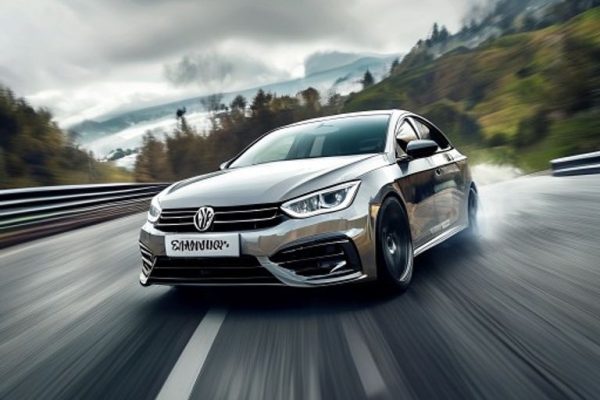



Volkswagen has revealed the first electric vehicle (EV) set to wear the hallowed GTI badge. This announcement signals a new era for one of the automotive world’s most iconic performance monikers. The new model, designated the ID. Polo GTI, represents a pivotal step in Volkswagen’s electrification strategy, fusing its celebrated performance heritage with the immediate, silent torque of an electric powertrain. Enthusiasts worldwide are keenly observing this evolution of the ‘hot hatch’ into the electric age.
The ID. Polo GTI promises an engaging driving experience, delivering 223 horsepower to its front wheels. This substantial power, combined with electric propulsion’s inherent advantages, suggests lively and responsive performance. Volkswagen confirms the ID. Polo GTI will feature sportier styling elements, aligning its visual identity with the aggressive aesthetic traditionally associated with the GTI family. However, this exciting revelation includes a crucial detail for North American enthusiasts: the ID. Polo GTI will not be available in America.
The Iconic GTI Legacy Evolves Electrically
The introduction of an electric GTI is a landmark event. Since its 1976 debut, the Golf GTI symbolized accessible, spirited performance, pioneering the ‘hot hatch’ concept. The GTI formula consistently blended a lightweight chassis, a potent engine, precise handling, and distinctive sporty aesthetics. This balance of daily usability and driving exhilaration cultivated a loyal following. By bestowing the revered GTI badge upon an EV, Volkswagen signals its commitment to preserving this spirit for an electric future, adapting a legendary identity for modern demands.
Performance: 223 HP and Front-Wheel Drive
The ID. Polo GTI’s specifications highlight Volkswagen’s approach to electric performance. Its 223 horsepower output is significant for a compact hot hatch, especially considering the instantaneous torque delivery of electric motors. Unlike internal combustion engines, which require building revolutions for peak power, an electric motor delivers its full rotational force almost immediately. This translates into brisk off-the-line acceleration and highly responsive power delivery across the speed range.
Maintaining a core tenet of its heritage, the ID. Polo GTI retains a front-wheel-drive (FWD) configuration. This choice is fundamental, as FWD has been a defining characteristic of the GTI’s handling philosophy. It contributes to a characteristically engaging driving style, praised for its nimbleness and responsiveness. Volkswagen’s engineers will calibrate the chassis and suspension to efficiently harness the electric powertrain’s power through the front wheels. The objective is to deliver the precise turn-in and balanced handling that GTI drivers expect, while managing instant electric torque to uphold the FWD performance tradition.
Sportier Styling Cues for an Electric Era
Beyond its electric powertrain, the ID. Polo GTI will distinguish itself with sportier styling. While specific visual details await full unveiling, the established GTI design language provides strong indicators. Typically, GTI models feature an aggressive front fascia (or EV-adapted aesthetic equivalents), uniquely designed alloy wheels, sculpted side skirts, and a rear spoiler. Signature red accents—like a strip across the grille or prominent brake calipers—are often incorporated as visual hallmarks of its performance pedigree. Interior enhancements usually include ergonomically designed sport seats (often with iconic tartan fabric), a bespoke sport steering wheel, and exclusive trim details. These styling elements are crucial for communicating the vehicle’s performance intent and reinforcing its connection to the storied GTI lineage.
The American Market: Strategic Exclusivity
The decision to not offer the ID. Polo GTI in the American market aligns with a common trend for many smaller, performance-oriented European hatchbacks. While Volkswagen has not explicitly detailed its rationale, several factors typically influence such regional exclusions. The U.S. automotive market heavily favors larger vehicles, with SUVs and pickup trucks consistently dominating sales. Compact hatchbacks, particularly those based on platforms not widely distributed in the U.S. (like the Polo), often face significant challenges against established consumer preferences and high homologation costs. Volkswagen’s current U.S. EV strategy appears concentrated on larger ID. models, such as the ID.4 SUV and the ID. Buzz, perceived to have broader appeal. Introducing a niche performance hatchback might dilute marketing focus and strain logistical resources without guaranteed substantial return.
Volkswagen’s Bold Electric Future
The unveiling of the ID. Polo GTI is more than a new model launch; it’s a declaration of Volkswagen’s unwavering commitment to electrifying its core product lines, including its cherished performance divisions. By applying the revered GTI badge to an EV, Volkswagen demonstrates that it is not merely adapting to a rapidly transforming industry; it is actively charting the course for the future of electric performance. This pioneering electric GTI suggests that automotive enthusiasts can anticipate a new generation of performance vehicles that skillfully balance environmental responsibility with exhilarating driving dynamics. It sets a significant precedent for how other performance sub-brands within the Volkswagen Group might transition to electric propulsion.
Source : https://www.caranddriver.com/news/a71318122/volkswagen-id-polo-gti-revealed/