

The Evolving Crossover Market and Honda’s Potential Strategy
The automotive landscape has undergone a significant transformation over the past two decades, with consumer preferences steadily shifting away from traditional sedans and wagons towards sport utility vehicles (SUVs) and crossovers. This evolution has led manufacturers to constantly re-evaluate their product portfolios, seeking to capitalize on burgeoning segments and adapt to changing tastes. In this dynamic environment, a new speculation has emerged concerning Honda’s potential strategic move: targeting the robust market segment currently dominated by the Subaru Outback with a reimagined, lifted version of its venerable Accord.
This speculative strategy suggests Honda might be observing subtle shifts within the crossover segment, particularly concerning vehicles that blend car-like driving dynamics with SUV aesthetics and practicality. The premise hinges on the idea that as certain popular models evolve, they may create new opportunities for competitors to fill perceived gaps or offer alternative interpretations of a successful formula.
Subaru Outback’s Journey: From Wagon to Mainstream Crossover
The Subaru Outback has long been a standout success story, carving out a unique niche that many have attempted to emulate. Historically perceived as a rugged, lifted wagon offering all-wheel-drive capability and adventurous appeal, the Outback has cultivated a fiercely loyal customer base. Its blend of sedan-like comfort, ample cargo space, and off-pavement prowess has made it a go-to choice for families and outdoor enthusiasts alike.
Over successive generations, the Outback has progressively evolved. While retaining its core attributes, its design language and overall market positioning have arguably edged closer to that of a more traditional SUV. With increased ground clearance, more pronounced body cladding, and an imposing stance, recent iterations of the Outback have leaned into the SUV aesthetic more definitively than their predecessors. This evolution, while contributing to its continued commercial success, could, hypothetically, open a window of opportunity for a competitor offering a different take on the raised-wagon-meets-SUV concept.
- Key characteristics of the Outback’s appeal often cited include:
- Standard Symmetrical All-Wheel Drive.
- Generous ground clearance for light off-road adventures.
- Spacious and practical interior with ample cargo volume.
- Robust reputation for reliability and longevity.
- A distinctive rugged yet refined aesthetic.
A Look Back: Lessons from the Honda Accord Crosstour
Honda is no stranger to exploring hybrid body styles that bridge the gap between sedans, wagons, and SUVs. The most notable previous attempt in this vein was the Accord Crosstour, introduced in 2010. The Crosstour aimed to blend the sedan’s ride comfort with the practicality of a hatchback and the elevated driving position of a crossover. However, despite its intentions, the Crosstour struggled to find widespread market acceptance.
Several factors contributed to its limited success. Its styling, particularly the fastback rear design, proved divisive among consumers. Furthermore, its positioning in the market was somewhat ambiguous, leaving potential buyers uncertain of its precise role relative to Honda’s established SUV lineup, such as the CR-V and Pilot, or the Accord sedan itself. Production of the Crosstour ceased in 2015, serving as a reminder of the challenges inherent in introducing unconventional body styles to a cautious market.
The notion of a « reimagination » of the Accord Crosstour suggests that Honda, if it were to pursue such a strategy, would likely draw significant lessons from that previous venture. This would entail a more cohesive design, clearer market positioning, and potentially a stronger emphasis on SUV-like attributes that align with current consumer demand, rather than repeating past missteps.
Envisioning a Modern Lifted Accord SUV: A Strategic Reinterpretation
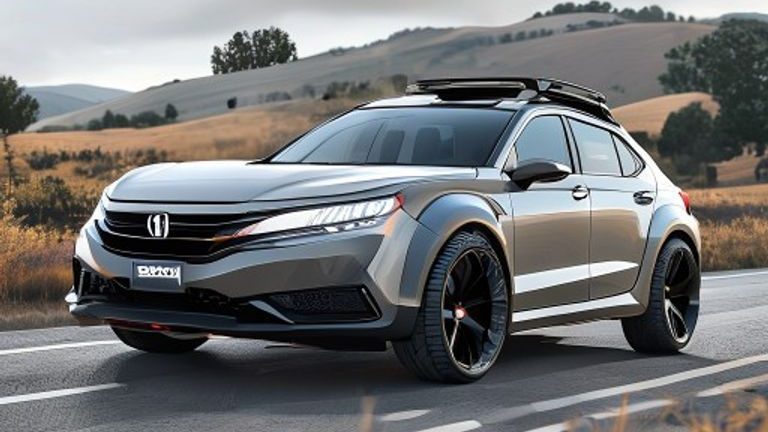
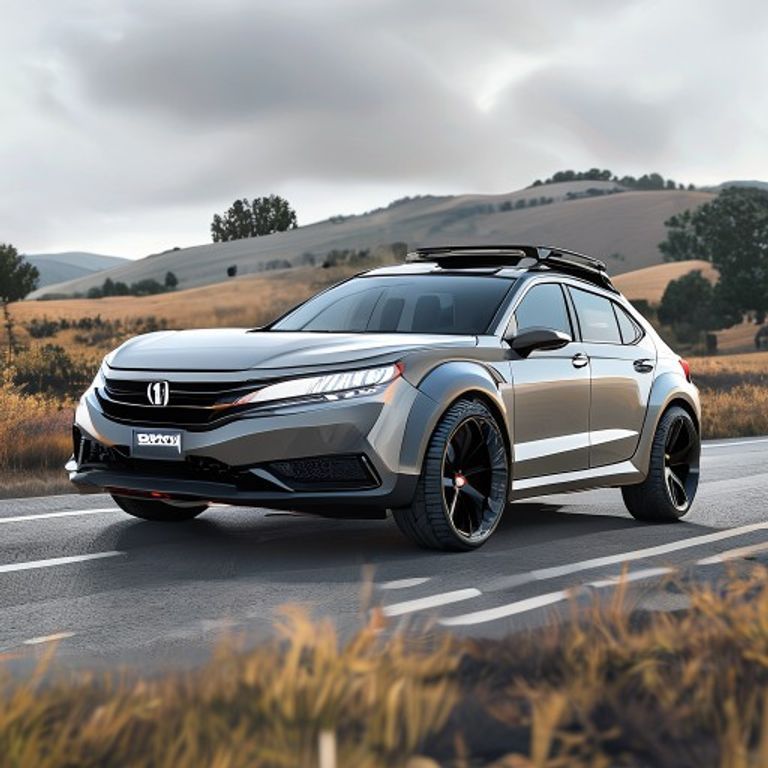
If Honda were to embark on developing a « lifted Accord SUV, » it would presumably leverage the highly regarded architecture of the current Honda Accord. The Accord is celebrated for its refined driving dynamics, spacious interior, fuel efficiency, and comprehensive suite of safety features. Building upon this foundation could allow Honda to offer a vehicle that retains the Accord’s on-road prowess while addressing the demand for increased ride height and rugged aesthetics.
Such a vehicle would likely feature increased ground clearance compared to the standard Accord, potentially accompanied by robust body cladding along the wheel arches and lower body panels to convey a more adventurous, SUV-like persona. All-wheel drive would be a crucial offering to compete directly with the Outback and appeal to buyers seeking enhanced traction and capability in varying conditions. The interior would likely prioritize practicality and versatility, perhaps incorporating design elements that emphasize utility and durability, while maintaining Honda’s reputation for ergonomic excellence and quality materials.
The « SUV » designation implies more than just a lifted stance; it suggests a deliberate design and marketing approach that positions the vehicle squarely within the crossover segment, rather than as merely a taller car. This would involve crafting an exterior design that resonates with contemporary SUV tastes, moving away from the more car-like perception that hampered the original Crosstour. The objective would be to offer a vehicle that feels robust and capable without necessarily committing to the larger footprint or potentially lower fuel economy of a full-fledged traditional SUV.
Market Opportunity and Competitive Landscape
The success of the Subaru Outback demonstrates a clear appetite among consumers for vehicles that blend the attributes of traditional passenger cars with the perceived benefits of SUVs. By potentially offering a « lifted Accord SUV, » Honda could aim to capture a share of this market, particularly from buyers who might appreciate the Accord’s established qualities but desire something with a more commanding presence and greater versatility than a sedan. It could appeal to those who find traditional SUVs too bulky or inefficient but seek more utility and a higher driving position than a conventional wagon or sedan.
The competitive landscape for such a vehicle would extend beyond the Outback to include other mid-size crossovers and even some premium soft-roaders. Honda’s strengths in reliability, fuel efficiency, and manufacturing quality could serve as compelling selling points. The brand’s reputation for practical engineering and user-friendly technology would also be significant assets in introducing a new concept.
Ultimately, the « hope » that buyers would flock to such a vehicle suggests Honda perceives a nuanced shift in consumer demand—a desire for a balanced vehicle that embodies the practicality and rugged appearance of an SUV, without fully abandoning the refined driving experience associated with a well-engineered passenger car. Whether this perceived opportunity is ripe for a « reimagined Accord Crosstour » in the form of a lifted Accord SUV remains a matter of strategic speculation, but it highlights the continuous innovation and adaptation required in today’s fiercely competitive automotive market.
Source : https://www.caranddriver.com/news/a73272367/honda-accord-lifted-suv-report/
