

The Genesis of a German Monster: Hartge’s Audacious H50
In the highly competitive world of German automotive tuning at the turn of the millennium, a select few names stood out for their audacity, engineering prowess, and uncompromising pursuit of performance. Among them, Hartge, under the visionary leadership of Herbert Hartge, consistently pushed the boundaries of what was thought possible with BMW platforms. While BMW M GmbH itself crafted some of the most desirable sports cars on the planet, tuners like Hartge dared to ask: what if we took their most potent engines and shoehorned them into smaller, lighter chassis?
The answer, in 2001, came in the form of the Hartge H50. This machine was not merely a performance upgrade; it was a wholesale transformation, a Frankensteinian creation of the highest order. The concept was simple yet breathtakingly complex in execution: transplant the mighty S62B50 V8 engine from the E39 M5 into the more compact, nimble body of an E46 3-Series. The result was a vehicle that offered an unparalleled blend of brute force and surprising agility, defining the ultimate sleeper for a discerning clientele.
Engineering Marvel: Fitting Eight into Three
The headline act of the H50 was undeniably its engine: the 4.9-liter naturally aspirated V8. In its factory E39 M5 application, this powerhouse delivered a robust 400 horsepower and 369 lb-ft of torque, earning accolades for its immediate response and intoxicating sound. However, the E46 3-Series, even in M3 guise, was designed around an inline-six engine. Integrating the wider and longer V8 into the E46’s engine bay was a monumental task, demanding meticulous planning and extensive custom fabrication.
Hartge’s engineers had to completely re-engineer the engine mounts, devise custom intake and exhaust manifolds that would fit within the cramped confines, and re-route numerous ancillary components such as power steering lines, air conditioning, and cooling system hoses. The cooling system itself required significant upgrades, including a larger radiator and bespoke ducting, to ensure the powerful V8 remained within optimal operating temperatures under hard driving. Wiring harnesses had to be custom-made or heavily modified to integrate the E39’s engine management system with the E46’s electrical architecture, a challenge that few tuners would even contemplate, let alone master.
Chassis and Drivetrain: Taming the Beast
With an engine producing double the horsepower of some standard E46 models, the H50’s chassis, suspension, and drivetrain required a complete overhaul to cope with the immense power and torque. Hartge opted for the robust 6-speed manual transmission directly from the E39 M5, which was deemed capable of handling the S62’s output. This necessitated a custom driveshaft to connect the gearbox to a modified, often reinforced, E46 rear differential or, in some cases, a complete M5 differential and subframe assembly, to ensure reliable power delivery to the rear wheels. The rear subframe itself, a known weak point in some high-performance E46s, was typically reinforced or replaced with a heavy-duty custom unit to prevent tearing under the strain of aggressive acceleration.
To keep the H50 planted and responsive, Hartge developed a bespoke sport suspension system. This typically involved custom coilover units, stiffer springs, performance dampers, and beefier anti-roll bars to minimize body roll and enhance cornering stability. The steering rack was often upgraded for a sharper feel, and the entire suspension geometry was recalibrated to accommodate the altered weight distribution and increased performance. The goal was not just straight-line speed but a balanced, capable handling package that could inspire confidence on both road and track.
Stopping Power and Aesthetic Refinements
Bringing a 400+ horsepower E46 to a halt required equally serious braking power. The Hartge H50 featured a comprehensively upgraded braking system, usually comprising massive multi-piston calipers (often from Brembo or AP Racing, branded by Hartge) clamping down on large-diameter, ventilated, and cross-drilled discs both front and rear. These components were vital for consistent, fade-free stopping performance, especially given the H50’s potential for high speeds.
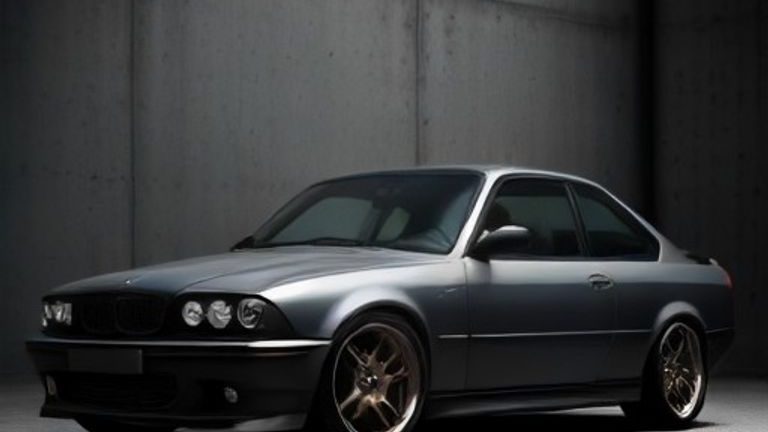
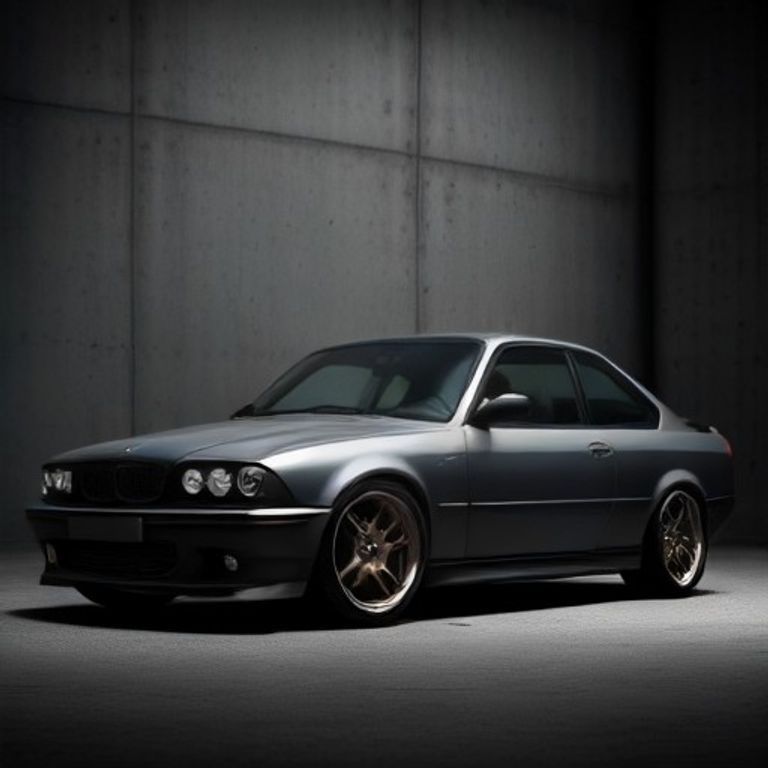
Visually, the H50 maintained a relatively understated, yet purposeful, demeanor. While the title suggests an « M3-bodied » machine, many H50s were based on standard E46 coupes or sedans that received subtle yet effective Hartge aerodynamic enhancements. These typically included a front spoiler to reduce lift, sculptured side skirts, and a rear apron, often complemented by a discreet boot lid spoiler. Wide, aggressive Hartge wheels, typically 19-inch ‘Classic’ or ‘Nova’ designs, were a signature touch, necessary to clear the larger brakes and accommodate wider, high-performance tires. Inside, the cabin received Hartge-specific touches such as a custom speedometer (often calibrated to 300 km/h or more), a sport steering wheel, aluminum pedal set, and unique badging, reminding occupants of the car’s special lineage without resorting to excessive flamboyance.
The Legacy of the H50: A Rare and Respected Beast
The performance figures of the Hartge H50 were staggering for its time. With an estimated 0-100 km/h (0-62 mph) sprint time in the low 4-second range, it could outpace many dedicated sports cars and even challenge its larger E39 M5 sibling, thanks to its lighter E46 chassis. Top speed, often electronically de-restricted by Hartge, could approach or exceed 290 km/h (180 mph), depending on gearing and specific modifications.
The Hartge H50 was never a mass-produced vehicle. Each example was a testament to bespoke engineering and meticulous craftsmanship, built to order for an exclusive clientele. Its rarity and the sheer scale of its transformation ensured its status as an instant legend among BMW enthusiasts and tuning aficionados. Herbert Hartge’s vision for the H50 solidified Hartge’s reputation as a tuner willing to tackle the most ambitious projects, creating vehicles that were not just fast, but genuinely unique and unforgettable. The 2001 Hartge H50 remains a powerful symbol of an era when independent tuners could challenge, and sometimes even surpass, the performance offerings of major manufacturers, delivering exhilarating machines that captivated the automotive world.
Source : https://www.caranddriver.com/reviews/a73285378/2001-hartge-h50-v-8-e46-3-series-archive-test/