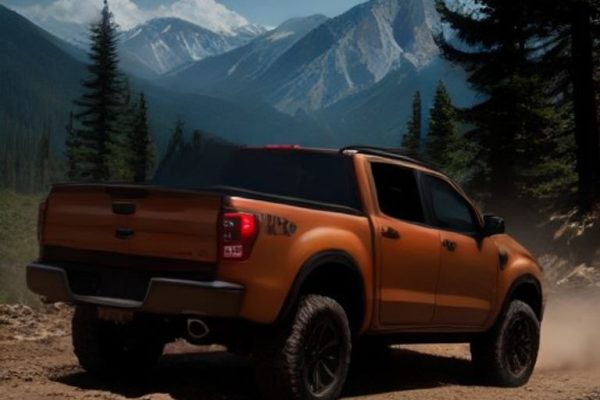


A Potent Upgrade for the 2027 Ford Ranger?
The automotive world is buzzing with recent reports suggesting a significant performance upgrade for the upcoming 2027 Ford Ranger. Unofficial sources indicate that Ford’s popular mid-size pickup truck is poised to receive a twin-turbocharged 3.0-liter V-6 engine, a move that would undoubtedly elevate the Ranger’s capabilities and standing within its highly competitive segment. This potential powertrain addition signals Ford’s commitment to offering robust and compelling options to truck buyers, blending everyday utility with exhilarating performance.
The Heart of the Beast: The 3.0-Liter EcoBoost V-6
At the center of this exciting development is Ford’s venerable 3.0-liter EcoBoost twin-turbo V-6 engine. This powerplant is not new to the Ford lineup, having proven its mettle in high-performance applications such as the Ford Bronco Raptor, where it delivers a formidable 418 horsepower and 440 pound-feet of torque. Beyond the Bronco Raptor, variations of this engine family can be found in other Ford and Lincoln vehicles, including the Ford Explorer ST and Lincoln Aviator Grand Touring, albeit with different tunings tailored to their specific roles. Its widespread use across various platforms underscores its reliability, efficiency, and significant power potential, making it a logical choice for expanded application.
Detuned for Duty: Ranger-Specific Performance
While the engine shares its lineage with the high-octane Bronco Raptor, reports suggest that it would be « detuned » for its prospective role in the 2027 Ford Ranger. This detuning is anticipated to result in an output of approximately 380 horsepower and 440 pound-feet of torque. This strategic calibration is common practice within the automotive industry, serving several purposes:
- Market Positioning: Differentiating the Ranger’s performance ceiling from the more extreme, off-road-focused Bronco Raptor, ensuring each vehicle maintains its unique appeal and justifies its respective price point.
- Fuel Economy: Optimizing the engine for better fuel efficiency, a crucial factor for a daily-driver pickup that consumers often use for work and family duties.
- Durability and Longevity: Potentially easing the stress on powertrain components for a truck that may be subjected to demanding towing and hauling scenarios over its lifespan, leading to enhanced long-term reliability.
- Cost Effectiveness: By sharing a core engine block and components but adjusting tuning, Ford can achieve economies of scale while offering a distinct performance characteristic.
Despite the detuning, 380 horsepower and 440 pound-feet of torque represent a substantial increase over the current Ranger’s standard 2.3-liter EcoBoost four-cylinder engine, which produces 270 horsepower and 310 pound-feet of torque. This boost would place the Ranger firmly in contention with some of the most powerful offerings in the mid-size truck segment.
Impact on Ranger’s Performance Profile
The introduction of a 3.0-liter twin-turbo V-6 would dramatically alter the 2027 Ford Ranger’s performance profile. Owners could anticipate:
- Enhanced Acceleration: Significantly quicker 0-60 mph times, making highway merging and overtaking much more effortless and confidence-inspiring.
- Superior Towing Capability: While official towing figures would be subject to chassis and transmission specifics, the substantial increase in torque, particularly at lower RPMs due to forced induction, would translate to effortless towing of heavier loads. This would allow the Ranger to comfortably handle larger boats, utility trailers, and campers.
- Improved Hauling Performance: Carrying heavy payloads in the bed would feel less strenuous, with the engine maintaining strong performance even under significant load.
- More Engaging Driving Dynamics: The added power would make the Ranger a more spirited and enjoyable truck to drive, appealing to enthusiasts seeking a blend of utility and excitement.
This engine would likely be paired with Ford’s well-regarded 10-speed automatic transmission, which is adept at managing high torque outputs and optimizing gear selection for both performance and fuel efficiency.
Navigating the Competitive Mid-Size Truck Segment
The mid-size truck market is fiercer than ever, with new and refreshed models from all major manufacturers vying for consumer attention. The potential addition of a high-output V-6 positions the 2027 Ford Ranger as a formidable contender against key rivals. Competitors such as the Toyota Tacoma, Chevrolet Colorado, GMC Canyon, and Jeep Gladiator all offer compelling powertrains, some with forced induction or hybrid assistance.
For instance, the new Toyota Tacoma offers a hybrid i-FORCE MAX powertrain producing 326 horsepower and 465 pound-feet of torque, while the Chevrolet Colorado ZR2 boasts a 2.7-liter turbo high-output four-cylinder with 310 horsepower and 430 pound-feet of torque. The Ranger’s reported 380 hp would give it a distinct advantage in raw horsepower over most of these rivals, appealing to buyers who prioritize outright power and speed. This move could see the Ranger offered in a ‘Raptor-lite’ trim, bridging the gap between standard models and the full-blown Ranger Raptor, or as a premium engine option for top-tier Lariat or Platinum variants.
Ford’s Powertrain Strategy and Future Outlook
The strategic sharing of powertrains across different vehicle lines is a cornerstone of modern automotive manufacturing. By utilizing the proven 3.0-liter EcoBoost V-6 in the Ranger, Ford can capitalize on economies of scale in production, research, and development. This approach not only helps manage manufacturing costs but also allows Ford to leverage a well-established engine with a known track record for performance and reliability. It also suggests a broader strategy to offer higher performance options across its utility and truck segments, responding to consumer demand for more potent and versatile vehicles.
While an official confirmation from Ford is still awaited, the prospect of a twin-turbo 3.0-liter V-6 in the 2027 Ranger is exciting news for truck enthusiasts and potential buyers alike. It underscores Ford’s commitment to innovation and maintaining a competitive edge in one of the auto industry’s most robust segments. This power boost would undoubtedly make the next-generation Ranger a more compelling and dynamic choice for those seeking a mid-size truck with serious performance credentials.
Source : https://www.caranddriver.com/news/a74184201/2027-ford-ranger-new-twin-turbo-3-liter-v-6/