

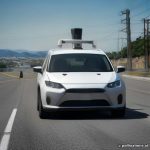



Unveiling the Tesla Cybercab: A Bold Leap Towards Autonomous Mobility
Tesla, a pioneer in electric vehicles, is once again pushing the envelope with its ambitious Cybercab. This initiative promises to revolutionize personal transportation through full autonomy at an unprecedentedly accessible price point. The announcement that the Cybercab could be available for under $30,000 has sent ripples through the industry, positioning it not merely as another electric car, but as a potential game-changer in the race for self-driving vehicles. This aggressive pricing strategy, particularly for an autonomous vehicle, aims to make cutting-edge technology available to a broader audience, potentially accelerating the adoption of robotaxis and autonomous personal ownership.
The allure of the Cybercab extends beyond its anticipated affordability to its core promise of autonomy. In self-driving technology, ‘autonomy’ signifies a vehicle’s ability to operate without human intervention under certain conditions, aspiring towards Level 4 or even Level 5 capabilities. Tesla’s existing Full Self-Driving (FSD) Beta system, while continuously evolving, offers advanced driver-assistance features requiring active human supervision. The Cybercab, however, is presented as a vehicle designed from the ground up to realize a higher degree of self-sufficiency, aligning with CEO Elon Musk’s long-standing vision of a future where cars serve as income-generating robotaxis for their owners.
Navigating the Initial Hurdles: Texas and Geofenced Operations
While the promises of low cost and full autonomy are compelling, the Cybercab’s initial rollout comes with specific caveats that highlight the intricate challenges of deploying such advanced technology. Foremost among these is the requirement for the first customers to take delivery in a handful of Texas cities. This geographical restriction likely reflects a strategic decision influenced by regulatory environments, testing infrastructure, and Tesla’s operational footprint in the state, including Gigafactory Texas. Launching in a controlled region allows Tesla to fine-tune systems, gather crucial real-world data, and navigate complex legal and logistical frameworks, a common strategy for pioneers of new technologies.
Furthermore, the Cybercab will be initially geofenced, meaning its operation will be restricted to specific regions within those designated Texas cities. Geofencing is a critical tool for the safe and systematic introduction of autonomous vehicles. It defines the Operational Design Domain (ODD) – the specific conditions under which an autonomous driving system is designed to function. Within these meticulously mapped and analyzed areas, the vehicle’s sensors, software, and predictive algorithms can be optimized for known variables, reducing unpredictability. This cautious approach allows for:
- Enhanced Safety: By limiting the operational area, rigorous testing and validation against known environmental factors, traffic patterns, and road conditions are ensured.
- Targeted Data Collection: Focusing data acquisition on specific, controlled zones provides more relevant and actionable insights for system improvement.
- Regulatory Compliance: Operating within pre-approved zones simplifies obtaining necessary permits and demonstrating compliance with local and state regulations.
- Phased Expansion: As the system proves its reliability and safety within geofenced areas, these boundaries can be gradually expanded, informed by real-world performance.
These initial limitations, while perhaps tempering excitement for customers outside Texas, are pragmatic steps in the responsible development and deployment of revolutionary technology. They underscore that achieving widespread, unrestricted autonomy is a phased journey, not a single leap.
The Vision Behind the Cybercab: Reshaping Mobility
The Cybercab’s introduction, even with its initial constraints, represents a significant milestone in Tesla’s long-term strategic vision. Elon Musk has long articulated a future where individually owned autonomous vehicles can serve a dual purpose: providing personal transport and, when idle, joining a vast robotaxi network to generate income for their owners. The Cybercab, with its projected low entry price, is designed to be the physical embodiment of this vision, democratizing access to both autonomous driving and the potential for passive income from vehicle ownership. This model could fundamentally alter urban mobility, potentially reducing congestion, optimizing parking needs, and offering affordable, on-demand transportation.
Such a shift could have profound implications. Urban planning might evolve to accommodate fewer privately owned, idle vehicles, opening up space for green areas or other infrastructure. The concept challenges traditional car ownership models, prioritizing utility and efficiency. While competitors like Waymo and Cruise have deployed limited robotaxi services, Tesla’s approach of integrating this capability into a consumer-purchasable vehicle, especially at a sub-$30K price point, sets a unique precedent and potentially a different trajectory for the autonomous vehicle market.
The Road Ahead: Challenges and Prospects
The journey from a geofenced autonomous vehicle in select Texas cities to a ubiquitous, fully self-driving transportation solution is fraught with challenges. Technical hurdles, regulatory complexities across different jurisdictions, public acceptance, and the sheer scale of mapping and validating every inch of public road are monumental tasks. Building consumer trust in driverless technology, particularly after high-profile incidents involving advanced driver-assistance systems, will also be critical. However, if Tesla can deliver on its promise of an under-$30,000 autonomous Cybercab that expands beyond its initial geofences, it could catalyze a monumental transformation in how people perceive, purchase, and utilize personal transportation.
The Tesla Cybercab embodies the ambitious spirit of innovation that defines the company. Its initial limitations serve not as roadblocks, but as foundational steps in a meticulously planned, long-term deployment strategy. For those in a position to take delivery in its initial Texas strongholds, the Cybercab offers a tantalizing glimpse into a future where personal vehicles are not just tools for individual mobility but integral components of a wider, intelligent transportation ecosystem, poised to revolutionize urban living and personal freedom.
Source : https://www.caranddriver.com/news/a74441018/tesla-cybercab-orders-pricing/