


The Elusive Pursuit of Automotive Design Shock: When Mild Awe Falls Short
In the fiercely competitive realm of high-performance automotive design, the unveiling of a new model from an iconic marque like Ferrari invariably ignites fervent discussion and sky-high expectations. Automakers often strive to deliver a product that not only pushes boundaries in performance but also captivates with its aesthetic and functional innovation. However, as noted by Elana Scherr, there’s a delicate balance between striving for the extraordinary and merely achieving the mildly surprising. Her recent commentary on a new Ferrari model suggests that while some might deem it shocking, it perhaps falls short of truly revolutionary design, prompting a deeper consideration of what constitutes genuine innovation versus superficial novelty.
Scherr’s central argument revolves around the premise that true automotive design shock is meant to be ‘earth-shaking.’ This implies a departure so significant, so visionary, that it fundamentally alters perceptions, establishes new benchmarks, or even redefines an entire segment. It’s a design philosophy that aims to be talked about for decades, not just in the immediate aftermath of its reveal. When a design aims for this audacious goal but only lands in the territory of ‘lightly jaw-dropping,’ Scherr argues, it misses the mark. This critique isn’t a dismissal of the design itself but rather an observation that if the intention was to truly astound, then merely evoking mild surprise signifies an unfulfilled ambition.
The Dichotomy: Truly Wild Versus Familiar and Functional
This perspective introduces a critical dichotomy in automotive design: either go ‘really wild’ and achieve a groundbreaking impact, or pivot towards ‘familiar and functional.’ According to Scherr, navigating the space between these two extremes—the ‘lightly jaw-dropping’ territory—can be a less desirable outcome, particularly when the ambition was clearly grander. A design that is moderately surprising might, ironically, be less effective than one that unashamedly embraces utility and proven design principles. For a brand like Ferrari, steeped in a legacy of both breathtaking beauty and engineering prowess, this distinction holds particular weight. The expectation is often for designs that are either profoundly revolutionary or exquisitely refined, leaving little room for a middle ground that neither shocks nor deeply satisfies through practicality.
What, then, makes a design ‘familiar and functional’ superior to one that is ‘lightly jaw-dropping’ if it doesn’t achieve true ‘wildness’? The answer lies in the enduring value of intuitive design and user experience. A familiar and functional approach prioritizes:
- Ergonomics: Controls are logically placed and easy to operate without distraction.
- Clarity and Readability: Information is presented clearly, reducing cognitive load for the driver.
- Comfort: Seating, sightlines, and interior space are optimized for long-term comfort and practicality.
- Durability and Timelessness: Designs that prioritize function often age more gracefully, avoiding faddish elements that quickly become dated.
- User-Centricity: The design genuinely enhances the driving and passenger experience through thoughtful consideration of interaction.
In contrast, a ‘lightly jaw-dropping’ design might feature aesthetic flourishes or novel interfaces that initially impress but ultimately prove less practical, less intuitive, or more prone to fatigue over extended use. The fleeting moment of awe can quickly dissipate if the underlying functionality or ergonomic considerations are compromised for the sake of visual drama that isn’t fully integrated or truly revolutionary.
The Interior: A Critical Junction for Design Philosophy
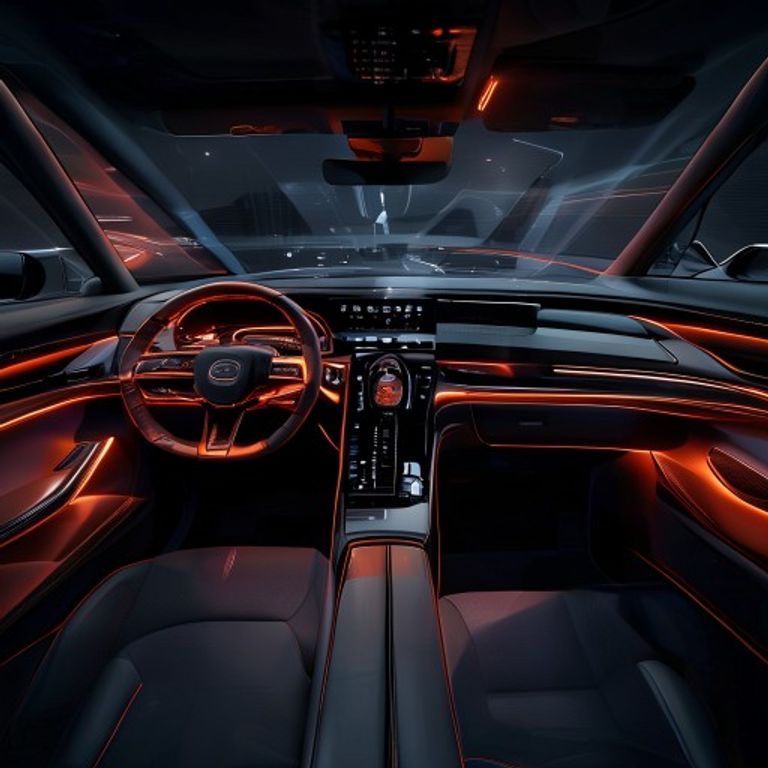
Scherr’s emphasis on car interiors as a prime example of this design philosophy is particularly insightful. The interior is where the user spends the vast majority of their time interacting with the vehicle. While exterior design often captures initial attention and embodies the car’s aspirational qualities, the interior dictates the daily experience, the sense of connection, and the overall satisfaction of ownership. A ‘lightly jaw-dropping’ interior might introduce unconventional layouts, dramatic lighting schemes, or experimental material combinations that initially impress. However, if these elements don’t coalesce into a cohesive, user-friendly, and comfortable environment, their initial impact can wane quickly. Practical considerations such as storage, visibility, tactile feedback from controls, and the overall sense of spaciousness become paramount.
For a brand like Ferrari, which has historically balanced cutting-edge performance with an undeniable sense of occasion and luxury, the interior design must be meticulously considered. If the aim was to create an interior that is truly ‘shocking’ and groundbreaking—perhaps by redefining digital interfaces, material sustainability, or spatial dynamics in an unprecedented way—then merely achieving a moderately surprising visual may be perceived as a missed opportunity. Instead, a focus on highly refined, functional elegance, drawing on established principles of Italian luxury and ergonomic excellence, might have yielded a more enduring and ultimately more satisfying result, if a truly ‘wild’ vision wasn’t fully realized.
Ultimately, Elana Scherr’s commentary prompts a valuable discussion about intentionality in automotive design. It underscores that for a new design to truly resonate and leave a lasting impression, it must either deliver on the promise of earth-shattering innovation or, failing that, skillfully embrace the virtues of familiarity and functionality. The middle ground, characterized by a design that merely achieves a ‘lightly jaw-dropping’ effect, risks falling short of both true visionary ambition and practical excellence, especially for a marque held to the highest standards of automotive artistry and engineering.