
Tiny EV Startup Enters Market with Ambitious Autonomous Claims and Presales Launch
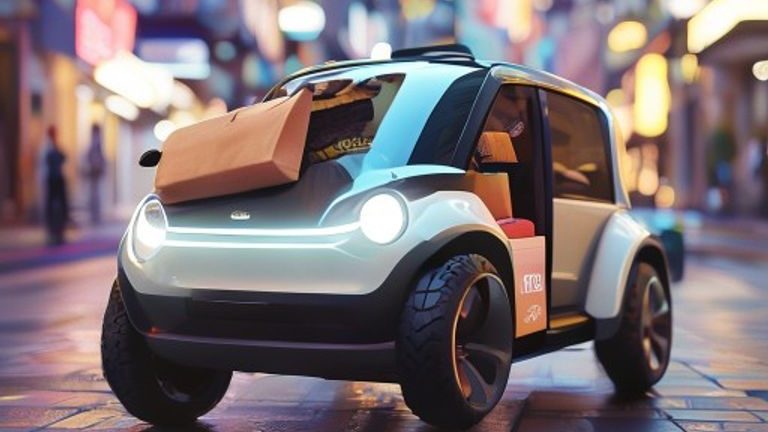
In the rapidly evolving landscape of electric vehicles, where innovation is often synonymous with disruptive technology and bold promises, a new contender has emerged. EV startup Chip Motors has officially opened presales for what it describes as a « cheerful low-speed vehicle. » What truly sets this newcomer apart, however, are the advanced capabilities it claims to offer: the ability to park itself, independently drive its user home, and even perform tasks like picking up groceries. These assertions, if realized, would position the compact EV at the forefront of autonomous urban mobility, promising a new level of convenience for consumers.
The concept of a low-speed vehicle (LSV) itself is not entirely new, but its integration with advanced autonomous functions represents a significant leap. LSVs are generally designed for urban environments, campus settings, or short-distance travel, typically with a top speed limited to around 25 mph (40 km/h) in many jurisdictions. Their compact size, lower energy consumption, and reduced environmental footprint make them attractive solutions for combating urban congestion and pollution. Chip Motors’ description of its offering as « cheerful » suggests a design philosophy aimed at integrating seamlessly and positively into city life, likely featuring an approachable aesthetic and user-friendly interface. This focus on design and utility aligns with a growing trend towards micro-mobility solutions that prioritize efficiency and accessibility in densely populated areas.
Navigating the Landscape of Autonomous Driving Claims
The core of Chip Motors’ groundbreaking announcement lies in its claims regarding autonomous functionality. The ability for a vehicle to « park itself, » « drive home, » and « pick up groceries » implies a highly sophisticated level of automation, approaching what is often classified as Level 4 or even Level 5 autonomy within specific operational design domains (ODDs). While parking assistance is available, full independent self-parking is a step further. The claim to « drive home » autonomously suggests the vehicle could navigate complex routes, adhere to traffic laws, react to unforeseen obstacles, and safely deliver its occupant without human intervention after an initial setup.
Even more ambitious is the idea of a vehicle independently performing errands such as « picking up groceries. » This would necessitate not only advanced navigation and object recognition but also intricate interaction with external environments like store parking lots and communication protocols for order retrieval. Such capabilities move beyond mere transportation and into the realm of a personal robotic assistant. For these claims to transition from aspiration to reality, the vehicle would require an extensive suite of sensors—including lidar, radar, cameras, and ultrasonic sensors—backed by cutting-edge artificial intelligence, robust real-time data processing, and highly accurate mapping systems. Furthermore, regulatory frameworks for fully autonomous vehicles operating without a human safety driver are still under development globally, posing significant hurdles for widespread deployment and commercialization.
The Promise of Effortless Errands and a New Lifestyle
The title accompanying Chip Motors’ announcement, « This Tiny EV Says It Can Run Errands While You Relax on the Couch, » encapsulates the ultimate promise of this technology. It envisions a future where personal mobility transcends the act of driving, transforming into a service that integrates seamlessly into daily life. Imagine being able to dispatch your vehicle to collect a prescription, pick up dry cleaning, or retrieve a pre-ordered meal, all while you remain comfortably at home or focused on other tasks. This paradigm shift could fundamentally alter how individuals interact with their vehicles and manage their time, potentially freeing up countless hours currently spent on routine transportation duties. This level of autonomy represents not just a technological advancement but a lifestyle upgrade, promising greater efficiency and reduced stress in an increasingly busy world. However, the journey from these ambitious claims to a widely available, fully functional product is often long and fraught with significant technical, safety, and regulatory challenges.
The EV Startup Model and Presales Strategy
As a new EV startup, Chip Motors is following a common trajectory in the modern automotive industry by initiating presales. This strategy serves multiple critical functions for emerging companies. Firstly, it allows the company to gauge genuine market interest and demand for its innovative product, helping to refine production forecasts and marketing strategies. Secondly, presales often provide a vital influx of early capital, which can be crucial for funding ongoing research and development, establishing manufacturing capabilities, and scaling operations. For a capital-intensive industry like automotive manufacturing, securing early commitments is paramount for survival and growth.
For consumers, participating in a presale for a new technology from a startup often involves a blend of excitement and a degree of risk. Early adopters are typically eager to be among the first to experience groundbreaking innovations. However, investing in a startup’s presale also means placing trust in the company’s ability to deliver on its promises, navigate potential production delays, secure necessary certifications, and ultimately bring a high-quality, fully functional product to market. The journey from ambitious concept to mass-produced vehicle is complex, requiring significant engineering prowess, robust supply chains, and substantial financial backing. Chip Motors’ entry into the market with these bold claims, accompanied by a presale launch, signals its ambition to carve out a unique niche in the burgeoning EV sector.
Source : https://www.caranddriver.com/news/a72654671/chip-motors-ev-revealed/