



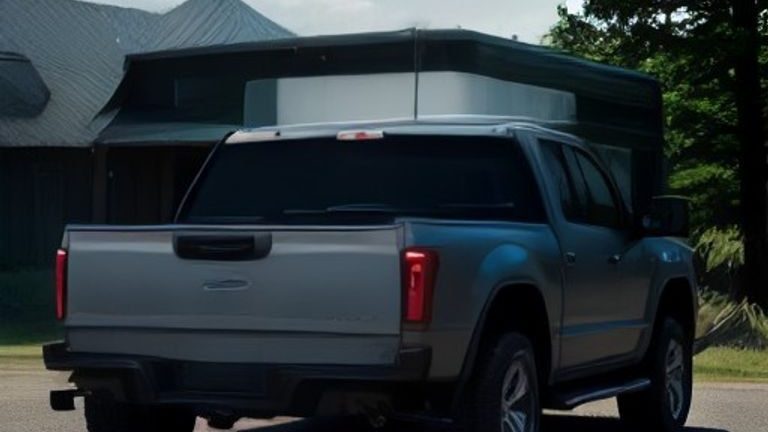
Ford’s Ingenious Patent Redefines Pickup Maneuverability
Ford Motor Company has recently secured a patent that could fundamentally alter how owners interact with their pickup trucks, particularly during low-speed, high-precision maneuvers. Titled “External Control of a Vehicle,” the patent describes a system that allows a user to move their truck from outside the cabin by simply interacting with it, potentially transforming several notoriously challenging two-person tasks into seamless solo operations. This innovative approach promises to enhance convenience, safety, and efficiency for pickup truck owners, addressing common frustrations associated with traditional vehicle positioning.
While the specifics of the patent detail a system that facilitates external movement, the core idea revolves around empowering a single individual to guide the vehicle precisely without needing to be seated behind the wheel. Imagine positioning your truck perfectly for a trailer hookup, navigating a cramped garage, or nudging it forward a few feet in a tight spot – all without constantly climbing in and out of the driver’s seat. This visionary patent underscores Ford’s continuous commitment to leveraging technology to solve real-world problems and improve the user experience for its loyal customer base.
The Clever Control Mechanism: How it Might Work
Although patent documents often focus on the functional aspects rather than specific interface designs, the description of « a clever control mechanism » implies an intuitive system designed for external operation. Such a mechanism would likely involve integrating the truck’s existing electronic steering, braking, and potentially a low-speed electric propulsion system (if available, or a highly controlled crawl from the primary engine) with an external user interface. This interface could manifest in several practical forms:
- Integrated Body Controls: Buttons or touch-sensitive areas strategically placed on the truck’s exterior, perhaps near the tailgate, on the bed rails, or on the bumpers, allowing for incremental movements and steering inputs.
- Dedicated Remote Control: A handheld device similar to a garage door opener or drone controller, offering precise joystick or button-based manipulation of the truck’s direction and speed.
- Smartphone Application: Leveraging modern connectivity, a mobile app could provide a graphical interface for controlling the truck, potentially offering real-time camera views and advanced settings.
Crucially, any such system would incorporate robust safety protocols. This would undoubtedly include limited operational speed, proximity sensors to prevent collisions, emergency stop functions, and perhaps requirements for the user to maintain line of sight or be within a certain distance of the vehicle. The goal is not to enable unsupervised vehicle movement, but rather highly controlled, deliberate adjustments made by an engaged operator.
Turning Two-Person Jobs into Solo Endeavors
The primary benefit highlighted by the patent is its ability to streamline tasks that traditionally require two people, or at least significant driver gymnastics. Pickup trucks are utility vehicles, and many of their core functions involve tasks that are made needlessly complicated by the need to be inside the cab:
- Trailer Hookups: This is arguably the most common and frustrating scenario. Aligning a hitch ball with a trailer receiver often involves repeated cycles of driving forward, backing up, getting out to check alignment, getting back in, and repeating. With external control, a single person could stand at the rear of the truck, observe the hitch and trailer directly, and guide the truck with millimetric precision, eliminating guesswork and shouting. This is particularly advantageous for complex fifth-wheel or gooseneck hitches, where alignment is even more critical and visibility from the cab is severely limited.
- Tight Space Maneuvering: Whether parking a large truck in a small garage, positioning it perfectly in a workshop for maintenance, or simply shifting it slightly to clear an obstruction, visibility from the driver’s seat can be compromised. External control would allow the operator to walk around the vehicle, gaining an optimal vantage point to guide it through narrow openings or around obstacles without fear of scraping.
- Loading and Unloading: Precision is key when backing up to a loading dock, a ramp, or a specific piece of equipment. Being able to inch the truck into position while overseeing the cargo or surrounding environment from outside significantly reduces the risk of error or damage.
By transforming these scenarios into solo operations, Ford’s patented system promises not only convenience but also a significant reduction in the time and effort typically expended on such tasks.
Broader Implications for Efficiency and Safety
Beyond the immediate benefit of solo operation, the implications of such a system extend to broader areas of efficiency and safety. For tradespeople, farmers, or anyone who regularly uses their truck as a workhorse, these minor time savings accumulate, leading to enhanced productivity over a workday or project. The ability to quickly and accurately reposition a truck on a busy construction site, for instance, could reduce delays and improve workflow.
Safety is another critical aspect. Misjudging distances or angles during maneuvers can lead to costly body damage or, worse, injuries. By allowing the operator to maintain a direct, unobstructed view of the vehicle’s surroundings, potential hazards are more easily identified and avoided. This capability could also be a boon for accessibility, potentially assisting individuals who might find repeated ingress and egress from the truck challenging or those who require a better external view for specific tasks due to physical limitations.
The Nature of Patents: A Glimpse into the Future
It is important to remember that a patent, while a significant intellectual property achievement, does not guarantee immediate production or commercialization. Companies like Ford continuously file patents to protect innovative ideas and explore potential future technologies. These filings offer valuable insights into a manufacturer’s strategic thinking, R&D focus, and vision for the evolving automotive landscape.
Ford’s consistent pursuit of such patents demonstrates a proactive approach to enhancing vehicle utility and driver experience. It suggests that the company is actively exploring ways to make its trucks not just more capable, but also smarter and more user-friendly in everyday practical scenarios. This patent aligns with a broader industry trend towards more autonomous and remotely controlled vehicle features, starting with very specific, low-speed applications.
Ultimately, while we might not see trucks that move themselves by a push of a button on the dealership floor tomorrow, this patent paints a compelling picture of a future where Ford pickups are even more versatile and intuitive to operate. The prospect of turning complex, often frustrating, maneuvers into simple, single-person tasks is an exciting development that could genuinely redefine what it means to work with and own a modern pickup truck.
Source : https://www.caranddriver.com/news/a73675468/ford-push-to-move-pickup-truck-patent/