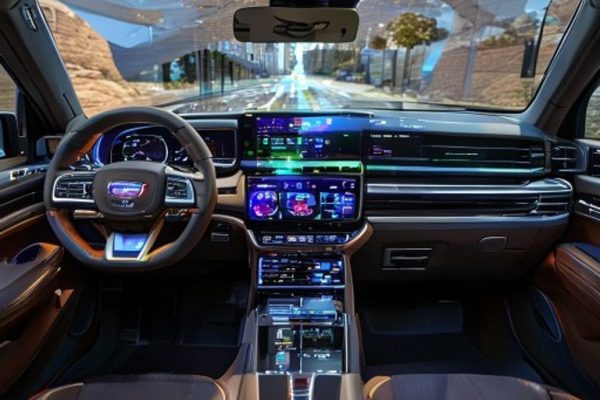



Google has announced a significant evolution for its in-car infotainment offering, Android Auto. The tech giant revealed plans for an open-source operating system specifically designed for Android Auto, signaling a strategic shift towards deeper integration and expanded capabilities within vehicles. This move, according to Google, aims to enable Android Auto to run more key features directly in cars moving forward, potentially redefining the user experience and the role of smartphone integration in automotive technology.
Embracing Open-Source for Enhanced Automotive Integration
The decision to pivot Android Auto towards an open-source operating system marks a pivotal moment for Google’s automotive ambitions. Historically, Android Auto functioned primarily as a « projection » system, mirroring content from a connected smartphone. This model, while effective, has inherent limitations regarding deep vehicle integration and native functionality. By introducing an open-source operating system, Google is laying the groundwork for a more robust and adaptable platform.
Open-source software fosters collaboration and transparency, offering significant advantages. Car manufacturers could gain greater flexibility in customizing the Android Auto experience to align with their brand and vehicle architectures. Developers, both independent and within automotive companies, could contribute to the platform, fostering innovation and accelerating new feature development. This collaborative ecosystem can address frustrations with proprietary in-car systems, which often suffer from slower updates and limited customization. Moreover, an open-source model could reduce automaker development costs and enhance security through community scrutiny, leading to a more reliable in-car environment.
From Projection to Native Control: Unlocking Key Vehicle Features
One of the most compelling aspects of Google’s announcement is the stated goal for this new open-source Android Auto operating system to « run more key features in cars moving forward. » This phrase strongly suggests a departure from the traditional projection model. If Android Auto evolves to become a full-fledged operating system running natively within vehicle hardware, it could gain access to and control over a much wider array of vehicle functions.
Currently, Android Auto primarily manages navigation, media playback, and communication. With an underlying operating system, possibilities expand significantly. « Key features » could encompass vital vehicle systems previously out of reach. This deeper integration promises a more cohesive and intuitive user experience, potentially eliminating the need to switch between the car’s native interface and Android Auto. It could also pave the way for more sophisticated voice control capabilities, allowing Google Assistant to manage vehicle functions with greater context and efficiency.
Examples of these expanded capabilities might include:
- Integrated Climate Control: Adjusting temperature and fan speed directly from the Android Auto interface.
- Vehicle Settings Management: Accessing and controlling door locks, mirror adjustments, or displaying real-time diagnostics.
- ADAS Information Display: Presenting driver-assistance system alerts, camera feeds, or parking assistance interfaces.
- Personalized Driver Profiles: Storing and recalling personalized settings for seat position and infotainment preferences.
- Expanded App Ecosystem: Supporting a broader range of vehicle-specific applications, from EV charging to smart home controls.
Industry Impact and the Future of In-Car Technology
Google’s initiative could have profound implications across the automotive landscape. For car manufacturers, it presents both an opportunity and a challenge. While offering a customizable, well-supported platform, it also means potentially ceding more control over the in-car user experience. However, the open-source nature might mitigate concerns, offering more avenues for differentiation than purely proprietary solutions.
For consumers, the prospect of a more powerful, integrated, and feature-rich Android Auto is exciting. It promises to bring the familiar convenience and vast app ecosystem of Android more deeply into their driving experience, potentially making new vehicles with this system more appealing. The ability to control more vehicle functions from a single, intuitive interface could enhance safety by reducing distractions and improve overall driving comfort and connectivity.
This announcement also positions Android Auto more directly alongside Google’s other in-car solution, Android Automotive OS, a full-blown embedded operating system. While details of how this new open-source Android Auto operating system will differentiate or integrate are yet to be fully elucidated, it suggests a broader strategy by Google to offer a spectrum of solutions for automakers, leveraging the Android ecosystem.
The journey towards fully integrated, software-defined vehicles is well underway. By embracing an open-source model and targeting deeper vehicle integration, Google is redefining Android Auto’s role from a smartphone companion to a central pillar of the modern automotive experience. The success of this initiative will depend on strong collaboration with car manufacturers and a thriving developer community to fully realize its ambitious potential.
Source : https://www.caranddriver.com/news/a70928680/open-source-android-auto-platform/