

Honda’s American Genesis: The Pivotal Role of the Tiny N600
Today, Honda is a household name in the United States, synonymous with reliable, efficient, and well-engineered automobiles. Models like the Civic, the Accord, and the CR-V are ubiquitous on American roads, having shaped generations of drivers’ experiences. Yet, to trace the lineage of this automotive giant in America, one must look back to a vehicle far humbler in scale and ambition: the Honda N600. It was this diminutive, pioneering model, first introduced to the U.S. market in 1969, that truly launched Honda’s four-wheeled aspirations in the land of the automobile, laying the groundwork for every success that followed. Indeed, the very essence of the Civic and the Accord, and countless other Hondas, undeniably flowed from the audacious spirit of the N600.
Before the Car: Honda’s Motorcycle Dominance
Before the N600 ever graced American showrooms, Honda was already a well-established and highly respected brand in the United States, though primarily for its motorcycles. Campaigns like ‘You Meet the Nicest People on a Honda’ had successfully transformed the image of motorcycling from a niche hobby to a mainstream leisure activity. This widespread recognition, however, came with a crucial challenge: convincing an American public, accustomed to large, powerful domestic automobiles, that a company known for two-wheelers could also build a compelling car. The transition from motorcycle manufacturer to full-line automotive contender was a monumental leap, one that would begin with a car barely longer than a compact refrigerator.
The N600’s Daring Entry into the American Market
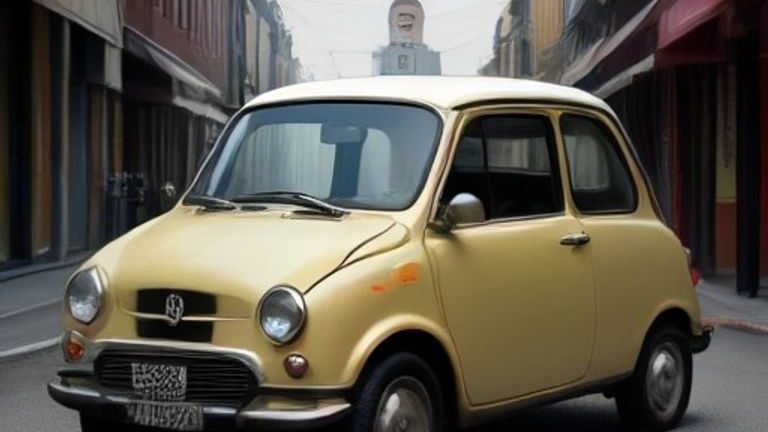
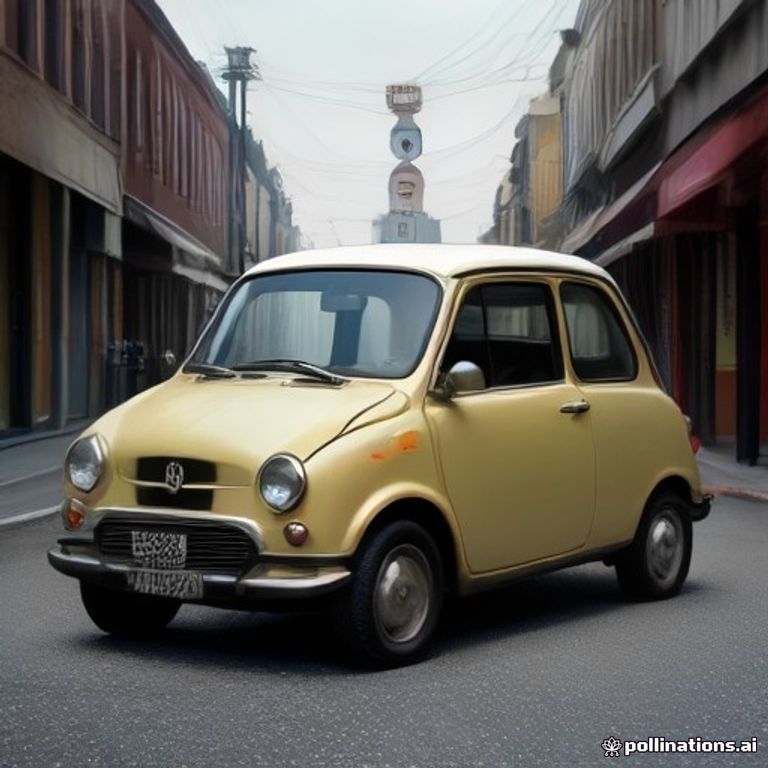
The Honda N600 was not merely a small car; it was a statement. Derived from the Japanese Kei car standard (though enlarged for export to meet highway speed requirements), it arrived in America at a time when ‘big’ was still largely synonymous with ‘better.’ Its design was undeniably unconventional for the American palette. However, Honda recognized a burgeoning niche: drivers seeking economy, maneuverability, and a pragmatic approach to personal transportation. The N600 was engineered with typical Honda ingenuity, borrowing heavily from the company’s motorcycle expertise.
Under its hood lay a transversely mounted, air-cooled, two-cylinder engine. This high-revving 600cc powerplant, capable of producing around 45 horsepower, was paired with a four-speed manual transmission (a more advanced five-speed was also available later). While its top speed was modest by American standards, its fuel efficiency and agile handling in urban environments were distinct advantages. More importantly, it showcased Honda’s commitment to innovative engineering and efficient packaging, traits that would become hallmarks of their future automotive endeavors.
Paving the Way: Establishing a Dealer Network and Brand Identity
One of the N600’s most critical, yet often overlooked, contributions was its role in establishing Honda’s automotive dealer network in the United States. Many early Honda car dealerships were, in fact, existing motorcycle dealerships that decided to take a chance on Honda’s automotive offerings. This dual-purpose setup was crucial for cost-effective expansion and helped to leverage existing brand loyalty. The N600 provided these dealers with their first four-wheeled product to sell, allowing them to learn the intricacies of car sales, service, and customer expectations in a new market.
This initial foray was not without its difficulties. The N600 faced significant challenges:
- Size Perception: Its diminutive stature often led to skepticism in a market dominated by large sedans and station wagons.
- Regulatory Hurdles: Adapting the car to meet stringent American safety and emissions standards required considerable engineering effort.
- Brand Association: Overcoming the perception that Honda was ‘just’ a motorcycle company and establishing credibility as an automobile manufacturer.
- Limited Features: Compared to larger, more feature-rich domestic offerings, the N600 was basic, focusing purely on economical transport.
Despite these hurdles, the N600 persevered. It cultivated a small but loyal following of early adopters who appreciated its unique character and economic practicality. It began to subtly shift perceptions, demonstrating that a small, Japanese-made car could indeed be well-built and reliable, laying the foundation for a reputation that would soon define the brand.
The Direct Line to Civic and Accord
The N600’s production run in the U.S. concluded in 1972, making way for a successor that would profoundly change the automotive landscape: the Honda Civic. It is no exaggeration to say that the lessons learned, the infrastructure built, and the initial brand awareness generated by the N600 were absolutely instrumental in the Civic’s immediate success. Honda understood the American market better, had a fledgling dealer network in place, and had a proven track record (albeit on a small scale) of building reliable engines and efficient vehicles.
The Civic, larger and more conventional than the N600 but still compact, arrived perfectly timed with the burgeoning oil crisis of the early 1970s, establishing Honda as a leader in fuel efficiency and compact car design. The Accord, launched a few years later, further cemented Honda’s reputation, expanding into the family sedan segment with unheard-of levels of quality and engineering for its price point. These iconic models were not born in a vacuum; they were direct beneficiaries of the N600’s pioneering efforts, its trials, and its quiet triumphs.
A Piece of History: The 1971 N600 on Bring a Trailer
Today, the Honda N600 holds a cherished place in automotive history, particularly for Honda enthusiasts and collectors. Its rarity and historical significance make well-preserved examples highly sought after. It’s a tangible link to the very beginning of Honda’s incredible automotive journey in the United States. It’s a testament to its enduring legacy that a specific 1971 model, a prime example of this foundational vehicle, is currently available for sale on the popular online auction platform, Bring a Trailer.
This particular listing offers a rare opportunity for collectors to acquire not just a car, but a pivotal piece of the automotive narrative. Owning an N600 is to possess a tangible reminder of Honda’s audacity, ingenuity, and the humble roots from which a global automotive powerhouse sprang. It’s a physical manifestation of a crucial turning point, a tiny car with a giant legacy, a testament to the belief that even the smallest beginnings can lead to the most profound impacts.
Source : https://www.caranddriver.com/news/a73859500/1971-honda-n600-bring-a-trailer-auction/