


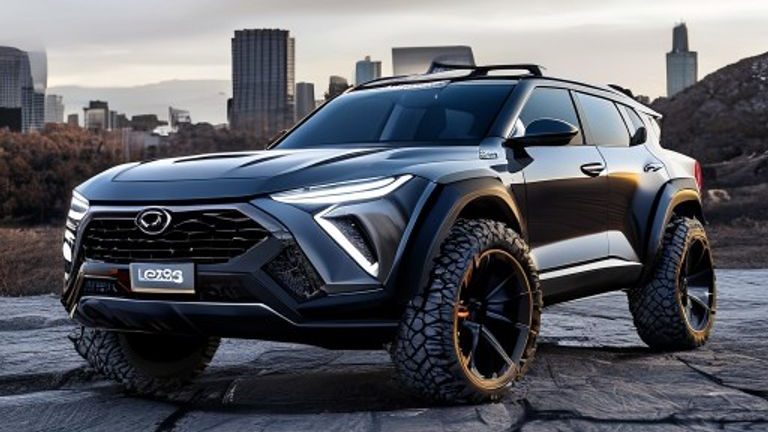
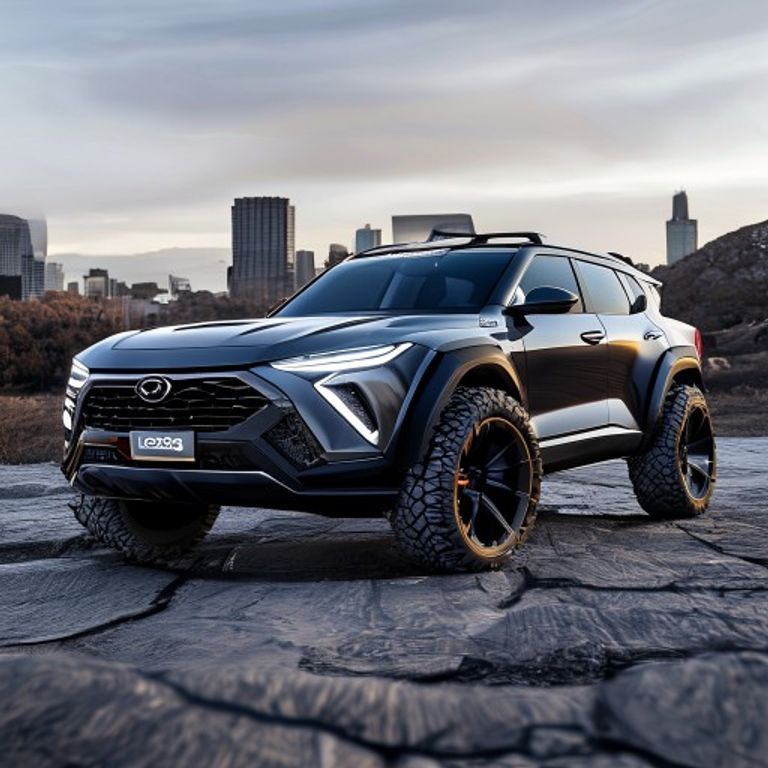
Hyundai Unveils Boulder Concept: A Bold Statement for Future Off-Road and Truck Markets
The automotive world witnessed a significant reveal at the 2026 New York International Auto Show with the debut of the Hyundai Boulder Concept. This eagerly anticipated unveiling has captured considerable attention, not only for its assertive design but also for what it potentially signifies for Hyundai’s ambitious plans in the rugged SUV and pickup truck segments. As a concept vehicle, the Boulder serves as a critical indicator of future design language, technological direction, and strategic market positioning for the brand, offering a tantalizing glimpse into potential production models.
Concept vehicles traditionally play a crucial role in the automotive industry. They allow manufacturers to gauge public and media reaction to radical new designs or engineering philosophies without the full commitment of a production launch. The Boulder Concept, by its very nature, invites speculation and discussion about Hyundai’s intent to broaden its appeal in markets demanding more robust, adventure-ready vehicles. Its presentation at a premier event like the New York Auto Show underscores the importance Hyundai places on this particular concept and the direction it represents.
Engineered for Extremes: The Body-on-Frame Foundation
One of the most striking technical details provided about the Hyundai Boulder Concept is its construction: it is a body-on-frame SUV. This architectural choice is highly significant, immediately distinguishing the Boulder from many contemporary SUVs that utilize unibody (monocoque) construction. The body-on-frame design, traditionally associated with pickup trucks and heavy-duty utility vehicles, comprises a separate chassis (or frame) upon which the body is mounted. This method of construction offers several inherent advantages, particularly for vehicles intended for strenuous duty.
- Durability and Robustness: The separate frame provides exceptional structural rigidity, making the vehicle highly resistant to twisting forces and impacts, which is crucial for off-road use and heavy hauling.
- Off-Road Capability: Body-on-frame vehicles typically offer greater articulation for their suspension systems, allowing wheels to maintain contact with uneven terrain more effectively. This construction also often allows for higher ground clearance, another critical factor for tackling challenging landscapes.
- Towing and Payload Capacity: The strong underlying frame is inherently better suited to handle the stresses of heavy towing and carrying substantial payloads, a key attribute for both utility vehicles and pickup trucks derived from such platforms.
- Ease of Modification: For enthusiasts who wish to customize their vehicles for extreme off-roading, the body-on-frame design often provides a more straightforward platform for modifications, such as lift kits and enhanced suspension components.
By opting for a body-on-frame architecture for the Boulder Concept, Hyundai is clearly signaling its intention to compete directly in a segment dominated by vehicles renowned for their ruggedness and utilitarian prowess. This design choice lays a fundamental groundwork for the concept’s extreme off-road credentials.
Off-Road Hardware and Dominant Presence: 37-Inch Tires
Further solidifying its dedicated off-road character, the Hyundai Boulder Concept is equipped with serious off-road hardware, most notably its colossal 37-inch tires. This specification alone speaks volumes about the concept’s intended capabilities and its readiness to tackle severe terrain. To put 37-inch tires into perspective, these are sizes typically found on heavily modified enthusiast vehicles or specialized military applications, not commonly on production SUVs, even dedicated off-road ones. Their presence on the Boulder Concept immediately communicates an uncompromising approach to off-road performance.
The inclusion of such substantial tires implies a suite of accompanying off-road enhancements necessary to support and fully leverage their potential. While specific details beyond the tires were not disclosed, it is reasonable to infer that a vehicle sporting 37-inch rubber would feature:
- Robust Suspension System: Capable of accommodating the large tires and providing significant wheel travel over obstacles. This would likely involve heavy-duty shocks, springs, and potentially multi-link setups for enhanced articulation.
- High Ground Clearance: Essential for clearing obstacles, which the large tires inherently contribute to.
- Protective Underbody Skid Plates: To shield vital components such as the fuel tank, transfer case, and engine from damage during aggressive off-road excursions.
- Advanced Four-Wheel Drive System: Likely incorporating low-range gearing, and potentially locking differentials (front, center, and/or rear) to maximize traction in challenging conditions.
- Optimized Approach, Departure, and Breakover Angles: Crucial metrics that determine a vehicle’s ability to navigate steep inclines, declines, and cresting obstacles without scraping.
These features, coupled with the body-on-frame construction, paint a vivid picture of a vehicle designed from the ground up to conquer challenging environments, underscoring Hyundai’s commitment to delivering genuine off-road capability with the Boulder Concept.
Drawing Comparisons: The Bronco Aesthetic and Market Context
The initial reaction and descriptive commentary surrounding the Hyundai Boulder Concept have notably drawn parallels to iconic vehicles in the rugged SUV segment, specifically mentioning its resemblance to the Ford Bronco. This observation, as stated in the title, reflects a prevalent trend in the automotive design world where certain aesthetics become synonymous with particular segments. The Ford Bronco, reintroduced to much fanfare, has undeniably set a benchmark for modern retro-inspired, purpose-built off-road SUVs, characterized by its boxy proportions, strong horizontal lines, and functional design elements.
For a new entrant like the Boulder Concept to evoke such comparisons suggests that Hyundai may be deliberately tapping into a design language that resonates with enthusiasts of traditional, go-anywhere vehicles. It speaks to a current market appetite for vehicles that project an image of adventure, capability, and timeless ruggedness. While the specific design elements of the Boulder Concept would be unique to Hyundai, the overarching perception indicates a strategic alignment with the visual cues that define the increasingly popular lifestyle off-roader category. This approach allows the concept to instantly communicate its intentions and appeal to a specific demographic.
From Concept to Capability: The Truck-Spawning Potential
Perhaps one of the most compelling aspects of the Hyundai Boulder Concept, beyond its immediate visual and technical attributes, is the explicit statement that it « will spawn a truck. » This strategic declaration positions the Boulder not merely as a standalone SUV concept, but as the foundational precursor to a future pickup truck model. The practice of developing a pickup truck from an SUV platform, especially a body-on-frame one, is a well-established and cost-effective strategy in the automotive industry.
A body-on-frame SUV provides an ideal starting point for a pickup truck due to the inherent strength and versatility of its chassis. The core engineering required for robustness, towing, and payload capacity is already integrated. For Hyundai, venturing further into the highly competitive and lucrative pickup truck market, particularly in North America, represents a significant strategic move. The success of the Boulder Concept as an SUV could therefore pave the way for a versatile truck variant, offering:
- Shared Components: Reducing development costs and manufacturing complexities.
- Brand Identity: Establishing a cohesive family of rugged vehicles under a unified design philosophy.
- Market Expansion: Tapping into the immense demand for pickup trucks, ranging from mid-size adventure trucks to full-size workhorses.
- Customer Choice: Offering consumers a choice between an enclosed SUV and an open-bed utility vehicle based on a proven, capable platform.
The Boulder Concept, therefore, represents more than just a potential new SUV; it embodies Hyundai’s future vision for a broader presence in the adventure and utility vehicle segments. Its unveiling at the 2026 New York Auto Show provides a powerful preview of a potential new family of vehicles engineered for both serious off-road capability and practical utility, ready to challenge established players and carve out a significant niche for the Hyundai brand.
Source : https://www.caranddriver.com/news/a70898163/hyundai-boulder-concept-revealed/