


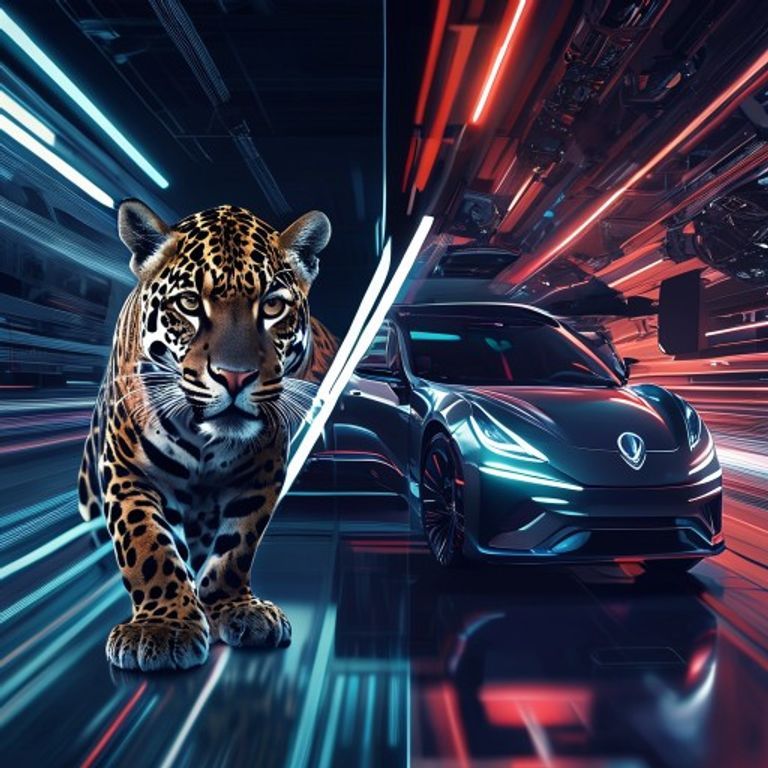
Jaguar Explores U.S. Development with Stellantis Partnership
Jaguar, a prominent luxury marque under the JLR umbrella, has formally announced the signing of a Memorandum of Understanding (MOU) with Stellantis, one of the world’s leading automotive conglomerates. This preliminary agreement signals an intent to explore potential collaboration focused on U.S. car development. The strategic move could eventually allow the British manufacturer to significantly restructure its approach to the American market, notably by potentially enabling it to avoid U.S. import tariffs.
This initiative comes at a pivotal time for Jaguar, which is undergoing a comprehensive transformation as part of JLR’s ambitious ‘Reimagine’ strategy, aiming for an all-electric future. The prospect of partnering with a manufacturing and distribution giant like Stellantis represents a potentially crucial step in solidifying Jaguar’s presence and enhancing its competitiveness within the highly important U.S. automotive landscape, particularly as the industry accelerates its transition towards electrification and regionalized supply chains.
The Nature of a Memorandum of Understanding
A Memorandum of Understanding is a non-binding pact that outlines the intentions of two or more parties to work together on a specific project or towards a shared goal. Unlike a definitive, legally binding contract, an MOU serves as a foundational agreement. It provides a framework for further discussions, due diligence, and the eventual negotiation of more formal and exhaustive agreements. It is a common preliminary step in large-scale corporate collaborations, allowing both entities to assess feasibility, explore mutual benefits, and define potential operational parameters without immediate, exhaustive commitments.
In this particular context, the MOU between Jaguar and Stellantis specifically targets « U.S. car development. » This broad term typically encompasses a spectrum of collaborative activities, which could range from joint engineering and design efforts to shared manufacturing facilities, localized component sourcing, or even the co-development of new vehicle platforms. The core implication is a strategic move towards localizing some aspect of Jaguar’s vehicle production or development within the United States, representing a significant strategic pivot from its traditional reliance on imported models for the American market.
Strategic Imperative: Mitigating U.S. Import Tariffs
One of the most significant stated benefits of this potential partnership for Jaguar is the avoidance of U.S. import tariffs. The United States levies duties on most imported automobiles, typically around 2.5% for passenger cars. While this percentage might appear modest on a per-vehicle basis, it translates into substantial additional costs when applied across an entire fleet of luxury vehicles. These tariffs directly impact a manufacturer’s pricing strategy, overall profitability, and ultimately, its competitiveness within the U.S. market.
By developing and potentially producing vehicles domestically, manufacturers can bypass these tariffs. This localization strategy offers multiple strategic advantages for automakers:
- Cost Efficiency: Eliminating import duties directly reduces the overall cost of bringing a vehicle to market in the U.S., allowing for more competitive pricing for consumers or improved profit margins for the manufacturer.
- Market Accessibility and Responsiveness: Locally produced vehicles can be more appealing to consumers, allow for quicker adjustments to market demands, and reduce lead times compared to those shipped internationally.
- Supply Chain Resilience: Domestic production can simplify logistical challenges, reduce reliance on complex global supply chains, and mitigate exposure to geopolitical uncertainties or trade disputes.
- « Made in USA » Appeal: Vehicles assembled within the United States often resonate positively with American buyers and can qualify for specific incentives or preferences, enhancing brand perception and sales potential.
For a premium brand operating in a highly competitive luxury segment, even a seemingly small tariff can influence purchasing decisions and overall market positioning. Local development, therefore, offers Jaguar a strategic pathway to strengthen its value proposition and optimize its operational costs within the critical American market.
Jaguar’s Vision and the Partnership’s Potential
JLR, Jaguar’s parent company, has outlined an ambitious future focused on sustainability and modern luxury. Jaguar is specifically set to become an all-electric brand, requiring substantial investment in new vehicle architectures, advanced electric vehicle technologies, and streamlined manufacturing processes. Partnering with an established global automaker like Stellantis for U.S. development could provide Jaguar access to existing robust infrastructure, invaluable engineering expertise, and established supply chain networks that would be exceptionally costly and time-consuming to build independently.
Such a collaboration could extend beyond just avoiding tariffs. It might involve sharing advanced electric vehicle platforms, powertrain components, or even leveraging existing manufacturing capacity at Stellantis facilities in North America. This collaborative approach aligns with broader industry trends where automakers, sometimes even direct competitors, increasingly collaborate to manage the immense research and development costs associated with the transition to electric vehicles and other next-generation automotive technologies.
Stellantis’ Role and Strategic Advantages
Stellantis, forged from the merger of Fiat Chrysler Automobiles and PSA Group, possesses a vast global manufacturing footprint, particularly strong in North America through brands like Jeep, Ram, Dodge, and Chrysler. Its extensive portfolio includes numerous well-known brands and a deep reservoir of expertise in high-volume vehicle production, intricate supply chain management, and extensive distribution networks. For Stellantis, entering into such an MOU with Jaguar could present several strategic benefits:
- Optimized Asset Utilization: The potential to leverage existing manufacturing plant capacity or specialized facilities that may have room for additional production volumes.
- New Revenue Streams: Generating income through manufacturing services, platform licensing, or component supply agreements with a luxury brand.
- Strategic Collaboration in Luxury EV Segment: Expanding its indirect influence in the premium and luxury electric vehicle market, complementing its existing brand portfolio without direct competition in all segments.
- Economies of Scale: Further maximizing economies of scale across its vast supply chain and R&D operations by incorporating Jaguar’s U.S. development needs.
The prospect of utilizing Stellantis’ robust North American industrial base offers Jaguar a practical and potentially expedited path to U.S. production. This could significantly reduce the capital expenditure and operational complexities typically associated with establishing entirely new manufacturing operations from scratch in a foreign market.
The Path Forward: From Intent to Implementation
While the signing of a Memorandum of Understanding is a significant announcement, it marks the beginning, rather than the conclusion, of a potentially lengthy and intricate process. The exploration of U.S. car development will require both Jaguar and Stellantis to conduct extensive due diligence, negotiate precise and detailed terms, and address a multitude of commercial, technical, logistical, and legal complexities before any definitive agreements can be reached.
Key considerations moving forward will include defining the exact scope of vehicle development and production, identifying specific manufacturing sites or co-production arrangements, agreeing on financial structures, and navigating potential regulatory approvals. The ultimate success and implementation of this potential partnership will fundamentally depend on the detailed agreements that emerge from these ongoing discussions. Nevertheless, this MOU signifies a forward-looking strategy for Jaguar to enhance its global competitiveness and for Stellantis to further solidify its position as a versatile industry partner in the rapidly evolving automotive landscape.
Source : https://www.caranddriver.com/news/a71361143/jaguar-stellantis-partnership-us-car-development/