



Reviving a Racing Icon: The Mazda Le Mans Rebuild Begins
The world of motorsport is alight with news of a monumental undertaking: the meticulous rebuild of one of Mazda’s fabled Le Mans race cars. This isn’t merely routine maintenance; it’s a comprehensive restoration aimed at bringing a piece of automotive history back to its roaring, track-ready glory. For enthusiasts and historians alike, the chance to witness such a process is a rare privilege, offering an unparalleled glimpse into the engineering marvels that once dominated the most demanding endurance race in the world.
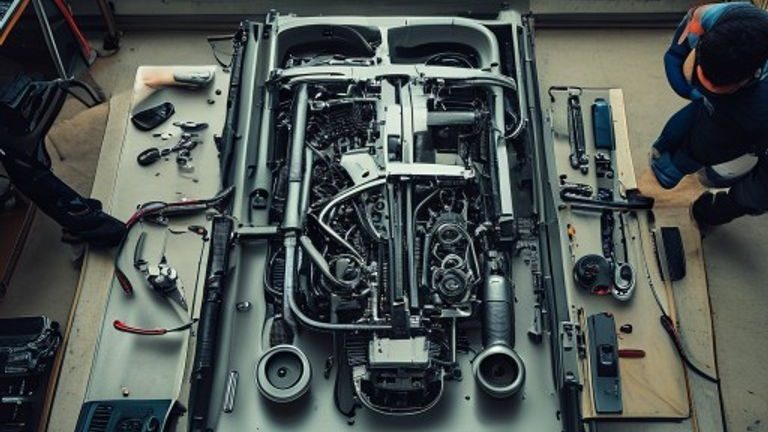
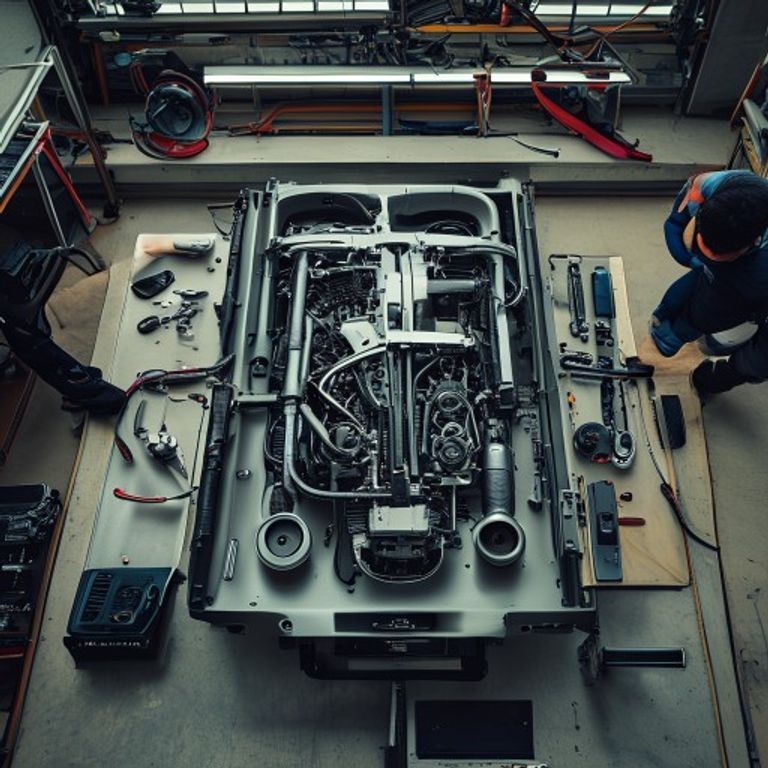
The project centers around the heart of the beast: a legendary four-rotor racing engine. This powerplant, synonymous with Mazda’s unique approach to motorsport, is undergoing a complete disassembly and overhaul by Flis Performance, a facility known for its expertise in high-performance machinery. The work involved in taking such an intricate engine apart is far more than simple disassembly; it is a surgical procedure designed to meticulously inspect, restore, and prepare every component for its return to high-speed duty.
The Enduring Legacy of Mazda at Le Mans
Mazda’s connection with the 24 Hours of Le Mans is etched deeply into motorsport folklore, primarily defined by its audacious spirit and revolutionary engine technology. While many manufacturers relied on conventional piston engines, Mazda steadfastly championed the Wankel rotary engine. This commitment culminated in one of motorsport’s most unexpected and celebrated victories: the 1991 triumph of the Mazda 787B. Driven by Johnny Herbert, Volker Weidler, and Bertrand Gachot, the 787B not only secured the first-ever victory for a Japanese manufacturer at Le Mans but also remains the only rotary-powered car to have achieved this feat.
The 787B, with its potent R26B four-rotor engine, was a testament to innovative design and unwavering persistence. It represented years of development and refinement, pushing the boundaries of what was thought possible with the rotary concept. Its distinctive, high-pitched scream became synonymous with its relentless pursuit of victory, endearing it to generations of fans. This car’s success was not just a win for Mazda but a vindication of a unique engineering philosophy, proving that unconventional approaches could indeed reach the pinnacle of motorsport success. Rebuilding such a vehicle is an act of preserving a crucial chapter in automotive history.
The Heart of the Beast: Understanding the Four-Rotor Engine
At the core of this legendary machine lies its most distinctive component: the four-rotor racing engine. Unlike conventional reciprocating piston engines, the rotary engine operates with triangular rotors rotating within an oval-shaped housing, converting pressure into rotational motion. Mazda’s racing iterations, especially the R26B, took this concept to extreme levels. The R26B, for instance, comprised four interconnected rotary units, allowing for immense power output, incredible smoothness, and a distinctive exhaust note that is instantly recognizable and deeply nostalgic for those who heard it thunder down the Mulsanne Straight.
The advantages of a racing rotary include its compact size, lower vibration levels, and high power-to-weight ratio. However, these benefits come with significant engineering challenges, particularly regarding apex seal wear, heat management, and precise fuel delivery at extreme RPMs. Rebuilding such an engine is not a task for the faint-hearted or inexperienced. It demands an intimate understanding of its intricate mechanics, specialized tools, and an almost obsessive attention to detail to restore its original performance capabilities.
Flis Performance: Masters of the Rotary Rebuild
The crucial task of dissecting and preparing this four-rotor racing engine has been entrusted to Flis Performance. Known for their expertise in high-performance engines, Flis Performance possesses the specialized knowledge and precision required to handle such a historically significant and mechanically complex powerplant. The process of « tearing apart » is, in reality, a highly methodical and precise disassembly, far removed from any destructive connotation. It involves:
- Meticulous Documentation: Every component is photographed, labeled, and its original position recorded to ensure correct reassembly. This vital step prevents errors and ensures authenticity.
- Detailed Inspection: Each part, from the smallest bolt to the largest rotor housing, undergoes rigorous inspection for wear, fatigue, and damage. Critical tolerances are measured to ensure they meet original racing specifications.
- Component Cleaning and Assessment: Parts are thoroughly cleaned, often using specialized methods, to remove carbon deposits and contaminants, allowing for a clear assessment of their condition.
- Repair and Replacement: Worn or damaged components are either meticulously repaired to racing standards or replaced with new-old-stock (NOS) parts or custom-fabricated equivalents that adhere to original specifications.
- Apex Seal and Bearing Renewal: Critical components like apex seals, side seals, and rotor bearings, which are subject to extreme wear in rotary engines, are typically replaced as a matter of course due to their critical function and wear characteristics.
- Housing and Porting Examination: The rotor housings and side plates are examined for scoring or distortion, and porting might be assessed to ensure optimal flow characteristics and performance.
- Precision Reassembly: The engine is then reassembled with exact torque specifications, careful lubrication, and meticulous attention to detail, often in a clean-room environment to prevent contamination.
This intricate process ensures that when the engine is finally fired up again, it will perform exactly as it was designed to, delivering the blistering power and signature sound that made it a legend.
Ready for the Track Again
The ultimate goal of this extensive rebuild is to prepare the Mazda Le Mans race car for a triumphant return to the track. Whether for historic motorsport events, prestigious car shows, or demonstration laps, the sight and sound of this machine in motion are incomparable. It serves as a living testament to Mazda’s engineering prowess and its indelible mark on motorsport history. The rebuild ensures that future generations will have the opportunity to experience, firsthand, the raw power and unique character of a vehicle that defied conventions and conquered the world’s toughest endurance race.
The work undertaken by specialists like Flis Performance goes beyond mere mechanical repair; it is an act of preservation, ensuring that the legacy of these extraordinary machines endures. As the rebuild progresses, anticipation will undoubtedly build for the moment this legendary Mazda once again unleashes its iconic four-rotor scream, echoing the triumphs of the past and inspiring a new appreciation for its engineering brilliance and unique design.
Source : https://www.caranddriver.com/news/a71088539/mazda-787b-le-mans-race-car-rebuilt-video/