

McLaren Unveils Future: The McL 820 Poised to Redefine Supercar Performance in 2027
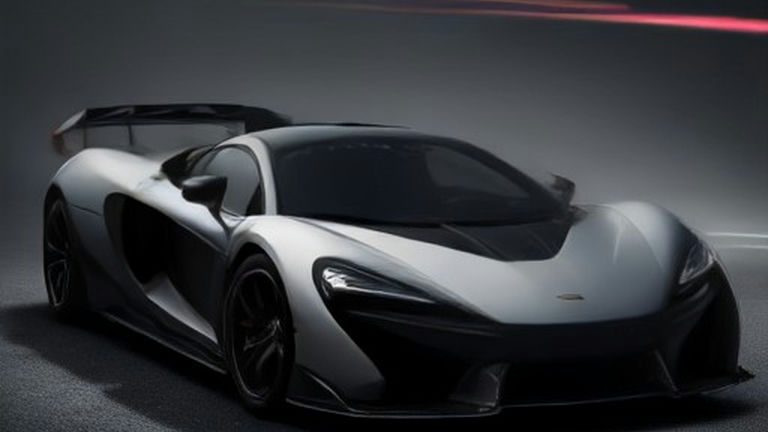
The automotive world is buzzing with anticipation as McLaren, the purveyor of some of the most exhilarating performance machines on the planet, officially confirms details regarding the successor to its much-lauded 750S. This new chapter in Woking’s storied history will be marked by a supercar bearing the designation ‘McL 820’, slated for a market debut sometime in the year 2027. With a formidable 809 horsepower confirmed, the McL 820 is poised to set a new benchmark, continuing McLaren’s relentless pursuit of automotive excellence and driver engagement.
The announcement provides a tantalizing glimpse into McLaren’s forward-looking strategy, laying out a clear timeline and a key performance metric for what will undoubtedly become one of the most talked-about vehicles of the next decade. While specific design cues and technological innovations remain under wraps, the confirmation of the name, power output, and general launch window offers enthusiasts and industry observers a solid foundation for excitement and speculation about what McLaren has in store.
Building on a Legacy: The Outgoing 750S
Before delving into the future, it is crucial to appreciate the magnitude of the vehicle the McL 820 is set to replace: the McLaren 750S. Introduced as a refined, more potent evolution of the already exceptional 720S, the 750S quickly cemented its reputation as one of the most dynamically capable and engaging supercars on sale. Its combination of breathtaking performance, communicative chassis, and relatively light weight made it a darling among critics and owners alike.
- Lightweight Philosophy: The 750S continued McLaren’s unwavering commitment to minimizing mass, employing extensive use of carbon fiber for its MonoCage II chassis and various body panels, contributing significantly to its agile handling and blistering acceleration.
- Driver-Focused Dynamics: Engineered to provide an unparalleled connection between car and driver, the 750S featured electro-hydraulic steering that offered superb feedback and a Proactive Chassis Control III system that expertly managed ride and handling.
- Potent Powertrain: Power came from a twin-turbocharged V8 engine producing 740 horsepower (750 PS, hence the name), allowing it to rocket from 0-60 mph in under 2.8 seconds and achieve truly astonishing top speeds.
- Aerodynamic Prowess: Its sculpted body was not merely for aesthetics; every line and vent served a purpose, optimizing airflow for downforce and cooling, enhancing stability at high speeds and cornering grip.
The 750S, in its relatively short tenure, has embodied the very essence of McLaren’s engineering philosophy: uncompromised performance derived from intelligent design, advanced materials, and a singular focus on the driving experience. Its successor, the McL 820, thus faces the immense challenge of not just matching, but significantly elevating, an already sky-high standard.
The McL 820: Name, Power, and What it Signifies
The chosen nomenclature, ‘McL 820’, marks a slight departure from McLaren’s recent naming conventions, which often directly referenced metric horsepower. While the ‘820’ might hint at an internal codename or a different form of measurement, the confirmed 809 horsepower figure (which translates to approximately 820 PS, a common McLaren practice) is the true headline. This represents a substantial increase over the 750S’s 740 horsepower, indicating a significant leap in outright performance.
An 809 HP output places the McL 820 firmly in the upper echelons of the supercar hierarchy, bordering on hypercar territory. Such a power figure suggests an even more ferocious acceleration, higher top speeds, and an increased demand on the chassis and aerodynamic systems to manage this immense force. McLaren’s expertise in harnessing extreme power while maintaining control and driver engagement will be put to the ultimate test. While McLaren has been progressively integrating hybrid technology into models like the Artura and the Speedtail, the nature of the McL 820’s powertrain – whether it will be a purely internal combustion engine, a sophisticated hybrid system, or even lean towards partial electrification – remains officially unconfirmed. However, given industry trends and McLaren’s commitment to innovation, a form of hybridization to achieve such figures efficiently and meet future emissions standards would not be surprising, though any specific details would be purely speculative at this stage.
The very existence of the 809 HP figure underscores McLaren’s ambition. It’s not merely about adding power; it’s about optimizing every aspect of the vehicle to utilize that power effectively, from the tires and suspension to the braking system and active aerodynamics. The number itself is a statement: a declaration of intent to push boundaries even further than before, ensuring the McL 820 will not just be fast, but truly dominant.
The 2027 Timeline: A Glimpse into the Future of Supercars
The confirmed 2027 launch window provides an extensive lead time, typical for the development of an all-new, groundbreaking supercar. This extended period allows McLaren engineers and designers ample opportunity to:
- Refine Core Technologies: To develop and perfect new chassis architectures, powertrain solutions, and advanced driver assistance systems that will define the next generation of McLaren vehicles.
- Integrate Cutting-Edge Materials: Explore and incorporate even lighter and stronger materials, potentially going beyond current carbon fiber applications to further reduce weight and enhance rigidity.
- Address Evolving Regulations: Prepare for increasingly stringent global emissions standards and safety regulations that will undoubtedly be in effect by the mid-2020s, which often necessitate complex engineering solutions.
- Optimize Aerodynamics: Conduct exhaustive simulations and real-world testing to create active and passive aerodynamic solutions that provide unparalleled downforce and efficiency.
By 2027, the automotive landscape will likely have evolved significantly. Electrification will be even more prevalent, and artificial intelligence might play a larger role in vehicle dynamics and user experience. McLaren will be tasked with integrating these future technologies while staying true to its core philosophy of pure, unadulterated driving pleasure. The extra years also provide a strategic advantage, allowing McLaren to observe the market and competitive offerings from Ferrari, Lamborghini, Aston Martin, and Porsche, ensuring the McL 820 arrives not just as an innovative product, but as a strategically positioned market leader.
Anticipation Builds for a New Era
The confirmation of the McL 820, with its staggering 809 horsepower and 2027 launch date, marks a pivotal moment for McLaren and the wider supercar community. It signifies a fresh chapter for the Woking-based manufacturer, one that promises to build upon an already impressive legacy of high-performance vehicles. While the specific details surrounding its design, technological innovations, and the precise nature of its powertrain are still years away from being fully revealed, the foundation has been laid for what is sure to be another iconic machine from McLaren.
Enthusiasts around the globe will undoubtedly be monitoring every development, every leaked detail, and every official announcement as 2027 draws closer. The McL 820 is not just a successor; it represents McLaren’s vision for the future of extreme performance, a testament to their unwavering commitment to pushing the boundaries of what is possible on both the road and the track. The wait begins for what promises to be an extraordinary addition to the world of supercars.
Source : https://www.caranddriver.com/news/a74296120/mclaren-mcl-820-supercar-name-confirmed/