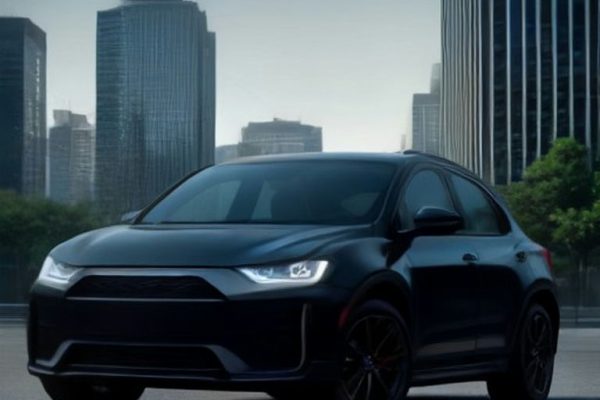



An Unforeseen Start for Our Long-Term 2026 Mazda CX-5
The anticipation surrounding the arrival of any new long-term test vehicle is always palpable, but particularly so when it’s a model like the 2026 Mazda CX-5, a vehicle representing the future iteration of an already popular and well-regarded compact SUV. Our team eagerly awaited the opportunity to put Mazda’s latest offering through its paces, simulating the real-world ownership experience that our readers depend on for insightful, unbiased evaluations. Unfortunately, the initial days with our test vehicle have presented an unexpected series of challenges, casting a somewhat disappointing shadow over what was hoped to be a seamless introduction.
From the moment the keys were handed over, our particular 2026 Mazda CX-5 began to exhibit a couple of notable issues that have significantly impacted its early tenure with us. These aren’t minor quirks that can be easily overlooked; instead, they are fundamental operational glitches concerning two of the most critical and frequently interacted-with systems in any modern automobile: the driver-assistance suite and the infotainment system. This early ‘stumble’ out of the gate has certainly set a distinctive tone for our long-term assessment, prompting us to monitor these issues closely as we proceed.
The Crucial Role of Long-Term Testing
For those unfamiliar, a long-term test isn’t merely a brief review; it’s an extended commitment, often spanning several months and thousands of miles. Its primary purpose is to uncover how a vehicle performs under sustained, varied conditions – from daily commutes and road trips to mundane errands and unexpected challenges. This format allows us to delve beyond initial impressions, revealing aspects of reliability, practicality, fuel efficiency, and the long-term user experience that simply cannot be gleaned from a week-long test drive. When issues surface so early in this process, they not only disrupt our planned evaluation schedule but also raise questions about the vehicle’s consistency and overall readiness for the consumer market.
The integrity of these tests hinges on the vehicle’s ability to operate as intended, providing a consistent baseline for performance and functionality. Early snags, especially with core technological features, introduce variables that demand immediate attention and can overshadow many of the positive attributes a vehicle might possess. For a 2026 model year vehicle, representing a potentially updated or refined version of an existing product, expectations for initial polish and seamless operation are naturally high. Thus, the unexpected hurdles faced by our CX-5 become even more pronounced in this context.
Driver-Assistance Suite: A Flurry of Error Messages
Modern vehicles, including the 2026 Mazda CX-5, are increasingly equipped with sophisticated driver-assistance systems designed to enhance safety and reduce driver fatigue. These suites typically encompass a range of features, from adaptive cruise control and lane-keeping assistance to blind-spot monitoring and automatic emergency braking. They are intended to provide an extra layer of vigilance and support, becoming integral to the contemporary driving experience. However, our long-term CX-5 has consistently displayed a series of error messages related to these crucial systems.
The nature of these errors, appearing recurrently and sometimes seemingly without direct provocation, has created an unsettling experience. Instead of a reassuring co-pilot, the dashboard has frequently illuminated with warnings, indicating that various components of the driver-assistance suite are either unavailable or operating with reduced functionality. This not only strips away the intended safety net but also fosters a sense of uncertainty for the driver. Reliability in these systems is paramount; drivers need to trust that they will function as expected when called upon. A ‘series of error messages’ implies not a singular, isolated event, but a pattern that suggests deeper underlying inconsistencies within the system’s operation or its sensors.
The specific implications of these recurring warnings are significant:
- Reduced Confidence: Drivers become hesitant to rely on features they know might suddenly become unavailable.
- Potential Safety Compromise: While these systems are assistive, their unexpected failure removes a layer of protection that many modern drivers have come to depend on.
- Inconvenience: Each error message is a distraction, and repeated occurrences necessitate investigation, potentially leading to dealer visits and downtime for the vehicle.
- Unpredictability: The intermittent nature of some tech issues can be more frustrating than a complete failure, as one never knows when the system might falter next.
These early operational failures are certainly not the welcome we anticipated for a vehicle whose driver-assistance capabilities are a key selling point in today’s competitive market.
Infotainment System: A Glitchy User Experience
Alongside the driver-assistance issues, the infotainment system in our 2026 Mazda CX-5 has also proven to be a source of frustration. In an era where vehicle cabins are increasingly becoming extensions of our digital lives, a responsive, intuitive, and reliable infotainment system is no longer a luxury but a fundamental expectation. These systems manage everything from navigation and media playback to smartphone integration and vehicle settings, acting as the central hub for interaction between driver and car.
Our experience with the CX-5’s system has been characterized by it being « glitchy. » This descriptor covers a range of undesirable behaviors that impede smooth operation. We have observed instances of slow response times to touch inputs, moments where the system would momentarily freeze before catching up, and occasional difficulties maintaining consistent connectivity with mobile devices for features like Apple CarPlay or Android Auto. Such glitches, while perhaps not as safety-critical as driver-assistance errors, are profoundly disruptive to the overall user experience.
The modern driver expects seamless interaction with their vehicle’s digital interface. When an infotainment system is unresponsive or buggy, it transforms what should be a smooth, enjoyable experience into a source of annoyance and even distraction.
- Lag and Unresponsiveness: Inputs are not registered promptly, leading to frustration and repeated taps.
- System Freezes: Temporary lock-ups require patience or, in some cases, a full restart of the system, interrupting ongoing functions.
- Connectivity Issues: Sporadic disconnections with smartphones can disrupt navigation, music streaming, and hands-free communication.
- Software Instability: Unforeseen bugs can lead to unexpected behavior, diminishing trust in the system’s reliability.
These inconsistencies detract significantly from the perceived quality and user-friendliness of the cabin, making daily interactions less enjoyable than they should be.
A Sour Note and What Lies Ahead
The combination of persistent driver-assistance error messages and a glitchy infotainment system has undeniably ensured that our 2026 Mazda CX-5 has started its long-term test on what we can only describe as a « sour note. » Mazda has historically earned a reputation for building vehicles with a strong emphasis on driving dynamics, quality materials, and a generally robust user experience. These early technological hiccups stand in stark contrast to that established perception and the high standards we typically associate with the brand.
While all new vehicles, especially early production models, can sometimes experience minor teething issues, the nature and frequency of these specific problems in our long-term CX-5 are concerning. They impact fundamental aspects of modern vehicle operation and user interaction. As we continue our evaluation, our team will be meticulously documenting these issues, tracking their frequency, and observing any patterns that emerge. Addressing these concerns, potentially through software updates or a dealer service visit, will be a crucial next step in determining if our CX-5 can overcome these initial obstacles and deliver on the promise of the 2026 model year.
Our long-term test is just beginning, and while the initial impression is certainly not what we had hoped for, we remain committed to providing a comprehensive and honest account of this vehicle’s journey. We will be closely monitoring whether these early glitches are isolated incidents unique to our specific test unit or indicative of broader trends. The performance of a vehicle over thousands of miles is always a dynamic story, and the 2026 Mazda CX-5’s narrative has certainly started with an unexpected plot twist. We look forward to seeing how its story unfolds and if it can regain its footing to impress us in the weeks and months to come.
Source : https://www.caranddriver.com/reviews/a71271745/2026-mazda-cx-5-premium-plus-reliability-maintenance/