SRT Targets Instantaneous Power Delivery with Innovative Electronic Supercharger Technology
In the relentless pursuit of ultimate performance, SRT, known for pushing the boundaries of automotive engineering, is exploring innovative solutions to enhance engine power and responsiveness. At the forefront of this endeavor is the development of a system designed to instantly spool conventional turbochargers, thereby eliminating notorious turbo lag and delivering an acceleration experience akin to a supercharged V-8 engine.
Turbocharging has become a ubiquitous technology in modern automotive powertrains, lauded for its ability to extract significant power from smaller displacement engines while also offering potential efficiency gains. However, a persistent drawback for performance enthusiasts has always been ‘turbo lag’ – the momentary delay between the driver pressing the accelerator and the engine delivering its full boost. This hesitation occurs as exhaust gases build up sufficient pressure to spin the turbine and compressor wheels to their operational speeds. While engineers have made considerable strides in reducing this delay through various advancements like twin-scroll turbos and variable geometry turbines, completely eradicating it without external assistance remains a significant challenge.
The Electronic Supercharger: A Breakthrough in On-Demand Boost
The solution under exploration by SRT involves what is colloquially referred to as an ‘electronic supercharger.’ This advanced system is fundamentally an electrically-driven compressor, independent of the engine’s exhaust gas flow, capable of rapidly forcing air into the engine’s intake tract. Unlike traditional, mechanically belt-driven superchargers that draw parasitic power directly from the crankshaft, an electronic supercharger is powered by the vehicle’s electrical system. This distinction allows it to operate on demand, providing immediate boost when the engine’s conventional turbos are still spooling up, or to augment their output at lower RPMs.
The primary objective of such a system is to circumvent the inertia of the conventional turbocharger’s rotating assembly. By instantly introducing pressurized air into the intake manifold, the electronic supercharger effectively ‘pre-spools’ the turbos or provides an immediate burst of initial boost, ensuring that power is available the moment the driver requests it. This eliminates the characteristic delay, transitioning seamlessly from off-throttle to full acceleration without the typical waiting period associated with exhaust-driven turbochargers.
Mimicking the Supercharged V-8 Feel
The declared aim to ‘mimic a supercharged V-8’s feel’ speaks volumes about SRT’s performance aspirations. A supercharged V-8 is celebrated for its instantaneous and linear power delivery across the entire RPM range, accompanied by a broad, flat torque curve that allows for rapid acceleration from virtually any engine speed. The mechanical connection of a supercharger to the crankshaft means there is no lag; boost is available immediately upon throttle application, resulting in an exhilarating, direct, and visceral driving experience.
By leveraging an electronic supercharger, SRT intends to replicate these highly desirable characteristics. The system’s ability to provide instant boost means that the driver experiences an immediate surge of power, mirroring the responsiveness of a large-displacement, mechanically supercharged engine. This not only improves straight-line acceleration but also enhances drivability and confidence in dynamic situations, such as overtaking or exiting corners, where immediate power delivery is crucial.
Enhanced Acceleration and Responsiveness
The impact of this technology on vehicle dynamics is profound. Improved acceleration is a direct consequence of eliminating turbo lag. Instead of waiting for the turbos to build pressure, the engine receives an immediate influx of forced air, allowing it to generate peak torque and horsepower much sooner. This translates into quicker 0-60 mph times and more potent in-gear acceleration. Furthermore, the enhanced responsiveness ensures that the vehicle reacts precisely to driver inputs, making the driving experience more engaging and predictable.
Beyond the pure performance metrics, the consistent and predictable power delivery also contributes to a more refined driving experience. The absence of noticeable lag smoothens the power band, making the engine feel more powerful and eager at all RPMs, a trait often missing in conventionally turbocharged powertrains.
Engineering Challenges and Integration
While the benefits of an electronic supercharger are compelling, its implementation presents several complex engineering challenges. Integrating such a system seamlessly into a high-performance powertrain requires meticulous design and calibration.
- Power Demands: The electric motor driving the compressor requires substantial electrical power, necessitating robust alternator and battery systems, potentially involving a higher voltage architecture (e.g., 48-volt systems).
- Integration with Engine Management: The electronic supercharger must be precisely controlled by the engine management system to work in perfect harmony with the conventional turbos, optimizing air delivery and preventing over-boosting.
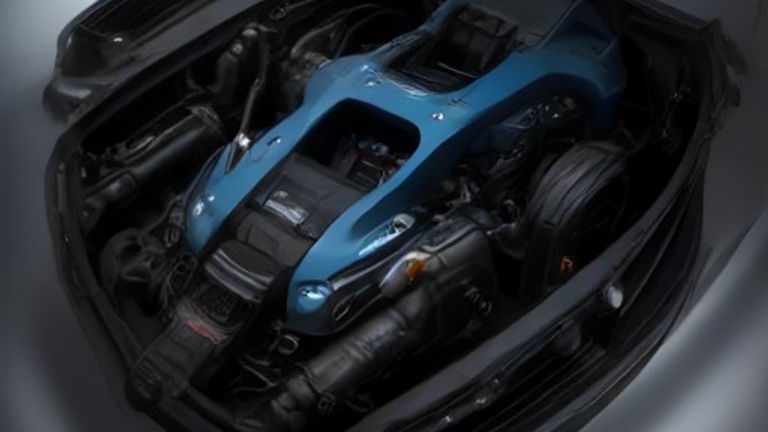
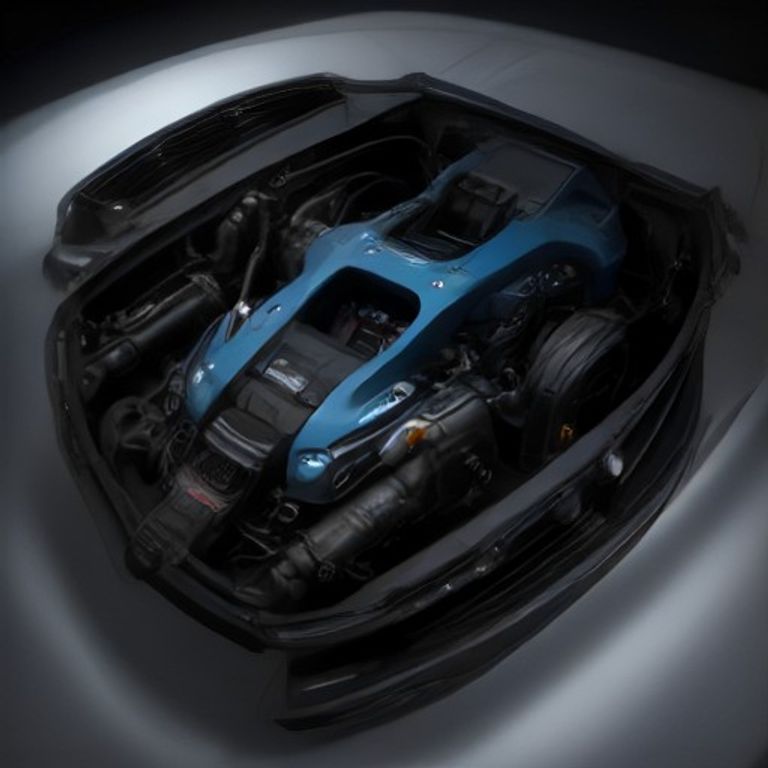
- Packaging: Finding space for an additional compressor and its associated components within an already crowded engine bay can be a significant design hurdle.
- Thermal Management: Both the electric motor and the compressor generate heat, requiring efficient cooling strategies to maintain optimal performance and reliability.
- Cost and Complexity: Adding an entirely new system inherently increases the overall cost and complexity of the powertrain, requiring careful consideration of the performance benefits versus the added expense.
Despite these challenges, SRT’s commitment to pushing performance boundaries suggests a determined effort to overcome them. This exploration into advanced electrified turbocharging technology underscores the brand’s dedication to delivering the most thrilling and responsive driving machines possible, setting a new benchmark for high-performance automotive powertrains.
Source : https://www.caranddriver.com/news/a73366803/srt-eboost-air-turbocharger-system-details/