

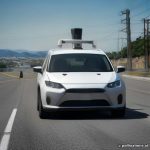

The Promise of Affordable Autonomy: Tesla Cybercab’s Bold Vision
Tesla has once again captured the automotive world’s attention with the announcement of its Cybercab, an autonomous vehicle slated to retail for under $30,000. This ambitious price point, if achieved, represents a potentially revolutionary shift in the accessibility of self-driving technology. For years, fully autonomous vehicles have remained a futuristic concept, often associated with luxury segments or experimental pilot programs bearing exorbitant costs. The notion of a vehicle capable of independent navigation being available at a price point comparable to many entry-level or mid-range conventional cars could profoundly disrupt the personal transportation landscape.
The « under $30,000 » figure is not merely a competitive price tag; it signals Tesla’s intent to democratize autonomous mobility. This could open up self-driving cars to a much broader demographic, moving them from niche luxury items to viable everyday transportation solutions. Such a price point would necessitate significant advancements in manufacturing efficiency, component cost reduction, and potentially a streamlined vehicle design focused specifically on autonomous functionality rather than traditional driver controls. The implication is clear: Tesla aims to make autonomous ride-hailing or even personal ownership of a fully self-driving vehicle a financially attainable reality for millions, potentially accelerating the transition away from human-driven vehicles in urban and suburban environments.
Understanding Tesla’s Autonomy: FSD and the Path Forward
At the heart of the Cybercab’s appeal is its promise of « autonomy. » For Tesla, this refers to its continually evolving Full Self-Driving (FSD) software, which leverages a sophisticated array of cameras and artificial intelligence to perceive and interpret the driving environment. While FSD is currently available as a supervised driver-assist system, requiring active human oversight, the Cybercab’s proposition pushes towards a higher level of independence. The automotive industry generally categorizes autonomous driving capabilities using the Society of Automotive Engineers (SAE) J3016 standard, ranging from Level 0 (no automation) to Level 5 (full automation in all conditions).
Achieving true Level 4 (high automation, driver attention not required in specific conditions) or Level 5 autonomy (full automation everywhere) presents formidable technical, regulatory, and ethical challenges. Tesla’s vision-only approach, which eschews lidar sensors common in many other autonomous driving projects, relies heavily on advanced neural networks to process visual data and make driving decisions. The successful deployment of the Cybercab as a truly autonomous vehicle would validate this approach on a large scale, demonstrating its ability to navigate complex real-world scenarios safely and reliably without human intervention. This ongoing development involves continuous software updates, extensive data collection from its fleet, and rigorous testing to refine its capabilities and address unforeseen edge cases.
Initial Constraints: A Phased Rollout in Texas
Despite the grand vision of widespread, affordable autonomy, the initial rollout of the Tesla Cybercab comes with important caveats. The first customers will be required to take delivery in a handful of specified Texas cities. This geographic limitation for initial deliveries is a common strategy for pioneering technologies, allowing manufacturers to focus their resources and manage the complexity of early deployment. Selecting specific urban centers in Texas likely provides a controlled and diverse environment for real-world testing and data collection, perhaps benefiting from favorable regulatory frameworks or existing infrastructure that supports autonomous vehicle operations.
This concentrated approach enables Tesla to gather critical performance data under specific traffic conditions, road types, and weather patterns prevalent in these regions. It also facilitates a more manageable process for customer support, service, and any necessary software or hardware adjustments that may arise during the initial launch phase. While this might be disappointing for enthusiasts outside of these designated areas, it underscores a cautious and methodical approach to introducing a transformative technology, prioritizing safety and reliability in its foundational stages before broader expansion.
Geofencing: Defining the Autonomous Operating Domain
A significant aspect of the Cybercab’s initial limitations is that the car is currently geofenced to operate only within specific regions. Geofencing involves creating virtual geographic boundaries within which the autonomous system is permitted to function. Should the vehicle venture outside these pre-defined zones, its autonomous driving capabilities would be disabled, requiring human intervention or preventing operation altogether. This constraint is not unique to Tesla; it is a standard practice for most autonomous vehicle developers during their early deployment phases.
The primary reasons for geofencing are multifaceted. Firstly, it enhances safety by ensuring the autonomous system operates only in areas that have been meticulously mapped, validated, and thoroughly tested. This includes detailed mapping of road features, traffic signals, signage, and predictable environmental conditions. Secondly, it simplifies the regulatory approval process, as authorities can grant permits for specific, well-understood operational design domains (ODDs) rather than an open-ended, nationwide deployment. Thirdly, it allows Tesla to concentrate its data collection and refinement efforts on specific, complex environments, incrementally expanding the geofenced areas as confidence and capability grow. For early adopters, this means that while their Cybercab is autonomous, its freedom to roam is initially restricted to specific urban or suburban corridors, highlighting the journey still ahead for truly ubiquitous self-driving.
The Road Ahead for Autonomous Mobility
The Tesla Cybercab’s announcement, with its blend of ambitious promises and practical initial limitations, reflects the ongoing evolutionary journey of autonomous technology. The under-$30,000 price point sets a new benchmark for affordability, potentially accelerating the public’s adoption of self-driving vehicles on an unprecedented scale. However, the requirements for delivery in specific Texas cities and the geofenced operational zones serve as a clear reminder that widespread, go-anywhere autonomy remains a future aspiration rather much than an immediate reality.
These initial constraints are not merely obstacles; they are strategic steps in the methodical development and deployment of a complex, safety-critical technology. As Tesla gathers more data, refines its FSD software, and navigates the evolving regulatory landscape, it is reasonable to expect a gradual expansion of the Cybercab’s operational design domain. The path to truly ubiquitous, affordable autonomy is paved with such measured introductions, ensuring that the technology matures responsibly. The Cybercab represents a significant milestone, offering a glimpse into a future where autonomous transportation is not just a luxury, but a fundamental and accessible option for many, beginning its journey within carefully defined boundaries.
Source : https://www.caranddriver.com/news/a74441018/tesla-cybercab-orders-pricing/