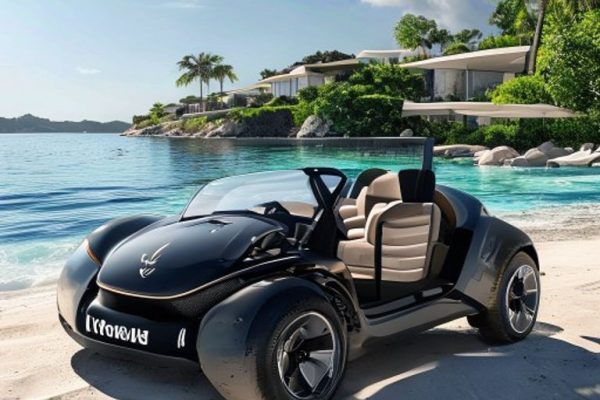

The automotive world is undergoing a profound transformation, with electric vehicles (EVs) driving towards a sustainable and technologically advanced future. While many compelling electric options are already available, significant consumer and industry excitement focuses on what lies just beyond the horizon. These are the next-generation EVs not yet in showrooms, but actively progressing through development, from visionary concepts to production prototypes. This period of anticipation reflects a collective eagerness to witness the next evolution of electric mobility.
However, the journey from an engineer’s design to a mass-produced vehicle is long, complex, and challenging. Understanding this intricate process is key to appreciating the future landscape of electric transportation. These forthcoming models promise to push boundaries in range, performance, charging speed, and integrated technologies. Yet, the path is not always linear; market shifts, technological hurdles, and economic realities can significantly impact even the most promising projects.
From Vision to Reality: The EV Development Journey
Every electric vehicle reaching consumers begins as an idea, often manifesting first as a concept car. These initial interpretations serve as powerful statements of intent, showcasing bold design philosophies, technological aspirations, and innovative interior layouts. Concept vehicles capture imaginations and gauge public interest, setting a vision for what could be, often unconstrained by immediate production realities.
Following the concept phase, promising ideas transition into prototype development. This stage involves meticulous engineering and construction of tangible, testable versions. Prototypes are crucial for evaluating performance, refining aerodynamics, testing battery systems, optimizing motor efficiency, and integrating advanced software in real-world conditions. This iterative testing is critical, as theoretical designs meet practical application, revealing unforeseen challenges and opportunities.
The penultimate step is pre-production. Here, manufacturing processes are established, assembly lines configured, and a limited number of vehicles produced to validate build quality, material sourcing, and production efficiency. This phase is vital for ironing out manufacturing kinks, ensuring consistent, high-standard production. Bringing a new automotive platform to market demands immense capital, specialized expertise, and significant time.
Navigating the Hurdles of Automotive Innovation
While advanced electric vehicles hold undeniable allure, the road to market is paved with significant hurdles. Technical challenges abound, from pushing battery energy density and longevity to developing robust charging solutions and seamlessly integrating sophisticated software and autonomous capabilities. Automakers must also contend with evolving global regulations regarding safety and materials, which vary significantly across regions.
Economic viability also plays a crucial role. The cost of R&D, new manufacturing facilities, and securing supply chains for critical components like minerals and semiconductors are astronomical. Companies must balance innovation with affordability for future EVs to be both desirable and accessible. The competitive landscape is also intense, sometimes leading to project adjustments or cancellations as strategies evolve.
It is a sober reality that not every promising concept or advanced prototype makes it to full production. Factors like unforeseen technological roadblocks, unfavorable market conditions, shifts in company strategy, overwhelming production costs, or new regulatory hurdles can cause a project to be shelved. The acknowledgment that « perhaps a few may never see the light of day » highlights this inherent uncertainty, reminding us that even exciting announcements are subject to the rigors of feasibility and market dynamics.
What Drives Anticipation for Future EVs?
Consumer anticipation for future electric vehicles is largely fueled by the promise of continuous improvement and diversification. Buyers seek longer driving ranges, faster charging times, and more widespread, reliable charging infrastructure. Performance remains a key driver, with electric powertrains offering instant torque and smooth acceleration.
Beyond core functionalities, future EVs are expected to introduce more refined designs, spacious and versatile interiors, and advanced connectivity features. The diversification of body styles is also highly anticipated, moving to a broader array of electric SUVs, trucks, vans, and niche segments, catering to wider needs. A growing emphasis on sustainability, using environmentally friendly materials and processes, also aligns with the broader ethos of electric mobility.
The Evolving Ecosystem of Electric Mobility
The development of future electric vehicles is part of a larger, evolving ecosystem. Innovations in charging technology, such as ultra-fast chargers and inductive solutions, are constantly explored for greater convenience. Software advancements transform vehicles into smart, connected devices, capable of over-the-air updates, personalized interfaces, and advanced driver-assistance systems nearing autonomous capabilities.
Concepts like vehicle-to-grid (V2G) technology, where EVs can feed electricity back to the grid, are also being explored, potentially stabilizing power networks and benefiting owners. The push towards material efficiency, recyclability, and ethical sourcing of components is a significant trend, aiming for a more circular economy in EV production and end-of-life management. All these interconnected developments enhance the appeal and practicality of the next wave of EVs.
The Promise and Prudence of Future Offerings
In conclusion, new electric vehicles emerging from concept to production hold immense promise for the automotive industry and consumers. Ongoing innovations across design, engineering, battery technology, and digital integration are set to redefine personal transportation. While excitement for these yet-to-be-released models is warranted, patience and realism are prudent. Development timelines can shift, specifications may evolve, and not every ambitious project will reach commercial availability.
Nevertheless, the underlying trend is clear: the future of mobility is electric, and a new generation of vehicles is steadily progressing towards readiness. These upcoming models are poised to offer unprecedented choices, greater efficiencies, and an even more engaging driving experience, accelerating the global transition towards a cleaner, more sustainable automotive future.
Source : https://www.caranddriver.com/news/g29994375/future-electric-cars-trucks/