
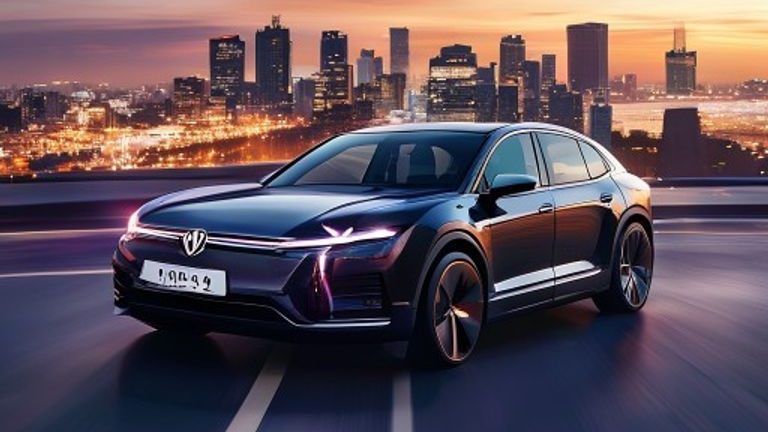
Volkswagen Pivots Amidst Evolving North American EV Landscape
The automotive industry is in a constant state of flux, and the electric vehicle (EV) segment, once characterized by explosive growth and seemingly limitless potential, is now experiencing a significant recalibration. In North America, particularly, the initial surge in EV adoption appears to be moderating, presenting new challenges for manufacturers who have invested heavily in electrification strategies. This evolving market dynamic is prompting a strategic reassessment across the board, compelling automakers to adapt their product portfolios and production priorities to align with shifting consumer demands and economic realities. Volkswagen, a global automotive giant with ambitious electrification goals, is among the companies navigating this complex transition, signaling a notable shift in its North American strategy.
The ID.4’s Role and Its Evolving Future in the U.S. Market
Central to Volkswagen’s initial foray into the mainstream electric vehicle market in North America was the ID.4 electric crossover. Positioned as a practical, family-friendly EV designed to appeal to a broad consumer base, the ID.4 quickly became a recognizable symbol of Volkswagen’s commitment to an electric future. It represented a crucial step in the brand’s global ‘Accelerate’ strategy, aiming to democratize electric mobility. However, recent developments indicate a significant strategic pivot concerning the ID.4’s trajectory in the region. Volkswagen is reportedly wrapping up production of the ID.4 electric crossover, a move that suggests a re-evaluation of its current market positioning or a strategic pause in its production cycle for North America.
While the exact implications of "wrapping production" are subject to interpretation, in the context of a challenging market and a stated shift in focus, it points towards either a temporary halt, a significant retooling, or potentially a winding down of the current ID.4 model’s presence in the U.S. market. This decision underscores the difficulties even well-received EVs face in a market that is not yet fully mature and grappling with infrastructure limitations, affordability concerns, and persistent consumer skepticism about range and charging convenience. For Volkswagen, this represents a crucial moment to reassess the most effective path forward for its electrification efforts in this vital market.
- Market Saturation & Competition: The influx of new EV models from both established players and new entrants has intensified competition, making it harder for individual models to capture significant market share without aggressive pricing or unique features.
- Consumer Affordability: High sticker prices for many EVs, coupled with rising interest rates, have made electric vehicles less accessible to the average consumer, impacting broader adoption rates.
- Infrastructure Challenges: Despite improvements, the availability and reliability of public charging infrastructure remain a significant concern for many potential EV buyers, contributing to range anxiety.
- Profitability Pressures: Producing EVs at scale and profitability has proven challenging for many automakers, forcing a re-evaluation of product lines that might not be meeting sales or profit targets.
The Strategic Shift Towards a New High-Volume Vehicle
In light of these market dynamics and the adjustments concerning the ID.4, Volkswagen has signaled a clear intention to redirect its resources and focus towards developing a "new high-volume vehicle." This strategic reorientation suggests that the company is keenly aware of the need to capture a larger share of the mass market, moving beyond niche segments or early adopters to truly scale its operations and achieve its ambitious sales targets. A "high-volume vehicle" for Volkswagen would likely embody several key characteristics designed to maximize its appeal and sales potential across a wide demographic.
The characteristics of such a vehicle are paramount for its success. It would need to be competitively priced, addressing one of the primary barriers to EV adoption. Practicality, versatility, and efficiency would also be crucial, catering to the everyday needs of families and commuters. While the specific nature of this new vehicle remains unconfirmed, the emphasis on "high-volume" suggests a product designed for broad appeal, potentially offering a compelling balance of performance, features, and cost. It could represent a more conservative approach to body style or a focus on essential features that resonate with a wider segment of buyers, distinct from the pioneering role the ID.4 played.
- Enhanced Affordability: A lower entry price point would be critical to unlock a larger segment of buyers currently priced out of the EV market.
- Broader Appeal: Potentially a more conventional body style or a focus on universally desired features to attract a wider, less EV-enthusiastic audience.
- Optimized Efficiency & Range: Maximizing range and charging efficiency while managing costs will be key to overcoming lingering consumer concerns.
- Technological Integration: Leveraging existing VW Group platforms and technologies to streamline production and reduce development costs.
Volkswagen’s Broader Vision and Market Adaptation
This strategic move by Volkswagen is not an isolated incident but rather a reflection of broader adjustments being made across the global automotive industry. Many manufacturers are reassessing the pace and specifics of their EV transitions, often reintroducing or bolstering hybrid offerings, or re-evaluating their EV product mix to better match current market realities. For Volkswagen, a company with a strong legacy in producing accessible, reliable vehicles, the pivot to a new high-volume vehicle indicates a commitment to adapting its long-term vision to short-term market fluctuations.
The goal remains consistent: to lead in sustainable mobility. However, the path to that goal requires flexibility and a keen understanding of consumer behavior. By potentially shifting away from the current ID.4 strategy in North America and focusing on a new high-volume offering, Volkswagen aims to solidify its market position, ensure profitability, and continue its journey towards an electrified future, albeit with a refined and more pragmatic approach tailored to the evolving landscape of electric vehicle adoption.
Conclusion: Navigating the Road Ahead
Volkswagen’s decision to wrap production of the ID.4 electric crossover and concentrate on a new high-volume vehicle in North America is a clear indicator of the dynamic and challenging environment facing EV manufacturers. It highlights a necessary strategic adjustment in response to a North American EV market that is recalibrating its growth trajectory. While the ID.4 paved the way, Volkswagen’s future success in the region will hinge on its ability to deliver a product that truly resonates with the mass market, balancing innovation with affordability and practicality. The road to full electrification remains long and complex, requiring continuous adaptation and strategic foresight from even the most established automakers.
Source : https://www.caranddriver.com/news/a70976132/volkswagen-planning-new-model-ends-us-id4-production/