
Volkswagen Confirms Hybrid Powertrain for Atlas, Tiguan, and Atlas Cross Sport
Volkswagen is set to significantly expand its hybrid vehicle offerings in the North American market, with a recent executive announcement confirming a new hybrid powertrain for three key SUV models: the full-size Atlas, the compact Tiguan, and the two-row Atlas Cross Sport. This strategic move underscores Volkswagen’s commitment to diversified electrification strategies, aiming to bridge the gap between traditional internal combustion engines and its growing all-electric ID. family.
According to the executive, the introduction of the new hybrid powertrain will coincide with, or follow closely after, the launch of the updated two-row Atlas, specifically the Atlas Cross Sport, which is anticipated to arrive in approximately one year. This timeline suggests that consumers can expect to see these hybrid-powered SUVs entering the market within the next two years, marking a notable evolution in Volkswagen’s product lineup.
Strategic Move Towards Electrification and Efficiency
The decision to integrate a new hybrid powertrain across such a crucial segment of its SUV portfolio highlights Volkswagen’s responsiveness to evolving market demands and increasingly stringent environmental regulations. As consumer interest in fuel-efficient vehicles continues to grow, particularly within the popular SUV categories, offering hybrid options becomes a critical component of maintaining competitiveness. For many consumers, a hybrid vehicle offers a practical stepping stone towards full electrification, providing improved fuel economy and reduced emissions without the need for significant changes in driving habits or reliance on widespread charging infrastructure.
Volkswagen has already made substantial investments in its all-electric future with the MEB platform and the ID. series of vehicles. However, the introduction of robust hybrid options demonstrates a pragmatic approach, recognizing that a significant portion of the market is not yet ready for a full transition to electric vehicles. Hybrids can appeal to a broader audience, including those who frequently undertake long journeys or live in areas where EV charging infrastructure is still developing. This multi-pronged strategy allows Volkswagen to cater to diverse customer needs while steadily pushing towards a more sustainable future.
The Atlas and Atlas Cross Sport: Enhanced Efficiency for Family Haulers
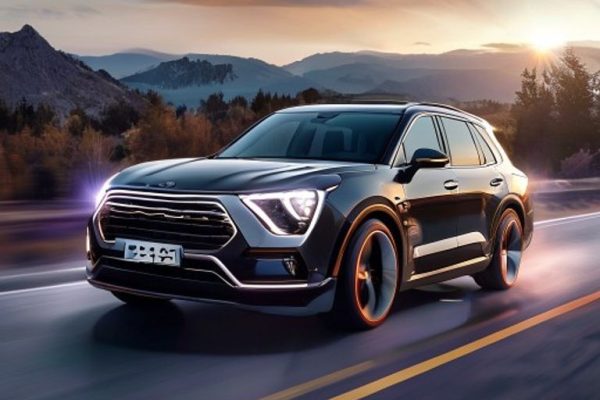
The Volkswagen Atlas, known for its spacious three-row seating and family-friendly appeal, is a strong contender in the large SUV segment. Its two-row sibling, the Atlas Cross Sport, offers a sportier design and a slightly more compact footprint while retaining much of the Atlas’s utility. Both models have been popular choices for their practicality and robust road presence. The integration of a hybrid powertrain into these vehicles promises to address one of the primary concerns often associated with larger SUVs: fuel consumption.
For current and prospective Atlas and Atlas Cross Sport owners, a hybrid option could translate into significant savings at the pump, particularly in stop-and-go city driving where electric motors can provide propulsion more frequently. This enhancement not only improves the cost of ownership but also aligns these substantial vehicles with modern expectations for environmental responsibility. The executive’s statement that the two-row Atlas is about a year away sets the stage for the subsequent introduction of this new powertrain, making the Atlas Cross Sport likely one of the first recipients.
Tiguan Hybrid: A Boost for the Compact SUV Segment
The Tiguan is a cornerstone of Volkswagen’s global sales, competing fiercely in the highly competitive compact SUV segment. Known for its European driving dynamics and practical interior, the Tiguan has a broad appeal. Introducing a hybrid variant for the Tiguan is a pivotal move, directly pitting it against established hybrid rivals in its class. This will allow Volkswagen to capture a share of the market that prioritizes efficiency alongside versatility and performance.
A hybrid Tiguan would likely offer a compelling blend of power and economy, appealing to commuters, small families, and urban dwellers alike. The added fuel efficiency, potentially coupled with a boost in low-end torque from the electric motor, could make the Tiguan even more attractive to a wider range of buyers looking for a modern, economical, and capable compact SUV.
Understanding the « New Hybrid Powertrain »
While specific technical details of the « new hybrid powertrain » have not been disclosed, the announcement suggests a dedicated system designed for efficiency and performance across these SUV platforms. Historically, hybrid powertrains can range from mild hybrids (MHEVs), which primarily assist the gasoline engine and enable features like enhanced stop-start, to full hybrids (FHEVs), which can drive short distances on electric power alone, and plug-in hybrids (PHEVs), offering larger batteries and significant all-electric ranges.
Regardless of its precise configuration, the introduction of a new hybrid system signifies Volkswagen’s investment in advanced, efficient technology. Consumers can generally expect a range of benefits from such a system, which typically include:
- Enhanced fuel efficiency, particularly noticeable in urban driving cycles and stop-and-go traffic.
- Reduced tailpipe emissions compared to conventional gasoline-only counterparts, contributing to cleaner air.
- Potential for improved low-end torque and smoother acceleration, thanks to the instantaneous power delivery of electric motors.
- Quieter operation at low speeds, as the vehicle may run solely on electric power for short durations.
- Regenerative braking systems that convert kinetic energy typically lost during deceleration into usable electrical energy, further boosting efficiency.
This powertrain will be engineered to integrate seamlessly with Volkswagen’s existing vehicle architecture, ensuring reliability and the signature driving experience customers expect from the brand.
Market Outlook and Competitive Landscape
The entry of hybrid Atlas, Tiguan, and Atlas Cross Sport models will undoubtedly intensify competition in the hybrid SUV market. Brands like Toyota, Honda, Ford, and Hyundai already offer a strong selection of hybrid SUVs across various segments. Volkswagen’s new hybrid offerings will need to stand out through a combination of efficiency, performance, technology, and value.
This strategic expansion reflects a broader industry trend where hybrids serve as crucial bridge technology during the transition to widespread electric vehicle adoption. By offering compelling hybrid options for its most popular SUV models, Volkswagen is positioning itself to capture a larger share of environmentally conscious consumers who are not yet ready for a fully electric vehicle but are eager to improve their vehicle’s efficiency and reduce their environmental footprint. The coming year will be critical as Volkswagen prepares to roll out these anticipated hybrid additions to its highly successful SUV lineup, setting a new course for efficiency and choice within its brand.
Source : https://www.caranddriver.com/news/a70910030/vw-tiguan-hybrid-atlas-cross-sport-confirmed/