

Volkswagen’s Strategic Shift Towards Profitability
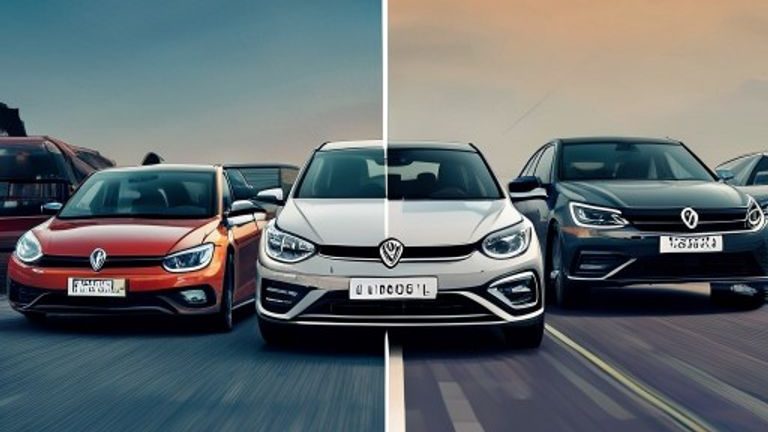
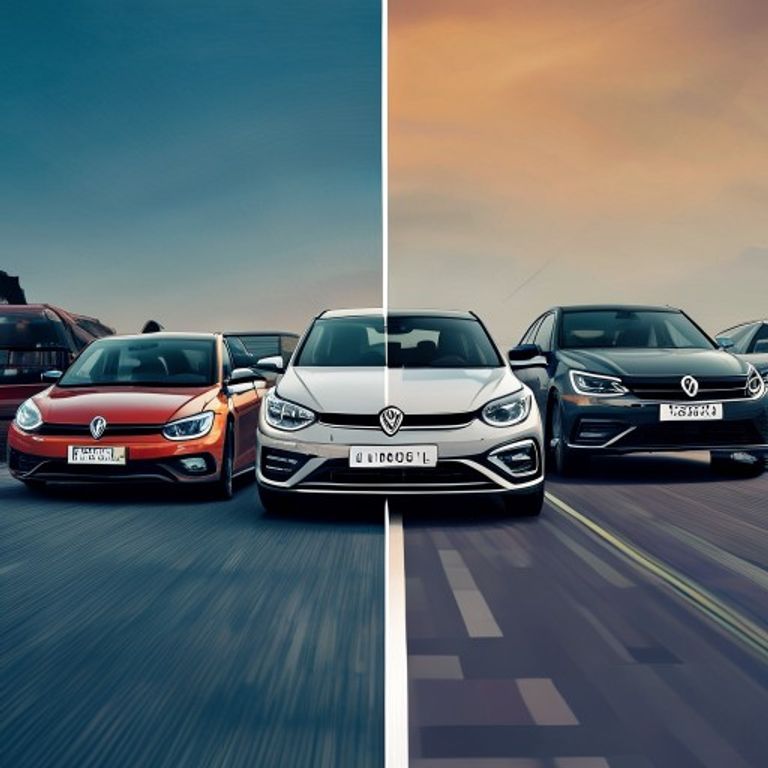
Volkswagen is reportedly considering a significant strategic overhaul that could see the automaker reduce its global vehicle lineup by as much as half. This ambitious move is not merely about cutting models but represents a concerted effort to prioritize the most profitable vehicles and segments, thereby enhancing the company’s financial performance and operational efficiency. In an era of immense investment in electrification and digital technologies, streamlining product offerings has become a critical pathway for major manufacturers to free up capital and resources.
This potential restructuring is indicative of a broader industry trend where automakers are increasingly re-evaluating their extensive portfolios. The goal is to divest from low-volume, low-margin models and instead focus on core products that deliver strong returns, resonate well with current market demands, and align with future strategic objectives.
The Global Scope of the Transformation
Volkswagen Group’s extensive global footprint means it offers a vast array of vehicles tailored to diverse regional tastes, regulations, and economic conditions. From compact city cars like the Polo and Up! prevalent in Europe, to various commercial vans, and region-specific sedans and SUVs in markets like China and South America, the global lineup is considerably more expansive than what is seen in North America. Cutting ‘half’ of this global lineup would likely not involve headline models that are volume sellers, but rather a strategic pruning of niche variants, less popular engine options, or models with significant market overlap that fail to meet stringent profitability targets.
The rationale behind such a sweeping global reduction is multi-faceted. It aims to simplify the manufacturing process, reduce the complexity of supply chains, and optimize marketing efforts. More critically, it allows Volkswagen to reallocate substantial research and development budgets, as well as engineering talent, towards areas deemed essential for future growth and competitiveness. These areas predominantly include electric vehicle development, advanced driver-assistance systems, and sophisticated in-car software solutions.
- Resource Reallocation: Freeing up capital and engineering talent to accelerate the transition to electric vehicles and develop next-generation technologies.
- Manufacturing Simplification: Reducing complexity in production lines, parts sourcing, and inventory management.
- Cost Reduction: Minimizing development and production costs associated with low-volume or less profitable models.
- Market Focus: Concentrating efforts on high-margin segments such as SUVs, crossovers, and premium trims that align with evolving consumer preferences.
Limited Direct Impact on the U.S. Market
Crucially, the significant global changes are unlikely to have a huge, direct effect on Volkswagen’s U.S. lineup. This is primarily because Volkswagen’s American portfolio is already considerably leaner and more focused than its global counterpart. The U.S. market has historically favored larger vehicles, particularly SUVs and crossovers, which already form the backbone of VW’s current offerings in North America. Models such as the Atlas, Tiguan, Taos, and the electric ID.4 are key volume drivers.
Many of the smaller, niche, or regionally specific models that might be on the chopping block globally, such as the Polo hatchback, certain Golf variants, or various commercial vans, have either never been officially imported to the U.S. or were discontinued years ago due to shifting market demand. Therefore, while the company as a whole will be undergoing a transformation, the fundamental composition of vehicles available to U.S. consumers is expected to remain largely stable.
Expected Changes: Fewer Variants and Trim Levels
While the overall model count in the U.S. may not drastically change, the more tangible impact for American consumers and dealers could be a reduction in the number of available variants and trim levels within existing model lines. This means that instead of a broad spectrum of choices, customers might encounter a more streamlined selection.
This strategy aims to simplify the car-buying process, reduce the complexity of dealer inventories, and optimize production lines. By offering fewer configurations, Volkswagen can potentially achieve higher efficiency, reduce manufacturing costs per unit, and improve overall profitability. It allows the company to focus on equipping vehicles with features and packages that are most in demand, rather than scattering resources across a multitude of less popular options.
- Consolidation of Trims: Merging or eliminating less popular entry-level or slow-selling trim lines.
- Streamlined Powertrains: Reducing the number of available engine and transmission combinations for a given model.
- Bundled Options: Moving away from numerous standalone options towards more comprehensive, bundled packages as standard features on higher trims.
- Niche Model Review: Potentially discontinuing very low-volume performance variants or special editions that do not justify their development and production costs.
The Broader Industry Context and Future Direction
Volkswagen’s potential lineup reduction is not an isolated event but rather aligns with a broader industry trend. Automakers like Ford and General Motors have previously pruned their North American lineups, largely exiting the sedan and hatchback segments to focus on more profitable SUVs, trucks, and electric vehicles. This strategic alignment prepares companies for the massive capital investment required for electric vehicle development, battery production, and autonomous driving technologies.
For Volkswagen, this initiative supports its long-term ‘ACCELERATE’ strategy, which emphasizes a rapid transition to e-mobility, enhanced software capabilities, and new business models. By creating a more agile and financially robust core business, Volkswagen aims to better compete in an automotive landscape undergoing unprecedented transformation. Ultimately, while choice might slightly narrow in some areas, the goal is a more focused, efficient, and future-ready Volkswagen, better equipped to navigate the challenges and opportunities of the coming decades.
Source : https://www.caranddriver.com/news/a71897612/vw-global-model-lineup-cuts/