

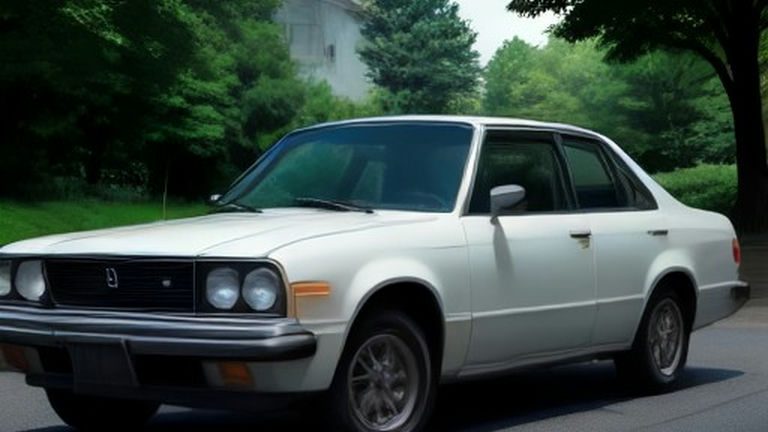
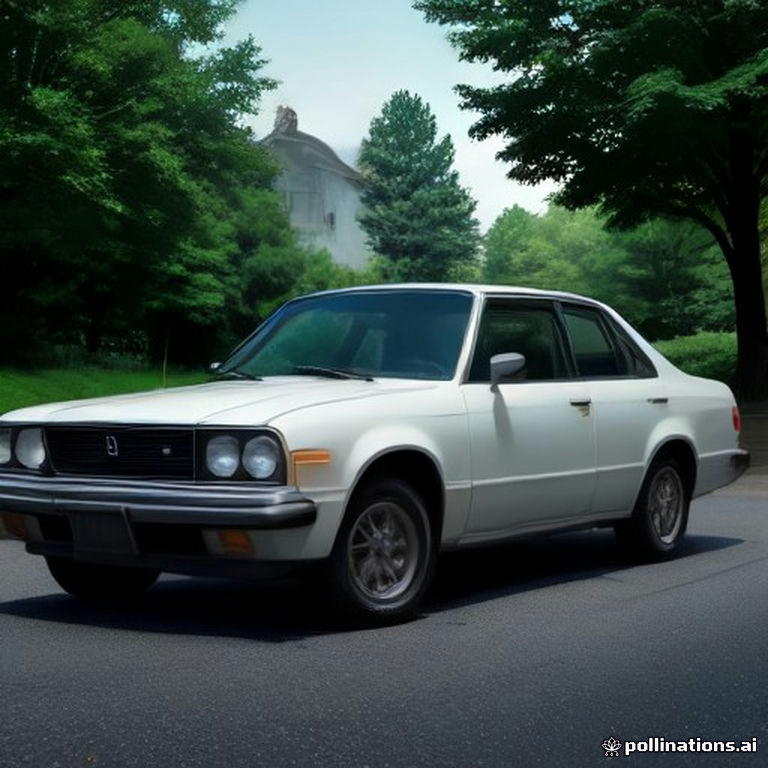
Echoes of a Pivotal Era: The 1979 Honda Accord’s Enduring Relevance
The year 1979 marked a fascinating crossroads in automotive history, particularly within the American market. Fuel crises underscored a pressing need for efficiency, while global manufacturers, notably from Japan, steadily expanded their footprint. Against this backdrop, the Honda Accord, originating from a nation celebrated for its technological prowess, began to redefine expectations for what a compact family car could be. Far from a mere utilitarian conveyance, the 1979 Honda Accord 4-Door sedan emerged as a surprisingly sophisticated and incredibly appealing proposition that, in many ways, offered exactly what American drivers were searching for.
Honda had already made inroads with the economical Civic, but the Accord represented a significant step up, aiming for a broader audience with a blend of practicality, comfort, and unexpected refinement. When it first arrived on American shores, it wasn’t just another import; it was a carefully engineered statement. Unlike some domestic competitors struggling with quality control and dated designs, the Accord exuded thoughtful construction. Its compact exterior belied an intelligently packaged interior, offering space and amenities that often rivaled larger, less efficient vehicles. This strategic positioning allowed the Accord to carve out a unique niche, appealing to those who valued smart design and reliable performance over sheer size or traditional brand loyalty.
Engineered for the Times: Features that Defined the Accord
Delving into specifics, the 1979 Honda Accord showcased a forward-thinking approach to automotive design. Central to its appeal was its efficient 1.8-liter CVCC (Compound Vortex Controlled Combustion) engine. This innovative design allowed the Accord to meet stringent emission standards without a catalytic converter in many markets, while delivering impressive fuel economy—a crucial selling point in an era of rising gas prices. Paired with a smooth-shifting manual or optional automatic transmission, the powertrain offered an economical yet surprisingly sprightly driving experience for its class.
Beyond its powertrain, the Accord was remarkably well-appointed for its time and segment. Standard features often included:
- Front-wheel drive for enhanced traction and efficient packaging.
- Power-assisted steering, improving maneuverability and comfort.
- An AM/FM stereo radio, a desirable standard when many competitors offered basic AM.
- Air conditioning, a significant comfort item often extra-cost, even on larger cars.
- Thoughtful interior ergonomics with clear instrumentation and quality materials.
- Independent front and rear suspension, ensuring a comfortable, composed ride.
These inclusions demonstrated Honda’s commitment to delivering value and a premium experience, challenging the notion that a compact car had to be sparsely equipped. The Accord was not merely transport; it was a sensible, comfortable, and well-equipped daily driver.
The « American Car » Paradox: Mainstream Acceptance of an Import
The initial news article snippet referred to the Accord as a « sensational little American car, » an intriguing descriptor for a Japanese import. This apparent paradox speaks volumes about the Accord’s profound impact and swift integration into the American automotive landscape. While Japanese in origin and engineering, the Accord embodied qualities American consumers increasingly prioritized: unwavering reliability, exceptional fuel efficiency, thoughtful design, and strong value. It offered a compelling alternative to domestic offerings often perceived as lacking in these areas during the late 1970s.
The Accord wasn’t just sold in America; it was adopted by America. Its combination of low running costs, dependable performance, and respectable comfort made it a practical choice for families and commuters alike. It transcended its « import » status to become a mainstream staple—a car that simply worked, day in and day out. This widespread acceptance paved the way for future generations of Japanese cars and fundamentally shifted consumer perceptions, proving that foreign manufacturers could indeed build vehicles perfectly suited to American lifestyles and preferences. Its success wasn’t about being American-made, but about perfectly fulfilling American needs with an unprecedented blend of quality and efficiency.
A Lasting Legacy: The Accord’s Enduring Influence
Looking back at the 1979 Honda Accord through the lens of an archive road test, its historical significance cannot be overstated. It was a trailblazer, demonstrating that a compact sedan could deliver on comfort, features, and efficiency without compromise. Its success not only cemented Honda’s reputation in the crucial North American market but also significantly influenced the design and development strategies of competitors, both domestic and international. The Accord proved that quality, reliability, and smart engineering were universal languages understood and appreciated by consumers everywhere.
The lineage of the Accord, stretching decades beyond this inaugural 4-door model, stands as a testament to its foundational strengths. Each subsequent generation has built upon the principles established in 1979: a commitment to practical innovation, driver satisfaction, and enduring value. The 1979 Honda Accord 4-Door wasn’t just a car; it was a harbinger of change, an exemplar of automotive excellence that left an indelible mark on the industry and continues to resonate in the enduring success of its descendants.
Source : https://www.caranddriver.com/reviews/a74159286/1979-honda-accord-4-door-archive-test/

