


A Golden Age of Performance: The 1992 Showdown
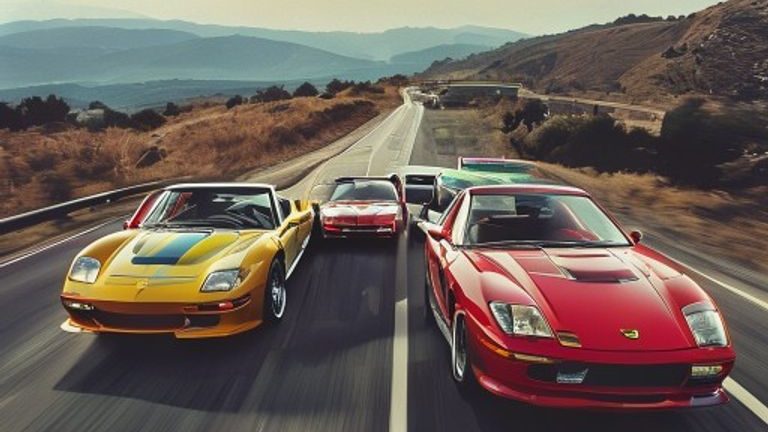
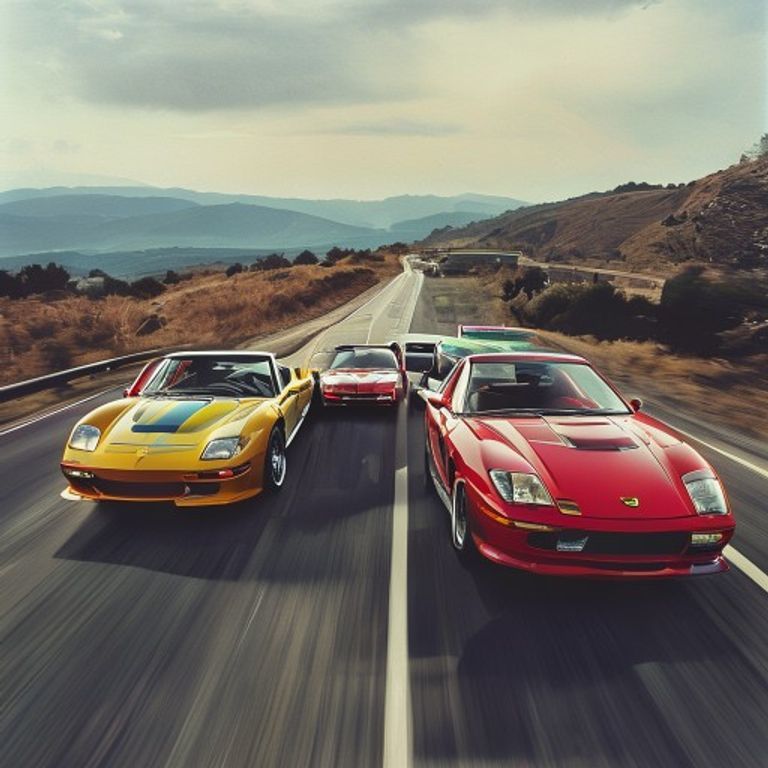
The year 1992 marked a fascinating intersection in automotive history, delivering some of the most memorable sports cars of a generation. It was an era when engineering prowess met design ambition, producing machines that promised thrilling performance and an unadulterated connection between driver and road. The soundscape was diverse: the rumble of a V8, the whine of a rotary, the precision of a small turbo, and the sophisticated growl of a twin-turbo V6 all vied for supremacy. Among the ‘silk-cut two-seaters’ that graced showrooms, four stand out for their blend of speed, beauty, and unique character: the Chevrolet Corvette, the Lotus Elan, the Mazda RX-7, and the Nissan 300ZX Turbo. But in this quartet of quick coupes and roadsters, which truly offered the most compelling package?
Chevrolet Corvette (C4): The Unapologetic American Icon
America’s definitive sports car, the 1992 C4 Corvette, exemplified its legacy with renewed vigor. Powered by the new 5.7-liter LT1 V8 engine, it produced an impressive 300 horsepower and 330 lb-ft of torque. This substantial power, channeled through either a 4-speed automatic or a ZF 6-speed manual, allowed the C4 to sprint from 0 to 60 mph in a blistering 5.3 to 5.5 seconds, pushing towards a top speed around 160 mph. More than just raw numbers, the Corvette offered an exhilarating, visceral driving experience. Its fiberglass body and iconic silhouette were instantly recognizable. The targa top offered open-air thrills, making the Corvette a refined brute, providing comfort for longer journeys while still delivering potent acceleration and the authoritative V8 sound. It represented accessible high performance, making dreams of owning a true sports car a reality for many.
Lotus Elan (M100): The Nimble British Maverick
The Lotus Elan M100 arrived in 1992 as a revelation in nimble handling and driver engagement. Breaking from Lotus tradition, the Elan was a front-wheel-drive roadster – a design choice that delivered astounding grip and precision. Its lightweight chassis, just over 2,200 pounds, was meticulously engineered. Under the hood resided an Isuzu-sourced 1.6-liter DOHC 16-valve turbocharged engine, producing 162 horsepower and 148 lb-ft of torque. While these figures seemed modest, the Elan’s exceptional power-to-weight ratio and finely tuned 5-speed manual gearbox allowed it to achieve 0-60 mph in a respectable 6.5 to 6.7 seconds, with a top speed approaching 137 mph. The Elan’s true genius lay in its steering and suspension – direct, communicative, and unbelievably agile, it carved corners with a finesse unmatched by many, proving that true driving pleasure isn’t solely about straight-line speed.
Mazda RX-7 (FD3S): The Rotary Revolution and Sculpted Beauty
The third-generation Mazda RX-7 (FD3S) arrived in 1992 like a vision from the future, redefining what a Japanese sports car could be. Its breathtaking, organic design hinted at the exotic engineering beneath. At its heart was the unique 1.3-liter 13B-REW sequential twin-turbo rotary engine, an engineering marvel delivering 255 horsepower and 217 lb-ft of torque. This high-revving engine, paired exclusively with a precise 5-speed manual, propelled the RX-7 from 0 to 60 mph in an astonishing 5.0 to 5.2 seconds, with a top speed electronically limited around 155 mph. More than its straight-line pace, the RX-7 was celebrated for its near-perfect 50/50 weight distribution and lightweight construction, contributing to a chassis that offered telepathic handling and unparalleled feedback. It was a car designed for the purist, an extension of the driver’s will, rewarding skill with one of the most sublime driving experiences available.
Nissan 300ZX Turbo (Z32): The Technologically Advanced Grand Tourer
The 1992 Nissan 300ZX Turbo (Z32) represented the pinnacle of Japanese automotive technology and design, blending potent performance with a luxurious driving experience. Its sleek, wide stance and distinctive headlight design made it an instant classic. Beneath its sculpted hood lay a formidable 3.0-liter VG30DETT twin-turbo V6 engine, churning out a stout 300 horsepower and 283 lb-ft of torque. Available with either a 5-speed manual or a 4-speed automatic, the 300ZX Turbo could accelerate from 0 to 60 mph in a quick 5.5 to 5.9 seconds, reaching an electronically limited top speed of 155 mph. What set the Z32 apart was its comprehensive suite of advanced features, including Nissan’s Super HICAS four-wheel steering system, which enhanced its cornering capabilities and stability. While heavier than some rivals, the 300ZX Turbo offered a supremely composed ride, making it an excellent grand tourer capable of devouring miles with effortless speed and refinement. It was a testament to Nissan’s ambition to create a world-beating, technology-packed sports car.
The Verdict: A Symphony of Diverse Speeds
Deciding which of these 1992 legends stands as the ‘best of all’ is challenging and subjective, depending entirely on a driver’s priorities. Each car carved its own niche, offering a distinct philosophy of performance:
- Chevrolet Corvette: The raw, powerful, iconic American muscle, delivering thunderous V8 performance for those who cherished tradition and accessible speed.
- Lotus Elan: The lightweight, agile British roadster, prioritizing sublime handling, communicative steering, and pure driving engagement over brute force.
- Mazda RX-7: The exotic, high-tech Japanese masterpiece, offering a unique rotary engine experience, razor-sharp handling, and stunning aesthetics for the purist.
- Nissan 300ZX Turbo: The sophisticated, technologically advanced Japanese grand tourer, combining immense twin-turbo V6 power with luxury, refinement, and cutting-edge features.
In 1992, these four vehicles offered a thrilling cross-section of global automotive engineering. Whether one sought the visceral grunt of an American V8, the surgical precision of a British roadster, the exotic allure of a Japanese rotary, or the sophisticated power of a Japanese V6, the market offered a ‘silk-cut two-seater’ to satisfy every performance appetite. Their legacy endures, celebrated not just for their speed, but for the distinct character and engineering brilliance that made each a legend.