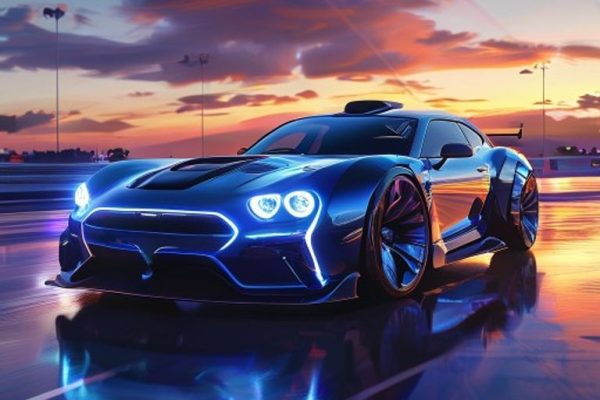



The Automotive Horizon: Anticipating Key Trends for 2026-2030
The automotive industry stands on the precipice of a profound transformation, with the period between 2026 and 2030 poised to be one of the most dynamic in its history. Rather than focusing on specific models, many of which are still under wraps, this sneak peek delves into the overarching technological and design trends that are currently shaping the development of future cars, trucks, and SUVs. These aren’t just incremental improvements; they represent fundamental shifts in how vehicles are powered, driven, connected, and manufactured, promising a new era of mobility defined by sustainability, intelligence, and a redefined user experience. As manufacturers worldwide pour investments into research and development, consumers can expect a wave of innovation that will fundamentally alter our perception of personal transportation.
Electrification and Advanced Battery Technology Set the Pace
The transition to electric powertrains will continue to accelerate, becoming the dominant force in the automotive landscape. By 2026-2030, electric vehicles (EVs) will have evolved beyond early adoption, moving towards widespread integration driven by technological advancements and expanding infrastructure. The focus will extend beyond mere range to include factors like charging speed, battery longevity, and sustainable resource management.
- Next-Generation Battery Chemistries: Expect to see more commercially viable solid-state batteries or advanced lithium-ion variants (e.g., silicon anodes) offering significantly higher energy density, meaning greater range in smaller, lighter packs. These technologies also promise faster charging times, drastically reducing the inconvenience associated with long-distance EV travel.
- Integrated Charging Ecosystems: The infrastructure for charging will become more robust and seamless. This includes ultra-fast DC chargers becoming commonplace, along with a greater emphasis on bidirectional charging capabilities, allowing EVs to serve as mobile power banks for homes or the grid. Wireless charging solutions, both static and dynamic (road-based), are also anticipated to gain traction.
- Sustainable Battery Lifecycle: The industry will increasingly prioritize the ethical sourcing of raw materials and comprehensive recycling programs for end-of-life batteries. Innovations in battery repair and repurposing for secondary applications will also contribute to a more circular economy.
- Diverse EV Offerings: The electric revolution will span all segments, from compact urban commuters to heavy-duty pickup trucks and performance-oriented SUVs, demonstrating the versatility and power potential of electric drivetrains.
The Evolution of Autonomous Driving Systems
While fully autonomous vehicles (Level 5) might still be some way off for widespread public use, the 2026-2030 timeframe will witness significant strides in assisted and semi-autonomous driving capabilities. Advanced Driver-Assistance Systems (ADAS) will become more sophisticated, reliable, and integrated, making driving safer and less demanding for the human operator.
- Enhanced Sensor Fusion: Vehicles will feature an even more comprehensive array of sensors, combining high-resolution cameras, advanced radar, LiDAR, and ultrasonic sensors. This fusion of data, processed by powerful AI algorithms, will provide a more accurate and robust understanding of the vehicle’s surroundings under various conditions.
- Advanced Semi-Autonomous Features: Expect highly capable Level 2+ and Level 3 systems to become more common. These will include sophisticated highway driving assists that handle acceleration, braking, and steering, often allowing for hands-free operation in specific, geofenced environments or under close driver supervision. Some systems may even manage complex urban driving scenarios like navigating intersections.
- Over-the-Air (OTA) Updates: Continuous improvement and feature enhancements for autonomous capabilities will be delivered via OTA updates, akin to smartphone software. This ensures that a vehicle’s intelligence can evolve and adapt over its lifespan, addressing new scenarios and improving performance.
- Driver Monitoring Systems: To ensure safety with higher levels of autonomy, advanced driver monitoring systems (DMS) will be standard, using cameras and sensors to track driver attention, engagement, and even physiological states, intervening if necessary.
Connected Ecosystems and Software-Defined Vehicles
The car of the future will be less of a mere machine and more of a highly integrated, mobile computing platform. Connectivity will move beyond infotainment, touching every aspect of the vehicle’s operation and user interaction, making software a critical differentiator and a core component of the automotive experience.
- Seamless Integration: Vehicles will integrate effortlessly into users’ digital lives, offering advanced smartphone mirroring, personalized user profiles across multiple vehicles, and seamless connectivity with smart home devices and cloud services.
- Vehicle-to-Everything (V2X) Communication: V2X technologies, encompassing V2V (vehicle-to-vehicle), V2I (vehicle-to-infrastructure), and V2P (vehicle-to-pedestrian), will become more widespread. This real-time data exchange will enhance safety by warning drivers of hazards ahead, optimize traffic flow, and improve efficiency by communicating with traffic signals.
- Software-Defined Functionality: Much of a vehicle’s features and performance characteristics will be controlled and updated by software. This enables greater customization, the unlocking of new capabilities post-purchase (e.g., performance boosts, advanced driving features), and predictive maintenance through sophisticated diagnostics.
- Advanced User Interfaces: Traditional buttons and switches will be increasingly replaced by intuitive voice commands, gesture controls, and large, customizable haptic touchscreens or holographic displays, creating a more immersive and personalized cabin experience.
Sustainable Design and Manufacturing Practices
Beyond the powertrain, the entire lifecycle of a vehicle will come under scrutiny, with a strong emphasis on sustainability. Manufacturers are actively pursuing methods to reduce the environmental footprint from design and production to end-of-life disposal, promising vehicles that are not only efficient to run but also responsibly made.
- Recycled and Bio-Based Materials: Interiors and even some exterior components will feature a higher percentage of recycled plastics, textiles derived from ocean waste, and innovative bio-based materials (e.g., plant fibers, mushroom leather). This reduces reliance on virgin resources and minimizes waste.
- Eco-Friendly Manufacturing: Production facilities will become increasingly carbon-neutral, powered by renewable energy, and implementing advanced waste reduction and water recycling programs. The entire supply chain will be optimized for lower emissions and greater transparency.
- Modular and Repairable Designs: A shift towards more modular vehicle architectures will facilitate easier repairs, component upgrades, and ultimately, greater longevity for the vehicle. This approach supports a circular economy model, reducing the need for complete vehicle replacement.
- Lightweighting Innovations: Advanced materials like new composites and improved aluminum alloys will continue to be deployed to reduce vehicle weight, enhancing efficiency for both electric and traditional powertrains, while maintaining or improving safety standards.
Evolving Form Factors and Redefined User Experience
The foundational changes in technology will naturally lead to a rethinking of vehicle design, both inside and out. The architecture of future cars, trucks, and SUVs will be shaped by electric platforms and increasing autonomy, leading to more flexible, adaptable, and human-centric spaces.
- Flexible Interior Spaces: With the absence of a large engine block and transmission tunnel, EV platforms allow for flatter floors and more versatile cabin layouts. Interiors will become more lounge-like, with configurable seating, integrated work surfaces, and enhanced storage solutions, especially as autonomous capabilities reduce the need for constant driver engagement.
- Aerodynamic and Distinctive Exteriors: Exterior designs will continue to prioritize aerodynamics for efficiency, resulting in sleeker profiles and innovative lighting signatures that serve as brand identifiers. Expect minimalist aesthetics, flush door handles, and active aerodynamic elements that adapt to driving conditions.
- Personalized Cabin Environments: Advanced climate control, adaptive ambient lighting, and sophisticated sound systems will create highly personalized and comfortable interior environments. Digital displays will offer customizable layouts, presenting information intuitively and reducing driver distraction.
- Blurring Vehicle Segments: The traditional definitions of cars, SUVs, and even vans may begin to blur, giving rise to new multi-purpose vehicles that combine the best attributes of different categories – offering sedan-like comfort, SUV utility, and minivan spaciousness in innovative packages.
The automotive landscape of 2026-2030 promises a future where vehicles are not just modes of transport but intelligent, sustainable, and integral parts of our interconnected lives. The ‘most promising’ models will be those that best embody these evolving trends, delivering unprecedented levels of efficiency, safety, convenience, and an entirely new driving – or riding – experience. While the specific names and models remain subjects of anticipation, the trajectory of innovation is clear, pointing towards a remarkably exciting chapter for personal mobility.
Source : https://www.caranddriver.com/features/g28985154/future-cars/