
The Long-Awaited Return to Vice City and Its Automotive Landscape
After over a decade of fervent anticipation, the veil has finally been lifted, granting us our initial mesmerizing glimpse into the vibrant, neon-drenched streets of the much-coveted Vice City in Grand Theft Auto VI. This first look has ignited the gaming world, but for automotive enthusiasts, the trailer presented a subtle yet profoundly significant detail that promises to revolutionize how players interact with the in-game environment and its intricate traffic systems: the apparent emphasis on realistic driving, complete with functional blinkers.
While the trailer showcased the signature blend of character-driven narrative and a sprawling open world, it was the quieter moments on the road that truly captured the attention of those hoping for a deeper, more immersive driving experience. The bustling highways and intricate urban grid hinted at a world where driving itself could be as engaging as any mission.
Blinkers and Beyond: A New Era of Driving Realism in Grand Theft Auto
The most discussed automotive detail emerging from the initial trailer for GTA VI is undoubtedly the visible, functional turn signals on player-controlled vehicles and NPCs alike. This seemingly minor addition carries monumental implications for the game’s driving mechanics and the potential for « role-play in traffic. » In previous Grand Theft Auto titles, player control over such a feature was either non-existent or purely cosmetic, lacking real gameplay impact beyond basic vehicle control.
The explicit inclusion of functional blinkers suggests a profound shift in design philosophy. It points towards a more detailed simulation of urban and highway driving, where adherence to traffic laws or deliberate signaling could play a significant role in navigation, evasion, or simply enhancing immersion. This feature transforms the act of driving from a mere means of transportation into an activity with greater depth, encouraging players to engage with the virtual road network in unprecedented ways.
- Enhanced Immersion: Proper signaling capabilities add a layer of realism, making driving feel more authentic.
- Structured Role-Play Potential: Functional blinkers unlock new dimensions for community-driven role-playing scenarios, allowing for more realistic convoys and traffic interactions.
- Dynamic Traffic Interaction: It hints at more sophisticated AI reactions, where signaling a lane change might influence how other AI drivers respond, leading to more predictable traffic flow.
- Strategic Gameplay Nuance: In pursuits or evasions, the tactical use (or deliberate non-use) of signals could add a subtle layer of strategy, influencing AI behavior.
From Chaotic Pursuits to Controlled Cruising: The Evolution of Open-World Driving
Grand Theft Auto has always offered a diverse fleet of vehicles and robust driving physics, with an emphasis on high-octane chases and unbridled chaos. While these elements are integral to the series’ identity, GTA VI appears poised to offer a compelling alternative: the serene satisfaction of simply driving, following rules, and immersing oneself in the rhythm of Vice City’s traffic.
The fidelity showcased in the trailer, from intricate vehicle models to dynamic weather effects impacting road surfaces, reinforces the idea that Rockstar Games is elevating the driving experience. This includes potential for nuanced handling, more realistic damage models, and environmental interactions. Imagine navigating rain-slicked streets with reduced traction, or cruising along the coast as the sun sets, using your blinkers to merge seamlessly.
This paradigm shift doesn’t negate chaotic pursuits, but rather broadens the spectrum of playstyles. Players can choose to simulate a delivery driver, a law-abiding citizen, or a getaway driver meticulously planning an escape. The tools for a more realistic and engaging automotive experience seem to be firmly in place.
Vice City’s Diverse Roadways: A Driver’s Paradise Reimagined
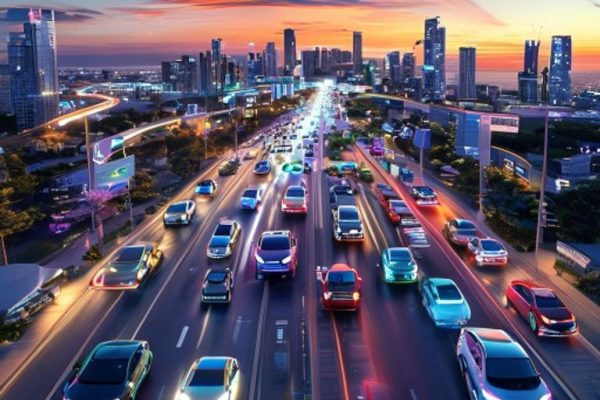
The return to Vice City also brings a fresh interpretation of its iconic automotive infrastructure. The trailer unveiled a vast and varied landscape, from sprawling multi-lane highways connecting distinct districts to narrower, more congested urban streets, and even what appear to be more rural routes. Each environment promises unique driving challenges and opportunities for exploration.
This diversity in road types, coupled with the enhanced traffic simulation suggested by features like blinkers, could make simply traversing the map a rewarding experience. Players will likely encounter different traffic patterns, varying speed limits, and a dynamic ecosystem of AI drivers that react more intelligently to player input and environmental cues, all set against a visually stunning backdrop.
Implications for the Automotive Gaming Community
The potential for deeper automotive realism in GTA VI holds significant implications for the broader gaming community, particularly those who gravitate towards simulation and role-playing genres. Features that facilitate realistic driving could attract a new demographic of players who prioritize immersion and adherence to rules. This level of detail offers incredible potential for content creators and virtual photographers who enjoy car culture within games. GTA VI, with its apparent commitment to automotive nuance, is poised to become a benchmark for open-world driving experiences, bridging the gap between arcade fun and simulation fidelity.
Conclusion: Redefining the Open-World Driving Experience in Grand Theft Auto VI
Grand Theft Auto VI is shaping up to be a transformative release, particularly for the automotive aspect of its open world. The subtle yet powerful inclusion of functional blinkers, alongside a visibly dense and dynamic traffic system, suggests a profound commitment to offering a driving experience that is not only thrilling but also deeply immersive and customizable.
For enthusiasts of virtual vehicles and realistic road interactions, the prospect of GTA VI’s Vice City is electrifying. It promises a world where the choice to simply cruise, obey traffic laws, and engage in a nuanced form of automotive role-play is as valid and rewarding as any high-octane escapade. After a decade of waiting, the streets of Vice City are ready to welcome drivers to an unprecedented level of virtual automotive fidelity, blinkers and all.
Source : https://www.caranddriver.com/news/a73556603/gta-vi-gameplay-car-details/