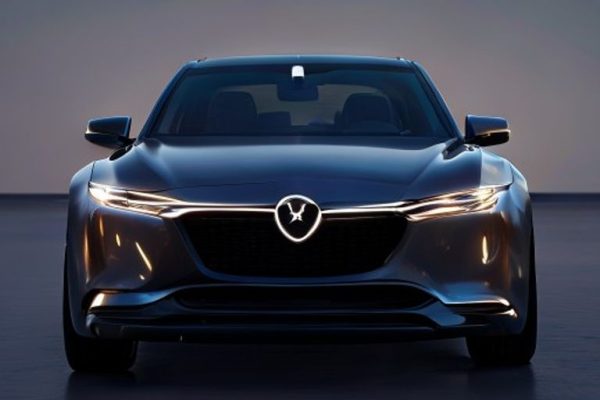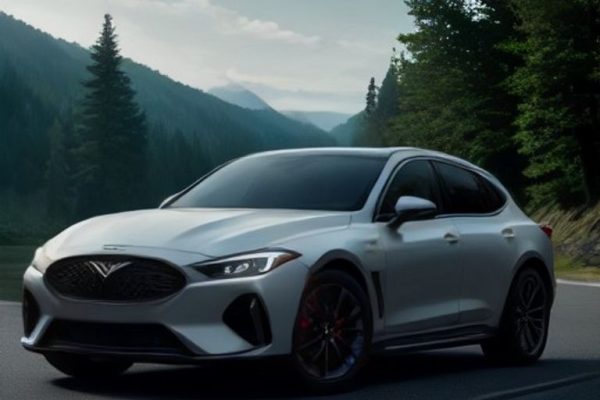



Hyundai Unveils Rugged Boulder Concept, Signaling Entry into Body-on-Frame Segment and Future Truck Production
At the 2026 New York Auto Show, Hyundai unveiled the significant Boulder Concept. This marked a bold new direction for the South Korean automaker, signaling its intent to enter the competitive body-on-frame off-road SUV segment. More than just a design study, the Boulder Concept is also confirmed to serve as the foundation for an upcoming production truck, broadening Hyundai’s presence in the utility vehicle market with a robust new offering.
Hyundai, known for its diverse lineup of popular crossovers and sedans, has largely focused on unibody platforms for its SUV offerings. The Boulder Concept represents a distinct departure, embracing a traditional body-on-frame construction. This design choice is fundamental to its rugged aspirations, promising enhanced durability, off-road capability, and superior towing capacity. Such a robust architecture is a prerequisite for any serious contender in the adventure vehicle category, preparing the Boulder for challenging terrains and demanding tasks.
A Deep Dive into the Boulder Concept’s Off-Road Prowess
From its very first appearance, the Hyundai Boulder Concept leaves no doubt about its adventurous intentions. Engineered from the ground up to tackle extreme environments, it boasts an impressive array of off-road hardware. Central to its formidable stance and capability are its massive 37-inch tires. These substantial tires are crucial components that contribute significantly to:
- Enhanced Ground Clearance: Lifting the vehicle’s body to clear obstacles effectively.
- Improved Traction: Providing superior grip on various loose surfaces like mud, sand, and rocks.
- Increased Approach and Departure Angles: Reducing the risk of scraping on steep inclines.
- Better Obstacle Rollover: Allowing easier navigation over larger rocks and uneven terrain.
While specific hardware details beyond the tires remain conceptual, a body-on-frame SUV of this caliber strongly suggests other heavy-duty off-road components. These typically include robust suspension systems, protective skid plates, and advanced four-wheel-drive systems, possibly with locking differentials, all designed to maximize traction and control in demanding conditions.
Entering the Rugged SUV Arena: Drawing Parallels and Setting Trends
The Hyundai Boulder Concept’s design language immediately evokes comparisons to other iconic, rugged off-roaders that have recently seen a resurgence in popularity. Its boxy silhouette, prominent fender flares, and utilitarian aesthetic place it firmly in a category re-energized by vehicles like the Ford Bronco. This isn’t merely a stylistic choice but a strategic move by Hyundai to tap into a rapidly growing market segment that values authenticity, capability, and a sense of adventure.
This segment appeals to consumers seeking vehicles capable of venturing far off the beaten path, projecting durability and exploration. The Boulder Concept, with its purposeful stance and emphasized off-road features, aims to capture this adventurous spirit while infusing it with Hyundai’s modern technological prowess. Its arrival signifies Hyundai’s ambition to offer a compelling alternative in a segment dominated by established players, providing a fresh perspective on adventure vehicles.
From Concept SUV to Production Pickup: The Confirmed Truck Variant
Perhaps one of the most exciting announcements alongside the Boulder Concept’s reveal is the confirmation that it will spawn a production truck. This strategic decision underscores Hyundai’s commitment to maximizing the utility and market reach of its new body-on-frame platform. The synergy between SUV and pickup truck variants built on a shared ladder frame chassis is a well-established practice in the automotive industry, exemplified by pairings such as the Ford Bronco and Ranger.
Developing a pickup truck from the Boulder’s robust architecture offers several compelling advantages:
- Expanded Market Reach: Attracting buyers who prioritize hauling capability and open-bed utility.
- Cost Efficiency: Leveraging platform sharing for economies of scale in development and manufacturing.
- Versatility: Body-on-frame strength suited for heavy loads and towing.
- Brand Expansion: A formidable entry into the mid-size body-on-frame pickup segment, complementing the unibody Santa Cruz.
While specific details on the production truck’s timeline, design, or market positioning are pending, its confirmed existence hints at Hyundai’s long-term vision for a comprehensive utility vehicle lineup, from urban commuting to off-road adventures.
Hyundai’s Strategic Vision and Future Outlook
The unveiling of the Hyundai Boulder Concept at the 2026 New York Auto Show is more than just the debut of a single vehicle; it’s a declaration of Hyundai’s strategic intent to diversify its portfolio and address new market segments. By committing to a body-on-frame platform for a rugged SUV and a derivative pickup truck, Hyundai is positioning itself to challenge established players and cater to a growing consumer demand for authentic, capable, and adventure-ready vehicles. This move could redefine perceptions of the brand, showcasing its engineering prowess and willingness to explore new territories.
Source : https://www.caranddriver.com/news/a70898163/hyundai-boulder-concept-revealed/