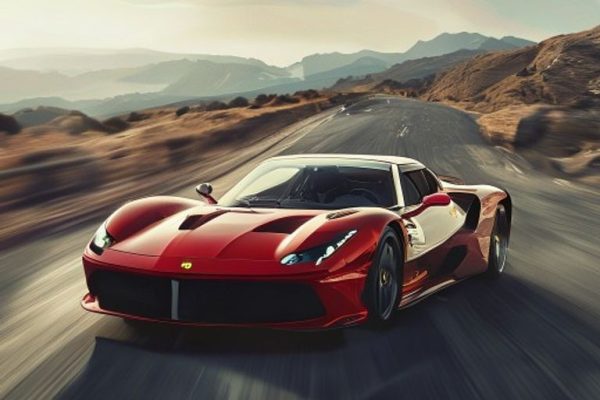


The automotive landscape is in a constant state of flux, and nowhere is this more evident than in the burgeoning electric vehicle (EV) sector. While a multitude of impressive EVs are already available on dealership lots, the horizon gleams with an even more diverse and technologically advanced lineup. These aren’t just incremental updates; they are the next generation of electric mobility, currently navigating various stages from bold concept designs to advanced prototype testing and pre-production runs. This fascinating journey from a designer’s sketchpad to a customer’s driveway is fraught with innovation, challenges, and the occasional pivot, meaning not every intriguing vision will ultimately make it to mass production. Yet, the anticipation surrounding these future offerings is palpable, promising to redefine consumer expectations and accelerate the global shift towards sustainable transportation.
From Vision to Reality: The Journey of Concept Vehicles
Every groundbreaking vehicle often begins its life as a concept—a bold statement of intent and a canvas for future possibilities. These early-stage electric vehicle concepts are more than just pretty show cars; they are crucial tools for automakers to explore novel design languages, experiment with cutting-edge technologies, and gauge public reaction to radical ideas. They often push the boundaries of what’s considered conventional, showcasing futuristic interiors, revolutionary powertrain integrations, and sustainable material applications that might seem far-fetched today but could become standard tomorrow.
While some concepts are pure flights of fancy, designed to inspire and attract attention, others serve as direct precursors to production models, offering strong hints about upcoming models’ aesthetics and core features. It’s a delicate balance between visionary aspiration and engineering practicality. The journey from an abstract concept to a tangible, road-worthy vehicle is complex, involving numerous design iterations, engineering feasibility studies, and market analyses. Consequently, the final production model, while often retaining the spirit of its concept, typically undergoes significant transformations to meet safety regulations, manufacturing constraints, and cost targets. This evolutionary process ensures that what eventually reaches consumers is not only innovative but also practical and reliable.
The Rigorous Path of Prototypes and Pre-Production Models
Once a concept gains traction and a production decision is made, the vehicle transitions into the prototype phase. This is where theoretical designs become physical, albeit often camouflaged, test mules. Prototypes undergo an exhaustive regimen of testing, scrutinizing every component and system under a wide array of conditions. Engineers rigorously evaluate performance metrics such as acceleration, braking, handling dynamics, and, crucially for EVs, battery range and charging efficiency. These vehicles are subjected to extreme temperatures, varied terrains, and simulated crash tests to ensure they meet stringent safety and durability standards.
The iterative nature of prototype development means that defects are identified, designs are refined, and technologies are optimized throughout this phase. As the vehicle matures, it moves into pre-production, where vehicles are built on the actual assembly line, often with production-intent tooling. This stage is vital for validating manufacturing processes, refining assembly techniques, and ensuring consistent build quality before full-scale production commences. Pre-production models are often used for final regulatory certifications, media drives, and employee training. This painstaking process, spanning months or even years, is essential to guarantee that when the vehicle finally rolls off the line for public sale, it is a polished, reliable, and high-performing machine.
Navigating the Road to Production: Challenges and Triumphs
Bringing a new electric vehicle to market is an immense undertaking, fraught with challenges that extend far beyond design and engineering. Manufacturing at scale requires massive investments in specialized factories, sophisticated robotics, and a robust supply chain for critical components like battery cells, electric motors, and advanced semiconductors. Ensuring the availability and stable pricing of these components, especially batteries, is a constant balancing act for automakers.
Beyond the technical and logistical hurdles, regulatory compliance in various global markets adds another layer of complexity. Each region has specific safety standards, emissions regulations (even for EVs, pertaining to manufacturing impact), and charging infrastructure requirements that must be met. Despite these complexities, the accelerating pace of EV adoption and the fierce competition within the industry are driving unprecedented innovation. The triumphs come in the form of breakthroughs in battery technology, more efficient powertrains, and manufacturing innovations that bring down costs and increase production capacity. These successes are paving the way for a broader array of EVs, democratizing access to electric mobility across different vehicle segments and price points.
Anticipating What Future EVs Will Deliver
The next wave of electric vehicles promises to build upon current successes and introduce new levels of performance, utility, and sophistication. While specific models remain under wraps until their official unveiling, several overarching trends are clear:
- Extended Range and Faster Charging: Expect significant advancements in battery technology, leading to greater driving ranges that mitigate range anxiety, coupled with ultra-fast charging capabilities that rival the convenience of gasoline refueling.
- Diverse Body Styles: The market will expand beyond traditional sedans and SUVs to include a wider variety of vehicle types, such as electric pickup trucks with immense utility, compact urban mobility solutions, high-performance sports cars, and even adventurous off-roaders.
- Advanced Autonomous Features: As sensor technology and AI mature, future EVs will offer increasingly sophisticated driver-assistance systems, moving closer to fully autonomous driving capabilities, enhancing safety and convenience.
- Seamless Connectivity and Digital Integration: Expect highly integrated infotainment systems, over-the-air updates for vehicle software, and deeper connectivity with smart homes and personal devices, transforming the vehicle into a mobile hub.
- Sustainable Materials and Manufacturing: A greater emphasis will be placed on the use of recycled and sustainably sourced materials in vehicle construction, alongside more environmentally friendly manufacturing processes, reinforcing the holistic eco-friendly appeal of EVs.
- Innovative Interior Designs: With the absence of traditional combustion engines, designers will have greater freedom to create more spacious, flexible, and technologically immersive interior environments.
These anticipated advancements are not merely speculative; they represent the natural progression of technological development and consumer demand within the rapidly evolving EV market.
The Excitement of What’s Yet to Come
The pipeline of upcoming electric vehicles represents a vibrant and dynamic future for personal transportation. Each new concept, prototype sighting, and pre-production announcement adds to the growing excitement for what’s next. While the journey from a bold vision to a ready-for-sale product can be long and sometimes unpredictable – with some ambitious projects occasionally facing delays or even cancellation – the collective effort of automakers globally is undeniably pushing the boundaries of what’s possible. The ongoing innovations in battery technology, powertrain efficiency, and vehicle design are poised to deliver a new generation of EVs that are not only environmentally conscious but also exhilarating to drive, packed with features, and seamlessly integrated into our increasingly digital lives. The coming years promise an unprecedented era of choice and advancement for anyone considering the switch to electric mobility, making the wait for these future models an exciting period of anticipation.
Source : https://www.caranddriver.com/news/g29994375/future-electric-cars-trucks/