


The Long Road to a New Roadster: A Design Odyssey
Tesla’s second-generation Roadster has been one of the most anticipated, and perhaps most enigmatic, vehicles in recent memory. Unveiled with great fanfare, it immediately captured imaginations with its radical styling and ambitious promises. However, the journey from concept to production has been exceptionally long, leading to a natural question for those who placed deposits years ago: Will the final car resemble the groundbreaking vision that first inspired them, or will it be a fundamentally different machine shaped by time and evolving design philosophies?
From Pioneer to Prototype: A Design Evolution Story
To understand the current anticipation and potential for « confusion, » it’s essential to look back at Tesla’s origins. The original Tesla Roadster, launched in 2008, was a pioneering electric sports car. Based on a Lotus Elise chassis, its design was distinctly of its era—a lightweight, agile two-seater with familiar sports car proportions, albeit powered by an innovative electric drivetrain. It was a critical proof-of-concept, demonstrating that electric vehicles could be exciting and performance-oriented, laying the groundwork for Tesla’s future ambitions. Its aesthetic, while attractive, was conventional in its sports car lineage.
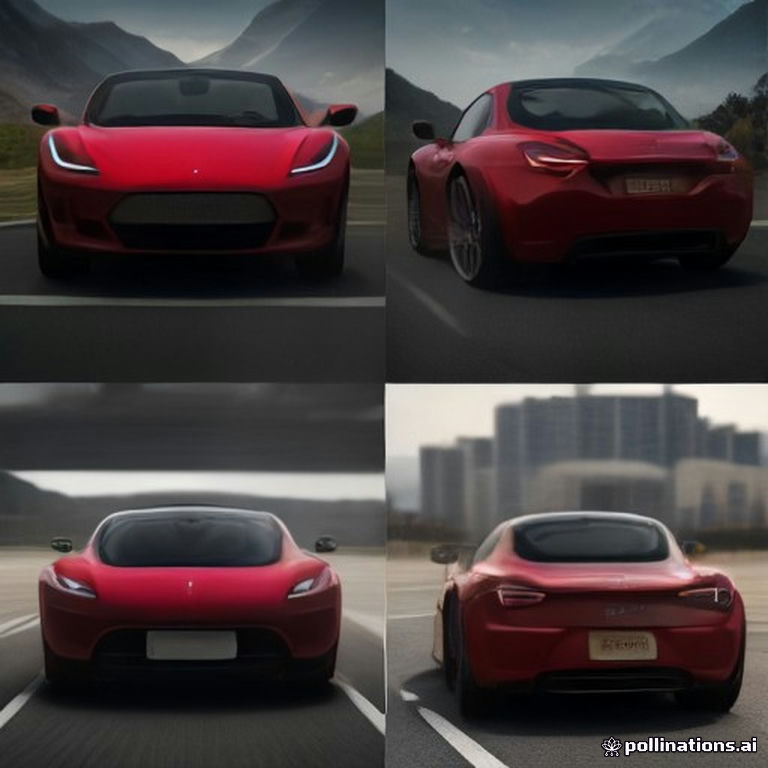
Fast forward to November 2017. Tesla introduced the concept for its next-generation Roadster, and the automotive world took notice. This was not merely an evolution; it was a revolution in design language. Gone were the familiar curves of the Lotus-derived original. In its place was a futuristic, ultra-sleek, and incredibly low-slung silhouette that seemed to leap directly from a science fiction film. The 2017 concept featured:
- Minimalist lines and a dramatic aerodynamic profile.
- A striking, aggressive stance with a wide, low footprint.
- An ultra-sleek silhouette, a departure from traditional sports car shapes.
- A glass roof that could be removed and stored.
This initial reveal set a very high bar for expectations, establishing a visual identity that was starkly different from anything Tesla, or indeed much of the automotive industry, had produced before. It promised not just speed but a complete reimagining of what an electric supercar could look like and how it could perform.
The Passage of Time and Shifting Expectations
The gap between the original Roadster’s debut and the second-generation concept’s unveiling, and then the even longer wait for its production, introduces a unique dynamic. « Nine years ago, » as mentioned, could refer to the substantial time elapsed since the original Roadster solidified Tesla’s place, or the considerable period since the 2017 concept was first shown to the world. Regardless of the precise timeline, such extended development cycles in the fast-paced automotive and technology sectors invariably lead to shifts. What was cutting-edge in 2017 might have seen iterations or new considerations arise by the time a production model is ready for manufacturing. Engineering challenges, evolving safety standards, new material sciences, and even shifts in brand identity can subtly, or sometimes dramatically, alter a vehicle’s final form compared to its initial concept.
The original Roadster was a trailblazer, but it maintained a design rooted in established sports car aesthetics. The 2017 concept, however, was a bold statement—a vision that seemed almost uncompromised by conventional design wisdom. The very boldness of that departure now feeds into the central question for many. Will the production version retain that audacious spirit, or will the practicalities of mass production, regulatory compliance, and a maturing electric vehicle market necessitate refinements that soften its initial impact? This is where the concern for a « Catfish of the Decade » arises, not necessarily in a pejorative sense, but as a reflection of the potential for a significant visual divergence from the vehicle that first compelled thousands to place a reservation.
The Deposit Holder’s Perspective: A Vision in Limbo
For the thousands of individuals who placed substantial deposits on the second-generation Roadster, the waiting game has been long. They committed their funds based on a specific, exciting vision presented years ago—a vision of a sleek, hyper-performing electric sports car that broke new ground in design. Their initial excitement was fueled by images and concept specifications that now belong to a past iteration of the development timeline. As years turn into more years, the memory of that initial concept can become both idealized and susceptible to change. Will the eventual production car faithfully mirror the proportions, interior layout, and overall aesthetic that first captivated them? Or will the passage of time mean that the final product, while still impressive, has undergone enough modifications to make it feel unfamiliar or unexpected compared to their long-held mental image?
This situation highlights the inherent tension in bringing revolutionary concepts to market after lengthy delays. A deposit holder who envisioned a certain type of interior, or a particular exterior finish, based on concept images, might find their expectations challenged. The initial « bold departure » from traditional sports car design may have been one thing, but a potential subsequent « departure » from the original concept’s design could lead to a different kind of bewilderment. They aren’t just buying a car; they’re buying into a vision, and visions, especially those taking nearly a decade to materialize, are prone to evolution. The core of the confusion lies in whether the final product will resonate with the initial emotional connection forged at the moment of the concept’s debut.
Balancing Innovation and Reality
Ultimately, the saga of the second-generation Tesla Roadster’s design is a compelling narrative of innovation, anticipation, and the challenges of bringing a futuristic vision to fruition. The initial unveiling was undeniably a « bold departure » that redefined expectations for electric performance vehicles. The long incubation period, however, brings with it the inherent risk of design evolution, technical adjustments, and shifting market dynamics that can alter the perception of the final product. Whether the Roadster emerges as a faithful continuation of its initial radical concept or a refined, perhaps subtly different, interpretation remains to be seen. For those with deposits, the question isn’t just about delivery, but about whether the car that finally arrives will be the dream they signed up for or a new chapter in its own right, perhaps even a pleasant surprise or an unexpected twist in the tale.
Source : https://www.caranddriver.com/news/a74158531/2029-tesla-roadster-design-changes/