

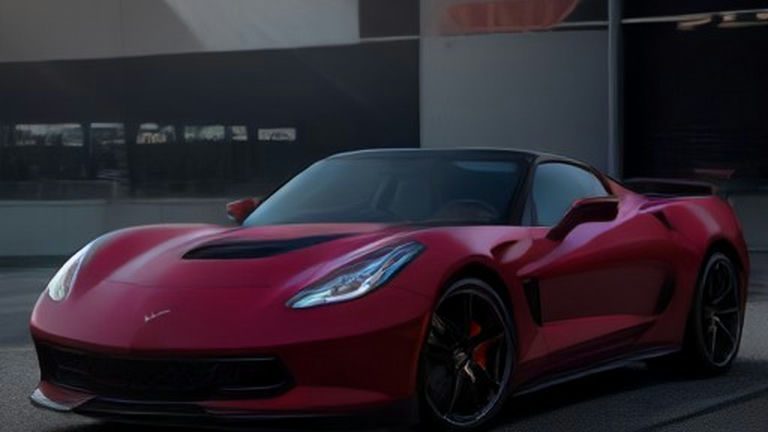

The Allure and the Unexpected Twist of a Corvette Test Drive
For many automotive enthusiasts, the opportunity to test drive a Chevrolet Corvette is a thrilling prospect, a chance to experience a blend of raw power, precision engineering, and iconic design. It’s typically the penultimate step before committing to ownership, a moment filled with anticipation and the promise of exhilarating performance. However, for one prospective buyer, this dream drive took an unforeseen and costly turn, culminating in an order to pay a substantial sum following what was described as a minor parking incident.
A ‘Minor’ Mishap Leads to a Massive Bill
The incident in question, while lacking granular detail, has been characterized as a « minor truck stop parking mishap. » While the term « minor » might suggest superficial damage, the financial repercussion of $12,250 indicates that even seemingly small incidents can carry significant weight when a high-performance vehicle like a Corvette is involved. Truck stops, often characterized by tight maneuvering spaces and heavy commercial traffic, present unique challenges for any vehicle, let alone one designed for agility and speed rather than navigating crowded, confined areas. A moment’s misjudgment, a slight scrape against a barrier, or an accidental brush with another object could easily escalate beyond what its initial appearance might suggest.
The cost of repairing damage to a modern sports car, especially an exotic model like the Corvette, is notoriously high. These vehicles often feature advanced materials such as carbon fiber, specialized alloy panels, and intricate sensor arrays embedded within their bodywork. Even a seemingly insignificant dent or scratch can necessitate the replacement of an entire panel, specialized paint matching techniques, and recalibration of sensitive electronic systems, all contributing to labor-intensive and expensive repairs. What begins as a ‘minor’ ding can quickly balloon into a four or five-figure repair bill, especially when factory-certified parts and labor are required to maintain the vehicle’s integrity and warranty.
Unpacking the $12,250 Financial Order
The sum of $12,250 that the customer was ordered to pay is a significant figure, prompting questions about what exactly such an amount covers. It is highly probable that this figure encompasses a combination of several factors beyond just the immediate repair costs:
- Direct Repair Costs: This would include parts, labor for bodywork, paint, and any mechanical or electronic diagnostics required. As noted, Corvette components are premium-priced, and specialized labor rates apply.
- Diminished Value: Even after expert repairs, a vehicle involved in an incident can suffer from diminished resale value. This compensation aims to cover the estimated loss in market value due to its accident history.
- Dealership Administrative Fees: Processing insurance claims, arranging repairs, and handling legal paperwork can incur significant administrative costs for the dealership.
- Legal and Arbitration Fees: If the dispute required legal intervention, arbitration, or settlement negotiations, associated legal counsel fees and court costs could be factored into the final amount.
- Insurance Deductibles/Gaps: Depending on the specifics of the dealership’s insurance policy and any personal coverage the customer might have, the $12,250 could represent an uncovered portion, a deductible, or a negotiated settlement outside of direct insurance claims.
The fact that the customer was « ordered to pay » suggests a formal determination, potentially through a legal judgment, an arbitration ruling, or a binding settlement agreement reached after a dispute over liability and financial responsibility.
Understanding Liability in a Test Drive Scenario
A crucial element in this incident is the question of liability. When a customer takes a vehicle for a test drive, they are typically operating it under the terms of a specific agreement with the dealership. These agreements often delineate the responsibilities of the driver, the dealership’s insurance coverage, and the potential financial exposure of the customer in the event of an incident. While dealerships generally carry insurance to cover damage to their vehicles, certain circumstances can shift financial responsibility to the test driver.
Potential reasons for a customer being held liable could include:
- Violation of Test Drive Agreement: This could involve driving outside a designated area, engaging in reckless behavior, or neglecting specific instructions provided by the dealership.
- Demonstrable Negligence: If the mishap was deemed a direct result of the customer’s clear negligence or careless operation of the vehicle, they might be held financially responsible.
- Insurance Policy Specifics: There could be clauses in the dealership’s insurance policy that limit coverage for certain types of incidents or under specific conditions, or the customer’s personal auto insurance policy might not extend adequate coverage to non-owned vehicles in a test drive context.
- High Deductibles: The dealership’s insurance policy might have a very high deductible that they seek to recover from the at-fault party.
This incident serves as a stark reminder that a test drive is not simply a casual spin, but a contractual engagement with significant implications.
A Cautionary Tale for Prospective Car Buyers
This case underscores the critical importance of due diligence for any consumer embarking on a test drive, especially with high-value vehicles. The excitement of driving a powerful car like a Corvette should be tempered with a thorough understanding of the terms and conditions. Before getting behind the wheel, consumers should:
- Read the Test Drive Agreement Carefully: Do not skim. Understand all clauses related to liability, insurance, mileage limits, and permissible driving areas. Ask questions if anything is unclear.
- Inspect the Vehicle: Before starting the drive, perform a quick visual inspection of the car for any existing damage, no matter how minor. Point these out to the dealership representative and ensure they are noted.
- Clarify Insurance Coverage: Ask explicitly whose insurance would cover damage in an accident – the dealership’s, your personal policy, or a combination. Understand deductibles and limits.
- Drive with Utmost Caution: Treat the test vehicle with even greater care than you would your own. Avoid aggressive driving or pushing the vehicle to its limits, especially in unfamiliar territory.
- Understand Your Financial Exposure: Inquire about what would happen financially in the event of an accident or damage and what your maximum potential liability could be.
Implications for Dealership Practices
While the focus often falls on customer responsibility, such incidents also carry implications for dealerships. It highlights the need for clear communication and robust procedures to mitigate risks for both parties. Dealerships should:
- Ensure Clear and Concise Agreements: Make liability clauses easy to understand and readily available for review.
- Implement Pre-Drive Inspection Protocols: Document the vehicle’s condition before and after each test drive to prevent disputes over pre-existing damage.
- Review Insurance Coverage: Regularly assess their insurance policies to ensure adequate coverage for all test drive scenarios and communicate these terms effectively.
- Train Staff: Equip sales personnel to thoroughly explain test drive terms, answer customer questions, and emphasize safe driving practices.
Navigating the Future of Automotive Sales
In an increasingly complex automotive market, where vehicle technologies are advancing rapidly and values are high, incidents like this Corvette test drive serve as a powerful reminder of the hidden complexities in seemingly simple transactions. The financial exposure for a relatively « minor » incident underscores the need for absolute clarity, comprehensive understanding, and heightened caution from both consumers and automotive retailers. As test drives remain an indispensable part of the car-buying process, ensuring that they are conducted under terms that are transparent and mutually understood is paramount to preventing future costly disputes and maintaining consumer trust.
Source : https://www.autoblog.com/news/corvette-test-drive-ends-with-customer-ordered-to-pay-12250