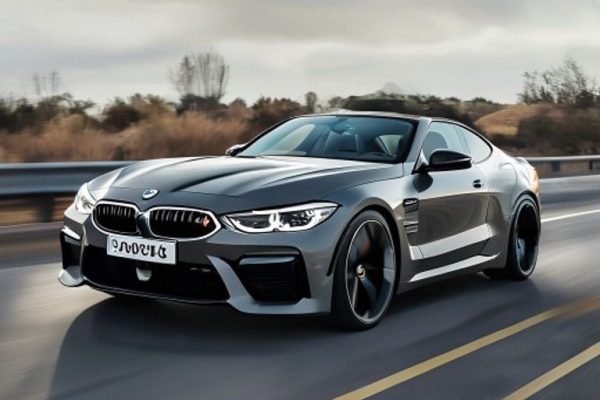


The Enduring Legacy of the Hyundai Elantra N
The automotive enthusiast world is perpetually abuzz with anticipation for what’s next. While official announcements often dictate the news cycle, a vibrant undercurrent of speculation and rumor keeps the community engaged, particularly when it comes to beloved performance models. One such model drawing considerable attention for its potential future is the Hyundai Elantra N. Recent whispers suggest a « second iteration » could be on the horizon, potentially as early as the 2028 model year, sparking discussions about what such a successor might entail. It’s crucial to emphasize, however, that details regarding a 2028 model, its design, and powertrain are currently speculative and unconfirmed by Hyundai.
To understand the excitement surrounding a hypothetical next-generation Elantra N, it’s essential to acknowledge the impact of the current model. Introduced for the 2022 model year, the first-generation Hyundai Elantra N quickly carved out a niche as a high-performance compact sedan that punched well above its weight class. It delivered a thrilling driving experience, track-ready capabilities, and an aggressive, eye-catching design, all while maintaining a remarkably accessible price point. Powered by a robust 2.0-liter turbocharged GDI engine, it sends 276 horsepower (286 hp with N Grin Shift overboost) to the front wheels, managed by either a precise six-speed manual transmission or a quick-shifting eight-speed wet dual-clutch transmission (N DCT).
The current Elantra N isn’t just about raw power; it’s a meticulously engineered package designed for maximum driver engagement. Its comprehensive suite of N-specific features includes:
- An electronically controlled limited-slip differential (e-LSD) for enhanced traction and cornering.
- Larger brake rotors and high-performance pads for superior stopping power.
- A stiffened chassis with unique suspension tuning and adaptive dampers.
- Integrated Drive Axle (IDA) for reduced unsprung mass and improved handling.
- Various N driving modes, including a customizable N Custom mode.
- The active variable exhaust system that delivers an exhilarating soundtrack.
These features, combined with its distinct « Parametric Dynamics » design language, complete with aggressive spoilers, side skirts, and prominent exhaust outlets, have solidified the Elantra N’s reputation as a genuine performance machine and a worthy competitor in the hot sedan segment.
Exploring the « Second Iteration » and Speculative Design Evolution
When discussions turn to a « second iteration » of the Elantra N, it prompts questions about Hyundai’s long-term strategy for its N performance division. Typically, a « second iteration » could refer to a significant mid-cycle refresh (like the one the standard Elantra received for 2024, influencing the 2024 Elantra N) or a full generational redesign. Given the mention of a potential 2028 model year, the latter scenario — a completely new generation built on an updated platform — seems more plausible. This would align with standard automotive product cycles, allowing for substantial advancements in design, technology, and powertrain.
The original snippet hints at an « even more expressive design. » Building on the current Elantra N’s already bold aesthetic, a future model would likely push these boundaries further. Hyundai’s design philosophy has become increasingly daring and unconventional, and the N brand is often the canvas for its most aggressive artistic expressions. Enthusiasts might envision a design that retains the current model’s sharp lines and angularity but incorporates even more aerodynamic elements, potentially drawing inspiration from Hyundai’s motorsport endeavors. While specific details are purely hypothetical, the N brand’s willingness to challenge norms suggests that a next-generation model would certainly aim to stand out.
The Rumored 2.5-Liter Engine: A Potential Power Play?
Perhaps the most intriguing piece of speculation revolves around a potential powertrain change: « more power thanks to a new 2.5-liter engine. » The current 2.0-liter ‘Theta-II GDI’ engine has proven to be a powerhouse, offering strong performance and excellent tunability. However, the automotive industry constantly seeks to enhance performance while navigating evolving emissions regulations and market demands.
The idea of a 2.5-liter engine for the Elantra N is not entirely without precedent in the broader Hyundai-Kia family. For instance, Kia offers a 2.5-liter turbocharged engine in models like the K5 GT, which produces 290 horsepower and 311 lb-ft of torque. While this is not an N-tuned engine, it demonstrates the availability of a larger displacement turbocharged unit within the corporate umbrella. Should Hyundai N decide to develop or adapt a 2.5-liter turbocharged engine specifically for its next-generation performance vehicles, it could indeed open the door to a significant bump in power and torque figures beyond the current 2.0-liter’s output.
A larger displacement engine could offer several theoretical advantages:
- Increased Power Output: More displacement generally allows for greater horsepower and torque potential.
- Broader Torque Band: A larger engine might deliver its peak torque earlier and sustain it across a wider RPM range.
- Future-Proofing: A newer engine design could potentially incorporate advanced technologies to meet future emissions standards.
However, such a change would also present challenges, including potential increases in weight, fuel consumption, and manufacturing costs. The N brand’s philosophy has always been about balance – extreme performance without exorbitant price tags. A new, more powerful engine would need to fit within this ethos, maintaining the car’s dynamic balance and affordability.
Maintaining the « Sporty, Affordable » Ethos
The original descriptor of a future Elantra N as a « sporty, affordable sedan worth waiting for » encapsulates the very essence of the Hyundai N brand’s current philosophy. Sportiness is non-negotiable for an N model; it is built into its DNA through rigorous testing at the Nürburgring Nordschleife and through the expertise of former BMW M engineers. The current Elantra N perfectly embodies this, offering a raw, engaging driving experience that few competitors can match at its price point.
The « affordable » aspect is equally critical. Hyundai N has made performance accessible to a broader audience, democratizing the thrill of track-ready vehicles. Should a next-generation Elantra N materialize with a new engine and advanced features, maintaining this affordability will be a key challenge and a significant draw for potential buyers. Hyundai’s ability to offer incredible value has been a cornerstone of its success in the performance segment.
Ultimately, the notion of it being « worth waiting for » reflects the passion of the enthusiast community. The current Elantra N has set a high bar, and the anticipation for what Hyundai’s N division might deliver next is palpable. While the shift towards electrification is a significant part of Hyundai N’s future, as evidenced by the groundbreaking Ioniq 5 N, dedicated internal combustion engine (ICE) performance vehicles like the Elantra N are still cherished by many. A potential « 2028 Elantra N » would represent a fascinating evolution in a segment that continues to thrive on innovation and driving pleasure.
As of now, all discussions regarding a 2028 Hyundai Elantra N, its design, and its powertrain remain firmly in the realm of speculation and rumor. Enthusiasts eagerly await any official word from Hyundai regarding the future of this beloved performance sedan. Until then, the current Elantra N continues to offer an exceptional package for those seeking an exhilarating and accessible driving experience.
Source : https://www.caranddriver.com/news/a74471359/2028-hyundai-elantra-n-future-cars/