


The Evolving Landscape of Automotive Performance
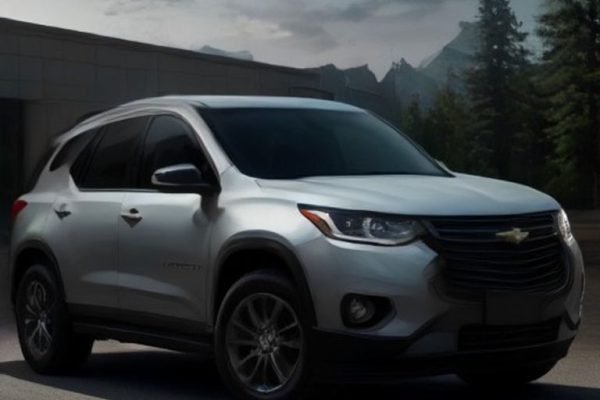
The automotive world frequently presents surprising developments, challenging long-held perceptions about vehicle categories and their capabilities. One such intriguing notion, recently highlighted in discussion, posits a scenario where a family-oriented utility vehicle, such as a conceptual ‘Toyota bZ Woodland,’ could hypothetically achieve 0-60 mph acceleration times on par with a dedicated sports car like the Toyota Supra. This premise immediately sparks a fascinating debate, as it pits the utilitarian demands of family transport against the pure, unadulterated performance ethos of a true sports machine. While the raw numbers might suggest a convergence in a specific metric, the fundamental driving experience and the essence of each vehicle remain distinct.
The very idea of a modern family SUV matching the rapid sprint of a Supra is, at first glance, counter-intuitive. Historically, sports cars have been engineered from the ground up for speed, agility, and driver engagement, often sacrificing practicality. Family SUVs, conversely, prioritize space, comfort, safety, and versatility. Yet, advancements in powertrain technology, particularly electrification, are dramatically altering these traditional boundaries, allowing heavier vehicles to unleash instant torque and achieve startling acceleration figures that were once the exclusive domain of high-performance coupes.
The Rise of the Performance Family Vehicle
The advent of electric vehicles (EVs) has been a game-changer for acceleration. Electric motors deliver maximum torque from a standstill, eliminating the need for gear changes or engine spool-up that internal combustion engines require. This inherent characteristic allows even substantial vehicles to post impressive 0-60 mph times, often defying their size and weight. The ‘bZ’ prefix in ‘Toyota bZ Woodland’ itself signifies a battery-electric vehicle, immediately placing it in a category renowned for its potential for rapid off-the-line performance.
Automakers are increasingly integrating powerful electric drivetrains into SUVs, recognizing consumer demand for both practicality and performance. These vehicles often feature dual-motor setups, providing all-wheel drive and even greater power output. While these engineering marvels enable a family SUV to win a drag race against many conventional cars, it’s crucial to understand that straight-line acceleration is merely one facet of a vehicle’s overall performance envelope. It’s a compelling statistic, certainly, but it doesn’t paint a complete picture of driving dynamics or the intended purpose of the vehicle.
The Enduring Allure of the Sports Car: The Toyota Supra Legacy
In contrast to the emerging performance SUV, the Toyota Supra stands as an icon of sports car engineering. Throughout its generations, the Supra has consistently represented Toyota’s commitment to building engaging, driver-focused machines. A true sports car, epitomized by the Supra, is meticulously crafted to offer a holistic driving experience that transcends a single performance number. This includes precise steering feedback, a finely tuned suspension that balances comfort with cornering prowess, powerful and fade-resistant braking, and an overall sense of connection between the driver and the road.
The essence of a sports car lies in its responsiveness, its ability to change direction with immediacy, and the visceral thrill it delivers through sound, feel, and G-forces during dynamic maneuvers. Its relatively low center of gravity, typically lighter weight, and optimized weight distribution are fundamental to its agility and handling characteristics. The Supra, in its various iterations, has consistently delivered on these promises, earning its place as a revered nameplate among enthusiasts who seek a purer driving experience than sheer acceleration alone can provide.
Decoding the ‘Match’: Numbers Versus Experience
The ‘shock’ mentioned in the original premise, regarding a family SUV matching a sports car’s sprint, stems from the deep-seated expectation that these two vehicle types occupy vastly different performance realms. While modern engineering can indeed bridge the gap in a 0-60 mph sprint, it rarely translates to a comparable driving experience across the board. The sensation of being pressed back into your seat during rapid acceleration might be similar, but the nuances begin immediately thereafter.
Consider the vehicle’s behavior beyond the initial launch: how it feels through a sweeping corner, its stability at high speeds, the feedback through the steering wheel, the rigidity of its chassis, and its braking capabilities during repeated hard stops. A family SUV, even one capable of rapid acceleration, will typically have a higher center of gravity, softer suspension tuning designed for ride comfort, and a heavier overall mass. These factors, while beneficial for its primary role, inherently limit its dynamic capabilities when compared to a purpose-built sports car like the Supra, which prioritizes performance characteristics above all else.
Implications for the Future of Automotive Design
This hypothetical performance parity between disparate vehicle types prompts important questions about the future direction of automotive design and consumer expectations. As technology enables more vehicles to achieve impressive acceleration, how will sports car manufacturers continue to differentiate their offerings? Perhaps the focus will further shift towards advanced handling dynamics, ultra-lightweight materials, bespoke driver interfaces, and sensory engagement that electric powertrains often diminish.
For family vehicles, the trend suggests a continued integration of performance elements with practicality. Consumers may increasingly expect their daily drivers to offer not only ample space and safety but also exhilarating acceleration on demand. This convergence could lead to a redefinition of luxury and performance, where high-output electric powertrains become a standard expectation across a wider range of vehicle types, blurring the traditional lines between segments even further.
Beyond the Straight Line: The Holistic Driving Experience
To truly understand the difference, one must look beyond single metrics and consider the complete package. The driving experience is a complex interplay of many factors:
- Instant Torque of EVs vs. Revving Engines: While EVs offer immediate thrust, the linear power delivery lacks the auditory and tactile feedback of a high-revving internal combustion engine.
- Weight Distribution and Center of Gravity: Sports cars excel with low centers of gravity and balanced weight distribution, crucial for cornering stability and agility. SUVs, by design, are taller and often heavier, impacting dynamic limits.
- Suspension Dynamics and Responsiveness: A sports car’s suspension is tuned for minimal body roll and maximum road feel, whereas an SUV’s is optimized for absorbing road imperfections and passenger comfort.
- Steering Feel and Feedback: Sports cars offer precise, communicative steering that tells the driver exactly what the front wheels are doing. SUVs, while competent, often prioritize ease of use over raw feedback.
- Braking Performance and Fade Resistance: Sustained high-performance driving demands robust braking systems designed for repeated heavy use, a characteristic more prevalent in sports cars.
- Acoustics and Sensory Engagement: The distinct engine note, exhaust burble, and overall soundscape are integral to the sports car experience, elements often absent in silent EVs.
- Ergonomics and Driver Immersion: Sports car interiors are typically driver-focused, with low seating positions and controls intuitively placed for spirited driving. SUVs offer a commanding view and a more relaxed, accommodating cabin.
Each of these elements contributes to an overall character that a 0-60 mph time, however impressive, cannot fully encapsulate. The satisfaction derived from driving a sports car comes from mastering its limits, feeling its responses, and engaging with the machine on a deeper level.
Conclusion: A New Era of Performance Dialogue
The intriguing proposition of a family SUV achieving performance metrics on par with a sports car like the Toyota Supra underscores the incredible pace of automotive innovation. It highlights how electric powertrains are democratizing straight-line speed, making breathtaking acceleration accessible in a wider range of vehicles. However, while such advancements can blur the lines on a spec sheet, they do not erase the fundamental distinctions in driving experience.
A true sports car, exemplified by the Supra, offers a comprehensive package of handling, feedback, and driver engagement that is engineered from its core. A high-performance family SUV, on the other hand, provides astounding acceleration within the context of practicality and comfort. Both serve distinct purposes and offer unique satisfactions to their owners. The conversation should evolve from simply ‘can it match’ to a deeper appreciation of the specialized engineering and the unique pleasures each vehicle category continues to offer in this exciting new era of automotive performance.