
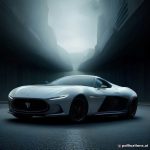

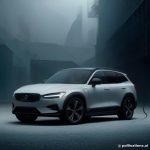
The automotive landscape is undergoing a monumental transformation, with electric vehicles (EVs) leading the charge towards a sustainable future. While the market already offers a compelling array of electric models, enthusiasts and prospective buyers are constantly looking ahead to the next wave of innovation. The vehicles generating the most buzz are often those still shrouded in a degree of mystery, existing as concepts, prototypes, or in various pre-production stages. These are the EVs that promise to redefine our expectations, push technological boundaries, and ultimately, become the next generation of cars on our roads.
The Journey from Vision to Reality: Understanding the EV Pipeline
Developing a new vehicle, especially an electric one, is an intricate and lengthy process. It begins with a bold vision and progresses through several critical stages before a car is ready for consumer purchase. Understanding this pipeline helps temper expectations and appreciate the complexity involved:
- Concept Vehicles: These are the showstoppers, often unveiled at major auto shows. Concept cars are designed to showcase a manufacturer’s vision for future design language, technological advancements, or a new market segment. They are often highly stylized, sometimes impractical, and don’t always represent a production-ready vehicle. Their primary purpose is to gauge public interest and explore innovative ideas.
- Prototypes: Once a concept gains traction, or an internal strategy is set, prototypes are developed. These are functional vehicles built for engineering, testing, and refinement. They undergo rigorous evaluations for performance, safety, durability, and efficiency in various real-world conditions. Prototypes start to resemble the final product but are still subject to significant changes.
- Pre-Production Models: As development nears completion, pre-production models are assembled on actual production lines. These vehicles are used for final quality checks, regulatory homologation, crash testing, and to fine-tune manufacturing processes. They are very close to what consumers will eventually buy, but minor adjustments are still possible.
It’s important to acknowledge that not every promising concept or even prototype makes it to full-scale production. Economic shifts, unforeseen technical hurdles, changing market demands, supply chain issues, or even a brand’s evolving strategic priorities can lead to a project being delayed, significantly altered, or even shelved indefinitely. This inherent uncertainty is part of the exciting, yet sometimes frustrating, anticipation surrounding future EVs.
Anticipated Advancements in Future Electric Vehicles
The EVs currently under development promise a host of improvements and new features that will elevate the driving experience and expand the appeal of electric mobility across diverse consumer needs.
Enhanced Range and Charging Capabilities
Range anxiety remains a significant concern for some, but future EVs are poised to offer substantially longer driving ranges, with many targeting over 300 or even 400 miles on a single charge. This will be achieved through more energy-dense battery chemistries, improved aerodynamic designs, and more efficient powertrains. Coupled with this, ultra-fast charging technologies are expected to become more widespread, significantly reducing charging times at public stations, making long-distance travel as convenient as possible.
Diverse Body Styles and Market Segments
While SUVs and sedans currently dominate the EV market, the pipeline includes a much broader array of vehicle types. Expect to see a proliferation of electric pickup trucks designed for robust utility, compact urban commuters perfect for crowded cityscapes, family-friendly minivans, and even high-performance sports cars that leverage the instant torque of electric motors for exhilarating acceleration. This diversification aims to cater to every lifestyle and professional requirement, ensuring there’s an EV for everyone.
Revolutionary Interior Technology and Comfort
Future EVs will further integrate cutting-edge technology into their cabins. We can anticipate more intuitive infotainment systems, augmented reality displays, advanced voice assistants, and seamless connectivity. Sustainable and ethically sourced materials will become more prevalent in interiors, contributing to a lighter environmental footprint. The inherent packaging advantages of electric powertrains – flatter floors and optimized space – will lead to more expansive and versatile interiors, enhancing passenger comfort and cargo capacity.
Advanced Driving Assistance and Autonomous Features
The groundwork laid by current Advanced Driver-Assistance Systems (ADAS) will evolve into more sophisticated semi-autonomous and potentially fully autonomous driving capabilities. Expect improved sensor arrays, more powerful AI processors, and over-the-air updates that continuously enhance these systems. These features promise not only greater convenience but also a significant boost in road safety.
The Excitement of What’s Next
The constant stream of announcements, patent filings, and concept car reveals paints a vivid picture of an incredibly dynamic and competitive industry. Manufacturers are pouring immense resources into research and development, driven by consumer demand, environmental regulations, and the sheer pace of technological progress. This competition ultimately benefits the consumer, fostering an environment where innovation thrives and new benchmarks are constantly being set.
While the wait for these future electric vehicles can be lengthy, and some may indeed never transition from drawing board to dealership, the anticipation itself is a testament to the transformative power of electric mobility. The upcoming models promise not just improved specifications, but a rethinking of vehicle design, utility, and the overall ownership experience. As the industry continues to mature, the gap between concept and production is narrowing, bringing us closer to a future where electric vehicles are not just an alternative, but the definitive standard.
Source : https://www.caranddriver.com/news/g29994375/future-electric-cars-trucks/
